
The AI child of Sheep In The Box unsurprisingly copies better movies
Step one: Cut a hole in the box. Step two: Put too many themes in the box.
Photo: Neon
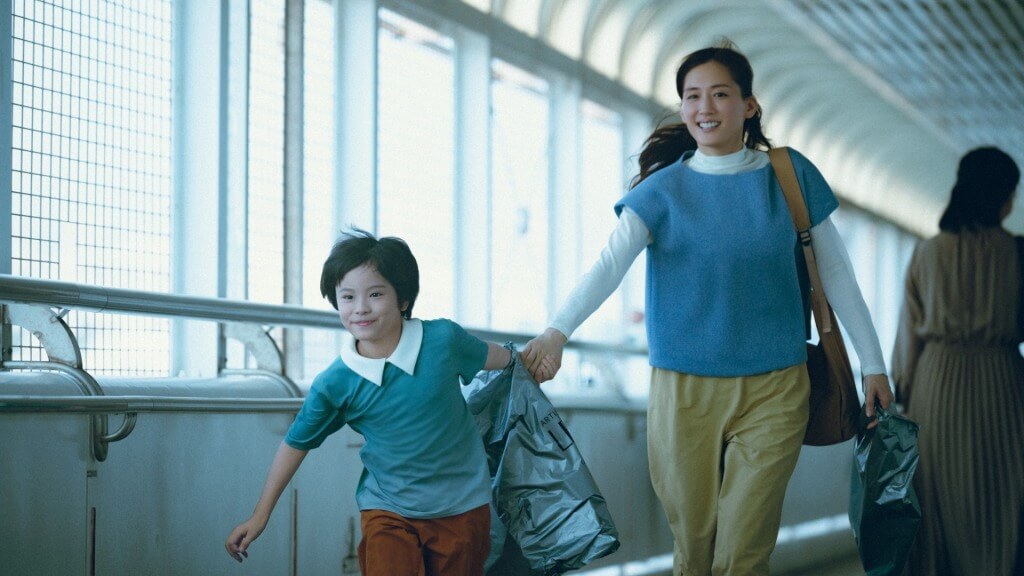
A few years ago, Sundance documentary Eternal You spotlit the burgeoning industry of techno-spiritualism, where AI start-ups used the images, sound files, and text conversations left behind by dead relatives in order to construct custom chatbots for their grieving customers. Eventually, these companies promise, we’ll bring them back for good. It’s a sad movie, filled with duped parents, lovers, and children who’re alternatingly amazed and repelled by this ghoulishness. The emotional or ideological stance of writer-director Hirokazu Koreeda, in his plodding take on the topic, Sheep In The Box, is frustratingly unclear; more clear is the ineffective influence of previous films centered on robots infiltrating the family unit.
Koreeda has made plenty of good movies about families suffering over-the-top duress, so it follows that he’d thread his film about AI into the same dramatic mold. It begins realistically enough, despite taking place in the near future, with targeted marketing. Otone (Haruka Ayase) and Kensuke Komoto (Daigo Yamamoto)—an architect and carpenter, respectively—get a drone-delivered advertisement for REbirth, a company that does what those AI start-ups can only dream of. Give them some photos, some backstory, and they’ll print out a “humanoid” robot, indistinguishable from your own lost loved one apart from their GPS-limited range and LED charging indicator. REbirth got the Komotos’ information because the death of their son Kakeru (Rimu Kuwaki) was quite public, though why they’re offering a gratis replicant two years after his passing is anyone’s guess. Probably trying to get them hooked on microtransactions later. Regardless, despite Kensuke’s skepticism, nobody’s turning down a free robot kid, so they acquiesce.
Otone is thrilled with her new high-tech surrogate son, so much so that she initially refuses to eat—or even talk about eating—lest she upset the illusion. Kensuke, in a more grounded and grumpy turn, refers to the stereotypically precocious humanoid as a Tamagotchi and a Roomba. Over the course of Sheep In The Box, guided by Koreeda’s unflappable sentimentality, the father warms up and the mother feels arrestingly seen. What’s stranger, though, is what happens to the Kakeru bot, though its story is given short shrift compared to its human counterparts. While the bookends of the film are engaging due to their competent construction and heightened circumstances, the domestic drama that forms the meat of Sheep In The Box‘s slow two hours dodders around in circles. Koreeda’s script struggles to convey how nu-Kakeru helps the parents process their grief, despite later asserting that it’s done so, or to drum up any drama around some of the various melodramatic threads the filmmaker drapes around his high-concept scenario.
 Keep scrolling for more great stories.