Update 2/28/2026 at 9 p.m.: Well, that was quick: THR is reporting that LaBeouf has once again been arrested in New Orleans on Saturday, on one additional charge of simple battery. The charge is apparently related to the original February 17 incident he was previously arrested on; LaBeouf voluntarily turned himself in on Saturday after learning that New Orleans police had issued a fresh arrest warrant for him on Friday. Such, presumably, is the small man’s plight.
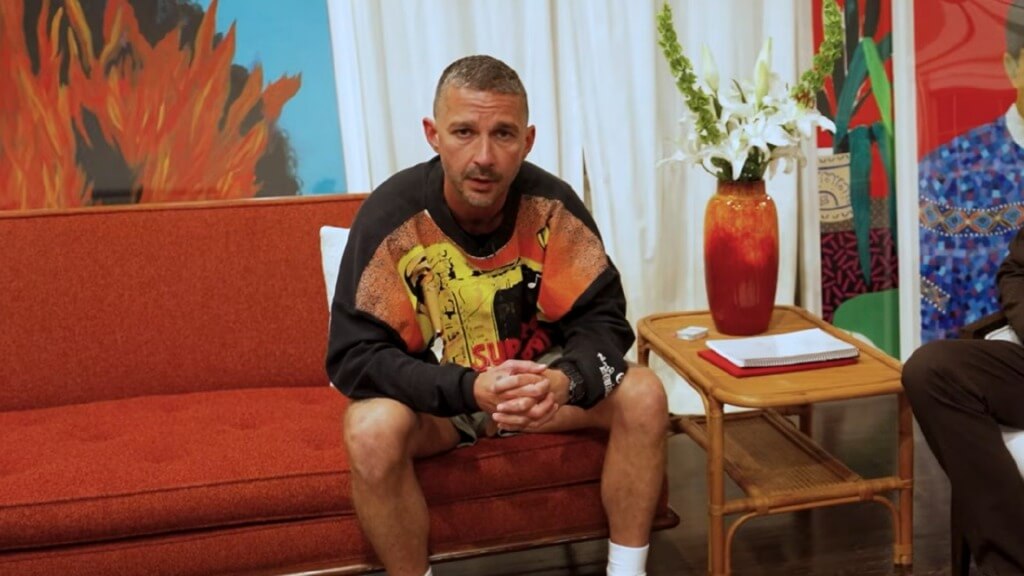
Original story: The life cycle of a Shia LaBeouf controversy is a well-studied, if not especially complex, sociological phenomenon. LaBeouf makes headlines for bad behavior—for instance, getting arrested on charges of battery stemming from a bar fight during Mardi Gras in New Orleans—and then, after a brief period, finds a fairly forgiving venue to tell everybody how sorry he is, before eventually doing it all over again. The major distinguishing feature of any given cycle, then, mostly come down to how ebullient LaBeouf is with his mea culpas and self reflections. In that light, his latest tour is a bit of a doozy, as LaBeouf appeared on the Channel 5 With Andrew Callaghan podcast this weekend to give an extremely digressive interview in which he diagnosed himself with a pesky case of “small man complex.”
First of all: Yes. But also, it’s a pretty fascinating interview, as Callaghan tries, as gently as possible, to prod an erratic LaBeouf on as many topics as possible: The abuse allegations from former girlfriend FKA Twigs. (“She’s a good girl, bro.”) His divorce from Mia Goth. (Also a “good girl,” in LaBeouf’s reckoning, who he’s happy to co-parent with.) And especially his tenuous grasp on sobriety, which was apparently most recently shaken by being introduced to the non-alcoholic psychoactive substance kava. The latter touches on the whole “small man complex” diagnosis, with LaBeouf—who talks extensively about years of being in various programs—putting forward his belief that he doesn’t actually need more rehab in his life, instead diagnosing his issues as bristling at situations in which “my masculinity” is “being challenged.”
It is truly a bizarre conversation, as LaBeouf clearly wrestles with the things he knows he’s supposed to be saying—including multiple apologies to the men he allegedly fought in New Orleans—versus making accusations that those same people were “clout chasers” who invaded his personal space and sexually harassed him. Or, in LaBeouf-speak: “Big gay people are scary to me. I’m like, standing by myself and three gay dudes are next to me, touching my leg, I get scared. I’m sorry if that’s homophobic. Then I’m that.” (Frequently referencing his Catholicism—including quoting G.K. Chesterton and professing his belief that Martin Luther is in hell—LaBeouf states at one point “I’m good with gay, be gay over there, though. Don’t be gay in my lap.”)
Even beyond the most headline-grabbing incidents, though, the conversation is truly a trove of strange quotes, as when LaBeouf defines his willingness to take photos with fans by stating “I’m like a golden retriever or a governor,” or addressing a celebrity who didn’t grant him the same grace when he was a kid with a “Mike Piazza, you’re a bitch, bro.” When Callaghan raises the idea that problematic people in our society often face forms of exile, LaBeouf sounds positively excited by the prospect: “Put me in the banished spot,” he effuses. “Let me party.”


 Keep scrolling for more great stories.