“What I should have said the first time was just ripped-from-the-headlines daily cataclysm humor is best left to shows like South Park that can do a fast turnaround,” clarified Selman, “where it is up to us to address the deeper recurrent themes of the dystopia that we live in.” He added, “So we’re not shying away from it, but when you’ve got South Park, who’s so brave and so funny and so topical, leading the charge, it frees us up to do more humor about how the world has gotten dumber and worse.”
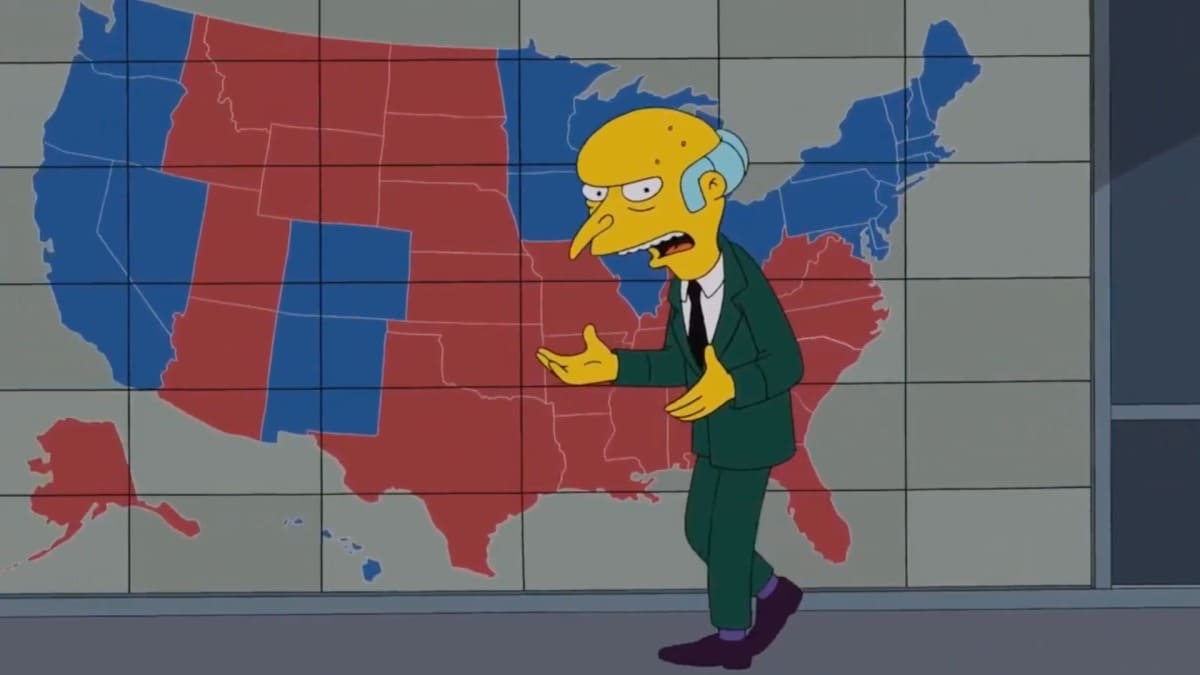
It’s an interesting distinction largely borne out by the best of both venerable animated series. The Simpsons’ holistic take on everyday American gullibility and short-sightedness has often foundered when trying to incorporate hot-button issues into its lengthy production lead-times. (And its attempts at jumping on cultural bandwagons has had more than a whiff of “How do you do, fellow kids?” about them.) Meanwhile, South Park‘s slash-and-burn mockery of current events and figures has drawn both satirical blood and praise, while its overarching political statements have too often shaded into “who cares?” nihilism. (And occasional, apologized-for wrongness.)
Still, Selman clearly admires the more immediate impact of his contemporaries, deferentially saying of the South Park creators, “Here’s the headline: I’m not as brave as Matt and Trey. I will stand by that quote. They are brave. They are brave American heroes, and I am a coward. Quote me on that.”
The Simpsons‘ 38th season premiered last night with a Get Him to the Greek-style caper where Homer has to escort a children’s author (voiced by Emma Thompson) to an event at Springfield Elementary. As to the possible cultural impact of the episode, Selman drew the barest of connections, stating, “She has her own journey and her own trauma, and she does drugs and alcohol and all the crazy things that Russell Brand does, but without all of the real-life Russell Brand crazy things.”


 Keep scrolling for more great stories.