
A brutal Slow Horses finale sends itself flying straight off a cliff
An interminable fight sequence—and a sudden, “shocking” cliffhanger—threaten to overwhelm Slow Horses’ character genius.
Jack Lowden in Slow Horses, Photo: Apple TV
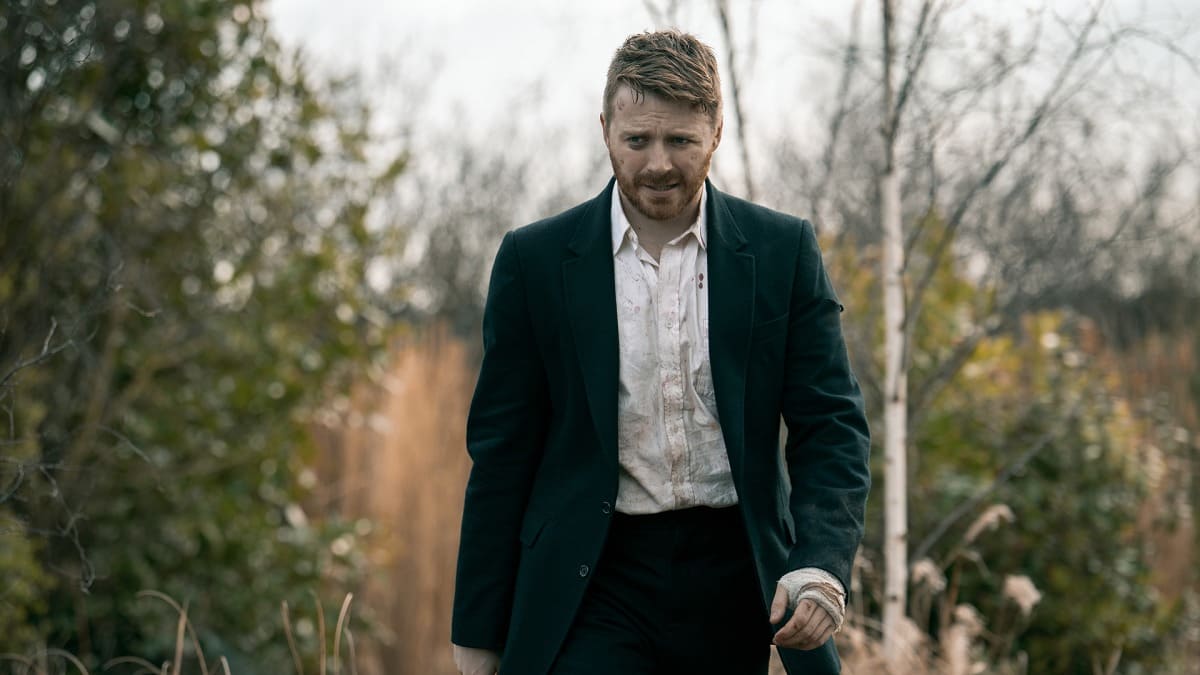
Well… That was frustrating, wasn’t it? And I’m not just talking about the immediate, mechanical sense of having a season of supposedly resolved TV slam full-stop into a surprise cliffhanger at the very last second. (Although, yes, I can already tell I’m going to be spending the next several days trying to figure out how the hell this apparent “Assassination by leaving a poisoned crowbar out on a kitchen counter” plot was actually supposed to play out.) But cliffhangers, like the one that ends the sixth season finale of Slow Horses, are frustrating, not just in a nuts-and-bolts sense, but a more conceptual one: They serve as an interruption of storytelling service, a logic bomb detonated in the midst of our understanding of what this narrative was even supposed to be about. The moral arc of the universe on this show may be anticlimactic and ugly, after all, but it’s rarely this karmically cruel. Which is to say that I’m used to River Cartwright finishing out a season having authored the mix of improbable successes and dumb-assed failures that keep him permanently trapped in stasis at Slough House—but less comfortable watching God Himself drop down from on high to deliver the poor bastard an unearned, if swift, kick to the nuts, simply for the temerity of being happy for roughly 20 seconds.
But maybe that’s part of the point. This is, after all, a season of TV that fundamentally orbited the idea of nobody knowing what the fuck was actually going on at almost any point. It’s Diana Taverner, with an assist from the Permanently Correct Jackson Lamb, who winds up spinning out the convoluted central irony of it all, to the pants-wetting terror of formerly slick media bro Damien Cantor: Taverner herself spending the cash that she got from the KGB, through three layers of nested intermediaries intended to compromise her, in order to send an assassin to Russia to kill an agent on their own home soil. (No wonder shadowy Russian spymaster Vasily was pissed off enough to not only authorize a hit squad on the miraculously resurrected Sid Baker—whose identity Taverner lent to the agent who actually did the kill—but also anybody she’d ever worked with, kicking off the killing of all those old Slow Horses way back in our premiere. And if the preceding hairball of plot ephemera exhausted you to parse, dear reader, just imagine how tiring it was to actually hork it up.)
Slow Horses is, after all, a show that enjoys indulging in some actual spy plot shenanigans from time to time, even as Lamb and his disciples tend to take an askance look at them in the main. You can feel the show delight itself a little, for instance, in how it’s sent the dominoes tumbling toward the season’s big action climax this week, where nearly every surviving character—remaining Russian killer Jane; Frank Harkness and his crew of hired agents; and various Slow Horses past, present, and secretarial—collide at Taverner’s safehouse/summer home for a bloody and deliberately confusing brawl.
It’s a pity, then, that this big three-way battle is also easily the dullest part of the finale, the point where “Judgement Day” most blatantly threatens to come apart. The sheer number of characters needing to be serviced doesn’t help, as writer Gaby Chiappe struggles to give every single “main” character (that is, River, Lamb, Ho, Catherine, Shirley, Flyte, Louisa, Moira, and Reese *deep breath*) a chance to contribute a beat to the fight. But it also highlights that this is a show where words, as a weapon, are a thousand times more interesting than bullets (or ineffectively hurled molotovs). The same chaos and confusion that thrills when it’s spinning out in tense verbal confrontations between supposed chessmasters collapses into mud when applied to interminable action scenes that mostly seem to amount to people running one way, and then another, aimlessly firing bullets at each other until the script says it’s time for the next body to fall. It’s paradoxical, maybe, to note that the (long) portions of this episode where our characters are in mortal peril are the parts that feel most like nothing is happening—but not inaccurate.
The grace notes are, as ever on this show, rooted in character, whether that means the beat of weary recognition Hugo Weaving projects as Frank guns down fellow badass Flyte (the only actual fatality on Team Slow Horse in the episode), or Shirley taking time out of the battle to give future trauma-hoarding tips to young Reese, before asking the teenager to impale one of Harkness’ mooks with a speargun. The best of these moments, unsurprisingly, is the final détente between River and Frank, who claims to have only been executing good tactical protocol when he saves his son, at the battle’s climax, from a ferociously vengeful Jane. (She had a gun, after all, while River was doing not-really-his-best with a beaten and battered table lamp.) Weaving is Sahara-dry as Frank shoots down River’s exasperatedly whiny wishes for a normal dad (“What’d you have in mind? Like a train driver? Or a postman?”) But he’s found enough sad, human room to operate inside this raging former-CIA psychopath that the begrudging respect, tinged with tiny traces of affection, that Frank offers up to his son are about as close to poignant catharsis as Slow Horses ever allows itself to get.
This scene, of an adult son hashing things out with his dad over a drink, also nicely completes a set of family drama moments the episode teed up earlier, as the ladies of Slough House (and Ho) absolutely rip each other a new one in the pre-battle chaos. This, more than the actual gunplay that follows, turns out to have been the big payoff to getting so many of these characters jammed around a single table together after multiple episodes of maneuvering; Shirley and Louisa tearing into each other over their life choices, Moira playing punctilious peacemaker, Catherine toying ominously with a puddle of spilled wine. It says something about how well the show can find the hell in its more human scenes that the sudden explosion of gunfire that punctuates this sequence qualifies as a release of tension, and not an escalation.
If it feels like we’re bouncing around the timeline a bit here, meanwhile, I can only shrug woefully, and point back at that cliffhanger; it’s got me casting back over the entire episode, looking for breadcrumbs of context (or maybe just better scenes, to wash the nasty taste of nerve agent-dosed crowbar out of my mouth). Gary Oldman, for instance, might get stuck with a couple of dud back-and-forths in this finale, bouncing off of enigmatic Russian agent Natasha Carrington in what are probably the show’s three-dozenth or so moments of Jackson Lamb violating social taboos in order to screw with his opponents. (Hell, he doesn’t even get to fart!) But he also gets to absolutely read Taverner the riot act, which is always a joy, and utterly play the hapless Cantor as a sap as he’s being whisked away to serve as the scapegoat for this whole ugly mess. Kristin Scott Thomas, meanwhile—after a season that has seen her spend more time in flop-sweat mode than not—is able to pilot Lady Di back into her most comfortable waters, i.e., lying her ass off while spreading a nice, thick layer of blame on everyone she can reach. This might just be personal preference bleeding through, but Thomas remains probably the single best reason to watch this show, on a moment-to-moment basis: Taverner’s cockroach-level survivability might be infuriatingly improbable from a plot point of view by now, but Thomas, like Weaving, is an expert at knowing how to let just enough human being peek out through the ice, making it all the more awful when she slams the mask back into place.
What have we learned, at the end of all this? Nearly nothing, of course, which is part of the point: It’s brewed into the curious alchemy of Slow Horses’ charm that this finale’s refusal to pay even lip service to resolving character arcs touched on earlier in the season feels more like a feature than a bug. Standish and Lamb hash out nothing regarding the reveal that he killed her former boss. (Ostensibly one of the show’s longest held, most-kept-in-reserve-for-a-rainy-day secrets!) Louisa and Shirley can only shrug at each other when an interrupting hail of bullets start flying in the midst of their big blow-up. Lamb refuses, as ever, to memorialize the murdered Coe with words, even as his quiet rage at his “Joes” being targeted serves the purpose better than hollow platitudes ever could. Slow Horses is a show with a bone-deep distrust of sympathy, or catharsis, or happy endings; people in this universe just keep going, usually trending slightly downward, and with a load of new scars in tow.
And maybe that’s why the show feels so comfortable setting up River Cartwright—the character most primed to believe he’s on an arc toward anything but being trapped as himself—as the punchline of a cosmic joke. And maybe it’s my own damn fault, as a viewer, for deluding myself into thinking this show might bend one inch, after six seasons of unrelenting misery, to give this poor bastard a single nice thing. I do fall into the trap of liking the guy, after all. I like how Jack Lowden runs; I like the terror that seeps into his eyes when River realizes he’s fucked up his latest Bone-wannabe one-liner; I like the way he awkwardly futzes in the kitchen, little-kid fussy, as he waits to surprise Sid with the possibility of two spies finding actual domestic happiness together. The mere fact of Sid being alive, pulled back out of the fridge after her season one “death,” had already felt like a slight relaxing of the show’s hardline stance on realism, a willingness to compromise just the tiniest bit on its principles in favor of cutting this guy, and us in the audience, a teensy modicum of slack. Maybe it’s on me for not realizing that sound wasn’t the tension lifting, or the lid on the box where hope is kept reluctantly creeping up; it was just an even crueler bear trap, waiting to be sprung.
 Keep scrolling for more great stories.