[Editor’s note: The following contains spoilers for Supergirl.]
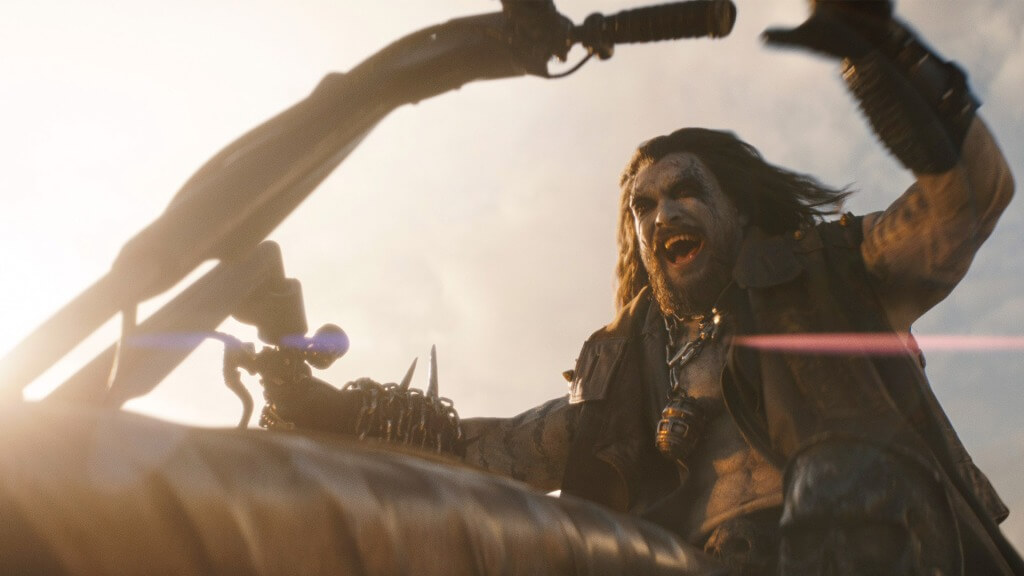
When women finally got the chance to start leading superhero movies in the cinematic universe era, there were a few basic lessons that even the most regressive side of Hollywood seemed to have internalized: Don’t have her fight the villain over a guy. Don’t oversexualize her costume and give her a storyline about evil face cream. And probably don’t have a big third-act fight where she’s captured and nearly killed until a big strong man swoops in to save her. Somehow, though, the new DCU’s much-touted first female superhero movie stumbles at that very low third bar. Instead, part of the climax of Supergirl sees Kara Zor-El (Milly Alock) depowered by Kryptonite arrows and on the brink of execution, until a hulking immortal bounty hunter named Lobo (Jason Momoa) swoops in like she’s an old-timey damsel in distress tied to some train tracks. Here, the new hierarchy of power in the DC Universe looks a lot like the oldest in superhero movie history.
Now, there are ways in which you could depict a man saving a woman in her own superhero movie that wouldn’t feel so backward. Like, say, if the act sprung from some moral lesson she had taught him or some inspiration she had given him—like when the New Yorkers help Peter Parker in Spider-Man 2 because he’s done so much for them. A hero doesn’t have to be an infallible badass to be a compelling character; in fact they probably shouldn’t be, but their heroism should infuse the arc of the movie and the supporting players around them. The Lobo moment has none of that. It’s just a cocky tough guy saving a helpless young woman so that the movie can celebrate how cool he is before he calls her “ditz” (though it sounds more like “tits”) and drives off on his big motorcycle.
It’s the most retrograde bit of gendered superhero storytelling since James Gunn decided it would be funny to call Gamora a whore in Guardians Of The Galaxy. It’s remarkable it made it through even one test screening, let alone the entire post-production process. It also raises the related question: Why is Lobo even in Supergirl at all? Momoa has been campaigning to play the role for years now, but who looked at a script about trauma, revenge, the human trafficking of young teenage girls, and the strength of female friendship and decided this was the perfect time to have him yukking it up in some KISS cosplay? They couldn’t have saved that for Clayface?
Even weirder, DC has gotten this note before. The original idea for the film’s comics source material was that Lobo and Kara would team up for a True Grit-inspired story in which he’s the grizzled bounty hunter and she’s the more naïve young woman looking for justice. But editor Brittany Holzherr advised writer Tom King it would be more interesting to make Kara the worldweary veteran instead. Thus, Lobo was cut from the comic and a new character named Ruthye Marye Knoll was created as Kara’s protégé in Supergirl: Woman Of Tomorrow.
It was a fantastic suggestion by Holzherr that, for some reason, the Supergirl movie partially goes back on. Ruthye (Eve Ridley) is still around as Kara’s sidekick, but Lobo is now shoehorned in as a random guy they keep running into on their quest to get revenge against the man who slaughtered Ruthye’s family and poisoned Kara’s dog. Because who doesn’t want to balance the story of a newly orphaned 13-year-old trying to murder a sex-slaver with jokes about how Lobo thinks Valley Girls are annoying?
In fact, Lobo’s role is so shoehorned into Ana Nogueira’s script, it would be easy to assume he was fully added in reshoots, although at least some version of the character was there from the beginning. Still, it’s strange that there’s not even an attempt to make his story intersect tonally or thematically with anything else going on. He just happens to be chasing the same bad guys so that he can pop up in almost every action scene—racing in on a motorcycle with a cigar in his mouth, whipping chains over his head, and tossing bombs and one-liners in a way director Craig Gillespie often seems to find more visually interesting than any of Kara’s Kryptonian abilities. At one point Supergirl just leaves its heroine writhing in a cave for several scenes so it can hand the True Grit dynamic fully over to Ruthye and Lobo instead.
Charitably, Lobo’s addition here is part of the same overeager impulse that led Gunn and his fellow DCU architects to overstuff Superman with Daily Planet staffers, Justice Gang members, and comic book creatures. More realistically, there’s a sense that Warner Bros. simply didn’t believe a female action lead could soar without an equally strong male hero at her side—even though, ironically, it’s Lobo who drags down Supergirl by unbalancing its tone. It’s not like the film is lacking for meaningful male representation elsewhere, either. Kara’s dad Zor-El (David Krumholtz) and her cousin Superman (David Corenswet, whose role was reportedly beefed up in reshoots) are heroic men who add to her story, rather than pulling focus from it. Shouldn’t that be enough?
For a while there, Hollywood studios at least felt the pressure to look progressive—to hire female directors for female-centered superhero stories and make films that didn’t always have to feature Strong Male Characters. If that could occasionally feel a little pandering (or at least overly market-tested), that’s perhaps the lesser of two evils compared to a world where those gestures aren’t happening at all. That’s maybe the most disconcerting thing about what Lobo represents. Here, the DCU can’t even let a woman star in her own superhero movie debut without a man (who has already helmed a whole separate superhero franchise of his own) eating up her screentime. Supergirl wants to make the point that women can be just as messy, angry, murderous, and complex as any male hero. At its best, it does that. At its worst, it suggests that two prickly female leads aren’t enough to carry a film—which hardly feels like a hopeful message for the women of tomorrow.


 Keep scrolling for more great stories.