A bit more funky and disreputable than some of the other film festivals we cover, SXSW may never again return to its slate of true unknown artists, but it certainly offers a lot of up-and-comers for the enterprising cinephile to dig through as they avoid the tech panels. Many of the films we’re looking forward to most at SXSW 2026 are genre films, films with mean little twists of the knife, or documentaries about subjects niche and eccentric. That doesn’t mean the headliners at this year’s fest aren’t worth scoping out, just that these smaller movies are worth taking a chance on.
The A.V. Club‘s most anticipated movies of SXSW 2026 play most often at midnight, are best after a beer or two, and stand out as hidden gems in a festival with nearly 120 features screening during its run. We’ve eschewed films that we’ve already seen at Sundance (movies like the excellent American Doctor, the moving Paralyzed By Hope: The Maria Bamford Story, and the quaint Big Girls Don’t Cry) as well as films that played at fests last year (like Pete Ohs’ Erupcja). After getting a sneak peek at a decent chunk of the lineup, these are the films we can vouch for standing in line to see—or at least adding to your watchlist for when they eventually leave Austin.
Never After Dark
A slyly sinister exorcism film from expat writer-director Dave Boyle, the Japanese horror Never After Dark excels at easing audiences into its isolated, cozy country home and then unleashing the horror inside—a bit like sinking into a warm bath only to awaken with your wrists slit. The house’s mother-and-son residents employ a medium (Shōgun‘s Moeka Hoshi) to help them get rid of a pesky spirit, and she turns up with a ghost already in tow. Haunted by her late sister, the exorcist is at peace with the spirit world; her composure when dealing with the supernatural—even when confronting the film’s terrifyingly realized ghoul—helps set Never After Dark apart from its genre peers. When the pivot comes, and of course it comes, a bevy of inspired formal techniques upset the calm. There’s something dreamlike about Boyle’s approach, even if there’s little surreal to speak of. Rather, there’s a pervasive sense of distance and separation embodied by the confident mystic. Whether she’s employing the ritual needed to access the other side or drunkenly singing through the halls, her comfortable relationship with the dead gives the Never After Dark an edge when establishing our false sense of security. Mixing the seductive nightmare of The Shining with the monstrous humanity found in more grounded horror, Never After Dark is a midnight movie you’ll wake up still thinking about.
The Last Critic
Beyond its facetious title (one perhaps inspired by its subject’s self-appointed moniker as the “Dean Of American Rock Critics”), The Last Critic provides an engrossing and moving inside-baseball look at the still-kicking octogenarian music writer Robert Christgau. The innovative blurb maestro of The Village Voice penned acidic poetry for decades, distilling albums to a few lines of potent prose that had an outsized influence on the next generation of criticism. Much of director Matty Wishnow’s documentary is composed of talking heads reading out some of their favorite lines from Christgau’s prolific catalog of capsules, and the joy in hearing his words read by those they impacted flows as freely as his opinions. But the best moments of the film are the humanizing sequences that see Christgau sit down at his writing station amid his mountainous piles of media, or walk hand-in-hand with his wife, writer Carola Dibbell (there’s nothing sweeter than watching two elderly critics fact-check and edit a Lil Wayne review). While The Last Critic has better footage than structure, its appreciation of a dedicated and principled writer, a man still discovering and publishing and loving what he’s doing, is inspiring—perhaps doubly so if you, like me, have a vested interest in the present and future of media criticism.
Ceremony
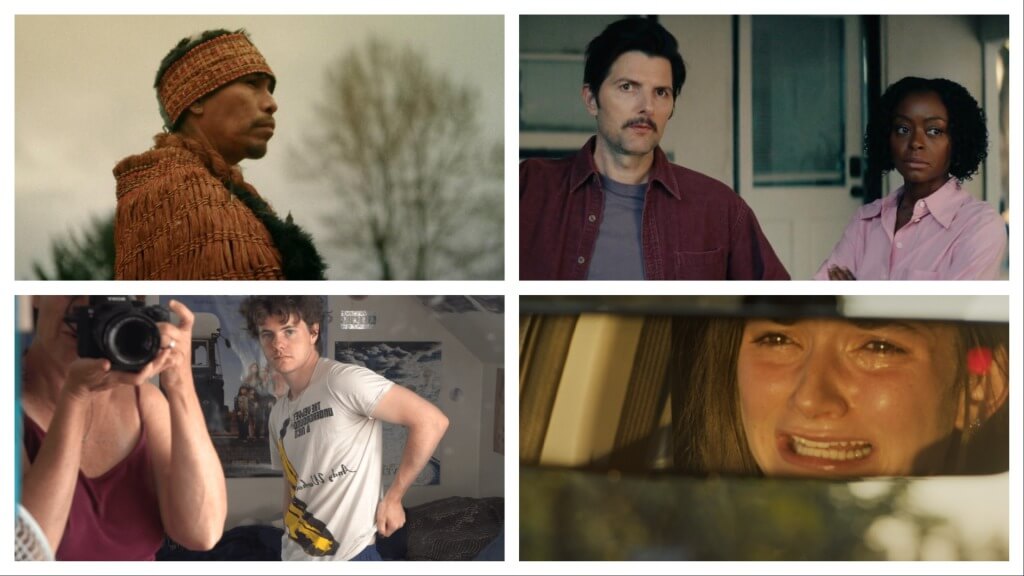
The Les Blank-like documentary Ceremony dives into the Nuxalk community, observing their relationship to the fatty, dwindling candlefish—or ooligan—with an immersive and quiet intensity that begins to blur the line between place and people. Much like the American bison exterminations that helped break the Indigenous peoples of the Great Plains, the drying up of the ooligan is as historically symbolic as it is a practical concern for the Nation in Bella Coola, British Columbia. Thanks to director Banchi Hanuse and some lovely watercolor-like animation from Anuximana Jade Hanuse and Jay White, Ceremony transports the viewer away from something purely anthropological or ecological and into a more integrated reality, where nature and history and people form a comprehensive tapestry. Without talking heads or voiceover, aside from scrappy Nuxalk Radio interviews, the non-narrative film strays from convention to find something broad yet personal in its portrait. More expansive than something like Sundance’s Nuisance Bear, Ceremony still uses a single focal point, a river’s staple, in order to spin out a larger look at Native perseverance.
Ugly Cry
It’s always satisfying when an intimately personal vision hits exactly as its creator intended. Enter Ugly Cry, the sarcastic and despairing acting showcase from writer-director Emily Robinson. After two decades in the industry, the 27-year-old makes her debut with a sharp jab at the Sisyphean cycle of auditions, the contradictory expectations around actresses, and the gladiatorial atmosphere perpetuated by Hollywood. Delaney (Robinson) and her fragile ego are penned in by a successful actor boyfriend on his way to shoot with a threatening starlet, a best friend going after all the same roles as she is, and a mother whose concern always comes backhandedly. Of course, when she nails an audition—with the caveat that a producer is concerned that she’s not pretty enough when she’s crying—it’s enough to send her into a tailspin. Centered around a single monologue and the neverending pursuit of surface-level perfection, Ugly Cry matches The Substance‘s gore with “preventative” shots of Botox. The range demonstrated by the entire cast is impressive, as is Robinson’s command of their performances (since so much of the film is about acting, it means capturing the process of getting a script read from stiff to confident). The ensuing crash-out is a little shallow compared to some of the gnarlier genre takes on the topic, but the mileage the insider dramedy gets from its smirky premise is more than enough to power the small, endearing film.
Beyond The Duplex Planet
Filmmaker and musician Beth Harrington dives headfirst into a countercultural artifact that refused to die even when its sources did. Beyond The Duplex Planet admires Duplex Planet zine creator and radio pro David Greenberger, whose decades-long work with nursing home residents took over his artistic life. The documentary captures the creative ebbs and flows of Greenberger, a Frank Zappa-looking oddball whose work obsesses over remembering—whether that manifests as stacks of answering machine tapes, or booklets filled with pages burned by his friends’ cigarettes, or the endless anecdotes collected from his elderly collaborators. Getting an insider glimpse at this project, which boasts fans like Michael Stipe and Penn Jillette, has its own pleasures, but Beyond The Duplex Planet shines when looking at Greenberger himself, an artist who has persisted long enough in his chosen niche to grow up into the kind of old man he was once so inspired by. This latter element is bittersweet, but of the same flavor as the work that took up so much of Greenberger’s life, open-hearted and flexible in its approach to people on the fringes.
Adam’s Apple
Like all decades-spanning home movies, there’s a crudeness in form and repetition in substance that defines director Amy Jenkins’ Adam’s Apple. Unlike most home movies, it finds something on the bleeding edge of cultural conversation in its intimate familial documentation. Watching as subject/cinematographer Adam Sieswerda comes of age, spending two decades finding himself and having the process filmed in a life-encapsulating series of video snippets, is an engrossing journey—one that forms an essential trans text for young people and parents alike. It’s endlessly valuable for an eloquent trans kid to get a platform to express himself as a kid, as a teen, and as a young adult. It’s equally valuable to get a first-hand look at his experience living with parents who mostly get it. Adam’s mom is his rock, his dad the more reluctant of the pair, but both are accepting in general and open to listening about the details when they get them wrong. The complex conversations the family has, in addition to the grounded discussions of endocrinologist visits and legal name changes, integrates the emotional with the practical while never dismissing any part of Adam’s identity. It’s endearing and well-constructed, but it’s also a big middle finger to bigots—which is always a bonus.
A Safe Distance
There’s no way that A Safe Distance could’ve predicted that “alpine divorces” were going to be a topic of conversation around its premiere, but the timing couldn’t be better. The feature debut of director-editor Gloria Mercer (who’s been in the editing department on projects from Netflix, Hallmark, and Lifetime) is a snappy, dark, and horny little thriller about getting stuck in the wilderness with folks you can’t trust. After Alex (Bethany Brown) is abandoned on a camping trip by her nice-guy boyfriend (Chris McNally), she runs into a vanlife couple (Tandia Mercedes and Cody Kearsley) who basically give her the “we saw you across the woods and like your vibe” spiel. Of course, they’re even less trustworthy than your standard bar-dwelling swingers, and Alex gets in over her head almost instantly. The crooked, sexy mind games that follow involve nicely visualized shroom trips, insufferable socialists, and a script whose cornier beats are balanced by the film’s execution. Brown and Mercedes in particular have a great spark on screen, while the pervasive fear of being Alone With Men gets a more salacious (yet still enjoyable) spin here compared to a grounded indie like Good One. A great setting and a mean little twist only make it a more memorable debut.
The Sun Never Sets
A familiar kind of relationship dramedy from writer-director Joe Swanberg, The Sun Never Sets is a warm dirtbaggish embrace from a mumblecore staple. Anchorage construction worker Wendy (Dakota Fanning) is dating Jack (Jake Johnson), who’s older, more well-off, divorced, and raising a pair of kids. Jack, in one of those boneheaded film-premise moves, suggests that before they take their relationship in an even more serious direction, Wendy should date around a little more to make sure she’s not going to regret settling into Jack’s comfortable life. Of course, this collides head-on with her hunky manchild ex-boyfriend Chuck’s (Cory Michael Smith) return to Alaska. They inevitably reconnect, but this rote setup establishes a foundation for these three to provide winning and mature emotional shades to their individual sides of the triangle. Johnson is particularly delightful in unpacking his character’s imperfections, but the whole cast is enjoyably nuanced in how they deal with their messy lives.
The Saviors
A contained and political little Twilight Zone riff, The Saviors (from writer-director Kevin Hamedani and co-writer Travis Betz) plays on America’s worst prejudices to unspool its comic genre mystery. Socially satirical DNA courses through Sean (Adam Scott) and Kim (Danielle Deadwyler) Harrison, a struggling couple who welcome a pair of guests (Theo Rossi and Nazanin Boniadi) into their coach house Airbnb with an unhealthy amount of side-eye. Their guests wouldn’t get this level of scrutiny if they were white, or if they spoke English at all times, or didn’t have names like Amir and Jahan. But people see what they want to see, and justify what they want to believe. Of course, Sean’s parents (Ron Perlman and Colleen Camp, in a single enjoyably searing scene) are worse, but the trickle-down xenophobia that leads to Sean and Kim’s conspiratorial view of their tenants is still pervasive enough in the U.S. to hit neoliberal suburbanites where it hurts. The real-world timing is terrible—especially for a film that eventually worries that someone’s going to try to take out the president—but that’s because the problems at its core are only getting worse. Surrounding its more trenchant ideas is a goofy comedy of well-performed rubes, with a specifically nutty turn from Greg Kinnear standing out among the delusional ensemble.
Cornbread Mafia
If you want an R-rated History Channel special on the good ol’ boy weed farmers who helped inspire the second season of Justified, there’s probably no better option than Cornbread Mafia. Aside from the colorful anecdotes flung around by the grizzly bunch of stoner elders—pet bears and lions get as much play as the rampant drug use—the film serves as an irony-laden look at what happens when big-time career criminals find their chosen profession decriminalized. Though the film does eventually ramble into tragedy, with murder and arson putting a damper on the otherwise rowdy affair, its narration-heavy trip through the decades is more endearing than anything else. Like so many other transgressions, the escapades of country drug lords only get more palatable with age. While the self-appointed Mafia’s present circumstances, partaking in the lucrative industry they once illegally defined, are offered up to the viewer with a shade of capitalistic smugness, there’s plenty of insight to be found in hearing about this Kentucky corner of the War On Drugs.


 Keep scrolling for more great stories.