As is the case even when Sundance isn’t giving one last hurrah before its big move to another state, the final weekend of the festival was a 48-hour binge session, enabled by the online access the fest offers to a selection of the program and its prizewinners. The buzz generated over the last few weeks thankfully led to less piracy drama than last year’s virtual offerings, which made gorging one’s eyes on the Sundance App all the easier. And, for every talked-about acquisition at the fest, there was at least one hidden gem glossed over and in need of championing. So, after one last push to excavate all the goodies from the corners of the slate, it’s time to run through the best films of Sundance 2026.
This year’s awards were split among the terrible (cloying drama Bedford Park), the modest and inoffensive (polar bear documentary Nuisance Bear), and the genuinely excellent (Josephine; Shame And Money). But towards the latter end of that spectrum were plenty of films that flew under the radar, either because they didn’t feature American stars or flashy premises. Below, you’ll find my favorites of the 51 features I saw at Sundance 2026, ranging from an exciting archival Harlem Renaissance party, to a harrowingly well-acted look at childhood trauma, to the best episode of How To With John Wilson that never was.
Once Upon A Time In Harlem
Even if you’re not typically in the bag for nonfiction films or history lessons, this posthumous release from documentarian William Greaves is major. Filmed in 1972, about 50 years after the Harlem Renaissance lit New York’s Black art scene aflame, Greaves’ party of reassembled luminaries is like the documentary equivalent of folks reminding you that, despite the black-and-white photographs, Martin Luther King Jr. was assassinated the same year that 2001: A Space Odyssey hit theaters. The point being, great historical strides—especially for Black Americans—happened more recently than you think. Watching the Broadway legends, acting titans, literary giants, and other major players of the Harlem Renaissance debate, get drunk, and chit-chat in bright, humanizing color not only shoots you back to the ’70s, but back to the ’20s and ’30s when the gathered artists were changing everything. Both endearingly shaggy and pointedly specific around certain impactful works, Once Upon A Time In Harlem preserves an inspiring gathering not in amber, but in living, breathing memory.
Josephine
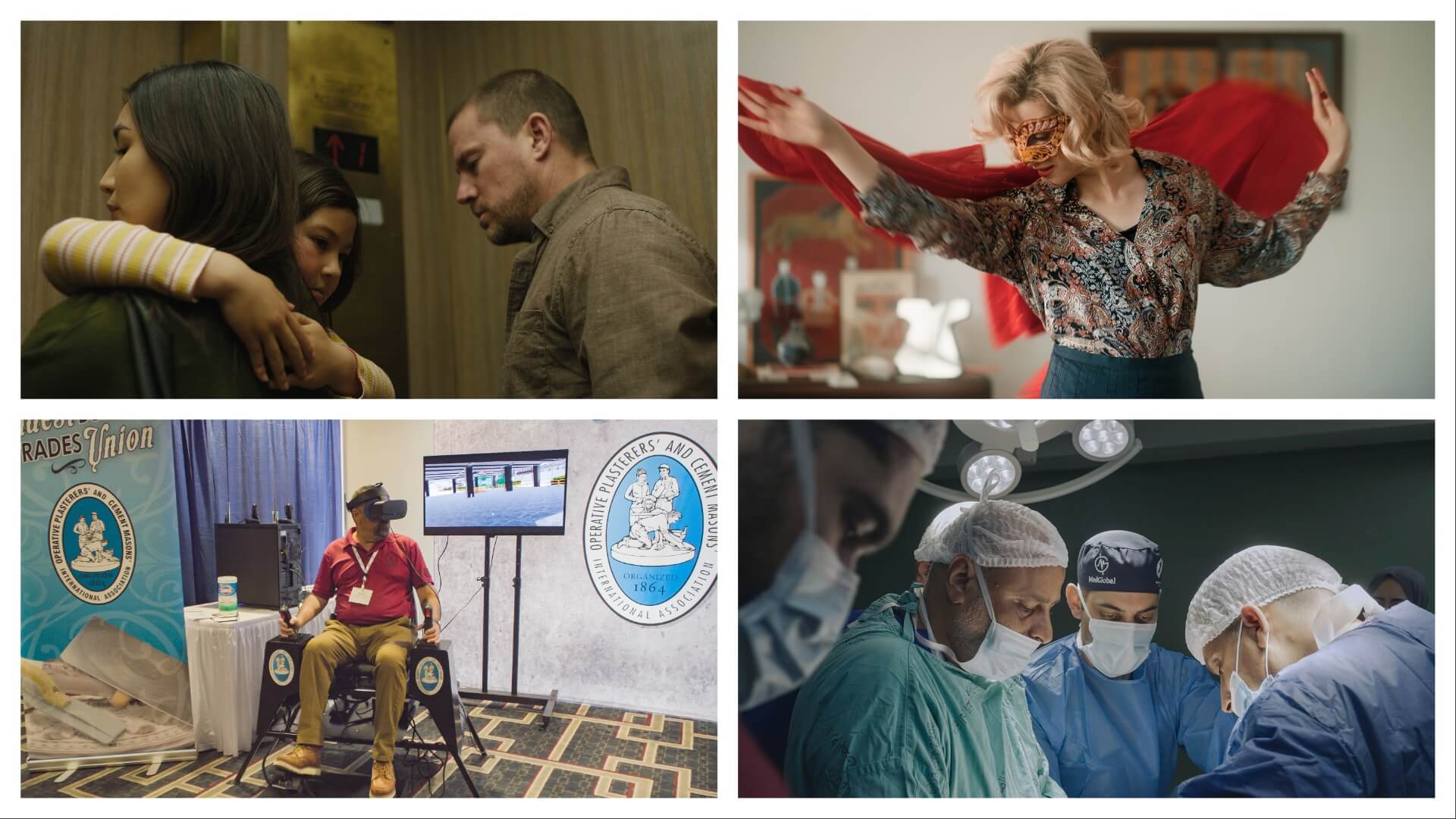
There’s nothing pleasant about watching Josephine, where an eight-year-old (the fantastic Mason Reeves) interrupts a rape while jogging in the park and must live with the emotional and legal fallout from witnessing the violent crime. Yet, filmmaker Beth de Araújo (Soft & Quiet) makes this devastation into gripping drama—though it works better as a child’s-eye look at trauma and the court system than as a domestic portrait. Since it’s all translated through Josephine’s perspective, from the height of Greta Zozula’s camera to the nightmarish manifestations of fear that pop up during her daily life, the engrossing tale easily recontextualizes larger social questions into the fabric of childhood. Her parents (Channing Tatum, Gemma Chan) offer their own opposing answers to these questions, to no avail—this is something Josephine has to process in her own time, in her own way. Coming to a tear-jerking head in a virtuosic courtroom sequence, the (re)confrontation of child and crime is harrowing, critical, and undeniably powerful.
The History Of Concrete
John Wilson goes long in his feature debut, spinning his How To format into a long-form journey that includes the same bizarre New Yorkers, the same follow-your-nose journalism, and the same curiosity about the mundane as the best of that HBO wonder. Is it damning with faint praise to say that The History Of Concrete is just one more (very good) episode of that cult favorite? Maybe, but it’s also a reassuring balm for Wilson-heads in search of one more eccentric, bone-dry hit of expertly curated B-roll. While there’s a bit of a misdirection in the pitch for this one—a Hallmark training seminar for Writers Guild members leads, in a representatively roundabout way, to guilt around being a landlord, which then leads to a fascination with concrete—this feature does offer a few punchline-like emotional throughlines to supplement the actual punchlines of the comedy-documentary hybrid. And the film is hilarious, with one of the most unexpected cameos of the festival and one of the funniest Wilson-esque professionals he’s interviewed yet (a guy whose business involves blasting gum from the sidewalks of NYC). Show a willingness to go with the flow of Wilson’s free-associative investigations, and The History Of Concrete offers the rewarding poignance and wryness that’s made him a favorite among the TV in-crowd.
Everybody To Kenmure Street
It’s deeply satisfying to watch Everybody To Kenmure Street, a documentary about a neighborhood in Glasgow gathering together in the streets to protest the aggressive actions of immigration officers—and winning. Sure, Scotland isn’t as weaponized as America and its immigration cops aren’t nearly as bloodthirsty as ICE, but the crowdsourced footage of the grassroots protest still offers some feel-good optimism around a group of local strangers banding together. Told through interviews with dozens of neighbors and reenactments when those neighbors couldn’t participate (including an outstanding appearance from Emma Thompson, standing in for the punk-rock Good Samaritan who dove under the immigration van in order to prevent it from driving off), Everybody To Kenmure Street is also filled with local political context, reminding its audience that this kind of awareness and action didn’t come out of nowhere. To come together as a community, Kenmure Street needed to feel like a community, which means knowing and acknowledging its past. This documentary understands that need, balancing its own context with the inspirational idea that most people just want to help those around them.
The Friend’s House Is Here
As Jafar Panahi’s It Was Just An Accident co-writer has been arrested in Iran, The Friend’s House Is Here is an especially timely, deeply winning look at trying to create art under the regime. Tracking a flighty, goofy, cheesy theater troupe in Tehran, led by BFF roommates Pari (Mahshad Bahram) and Hanna (Hana Mana), the film—shot in secret, and whose title responds to Where Is The Friend’s House?, a film by Panahi’s mentor, Abbas Kiarostami—is a charming snapshot of a community with the tonal control to turn on a dime. In their delightful ensemble—and their two masterful lead actresses—filmmakers Hossein Keshavarz and Maryam Ataei find bravery in ditziness, integrity in play, and possibility around every corner. Their colorful frames are filled with life, only ever robbed when the jackboot of reality lowers its heel. It’s a film full of deep friendship, nearly annoying theater kid energy, and enough oppression to make you appreciate what it takes to maintain the former two in that climate.
American Doctor
No matter your faith or ethnic background, serving in a Palestinian hospital is enough to radicalize anyone. For the three subjects of American Doctor—an older Jewish orthopedic surgeon, a younger tired-eyed Parsi cynic, and a Palestinian from Chicago—keeping their patients alive is the easy part. What’s harder is making anyone outside their hospital believe what they’re going through at the hands of the Israeli government. Poh Si Teng’s heartbreaking film shows the moral clarity not only drawing these volunteers back to Gaza time and time again, but inspiring them to write editorials, answer questions as cable news talking heads, and give speeches at conferences. Yet, clarity be damned, their efforts crash head-on with a political brick wall. As well-spoken, furious, and pointed as their testimony is, it will always be easier for the public not to listen. Their work is never over, because no matter what they do or say, nobody seems to believe what they’ve experienced first-hand. Filled with shocking, unobscured footage of murdered children and re-wounded victims in the aftermath of targeted hospital bombings, American Doctor makes the case of these medical professionals impossible to ignore.
Shame And Money
An unassuming drama of escalating consequences, Shame And Money lays bare the instability at the heart of an economy and immigrant community. German-Kosovan filmmaker Visar Morina’s film watches as a single selfish action drives a multigenerational family towards ruin. One domino knocks the family into disarray, leaving them to scatter into the unknown. Filled with granular realist details (Ken Loach would find plenty to enjoy here), the story of a farming couple (Astrit Kabashi and Flonja Kodheli), their children, and the children’s grandmother becomes a story of exploitation and the irreversible slip down the social ladder. Soon the couple are working for the very relatives that first extended a helping hand, pushed into an underclass by that same hand. But none of this is broad, preachy, or melodramatic—the script is intelligent and withholding, while the long shot lengths keep you involved. A thrilling score only makes the dire struggle of the leads more gripping as the fight for dignity (and cash), one that we all must partake in, continues to rage.
Barbara Forever
Probably including the most nudity in any Sundance film this year, simply by virtue of its body-focused subject, Barbara Forever is both a thorough rundown of pioneering lesbian experimental filmmaker Barbara Hammer’s life, but also a primer for her intimate style. Brydie O’Connor’s biographical documentary knows Hammer so well that it’s able to tell her story in the visual language (and literal language) of the artist herself. From her first avant garde films that feel like abstract coming-out texts to the final works documenting her own deteriorating body under attack by cancer, Hammer’s cinema provides a perfect lens through which to understand her life. Always armed with a camera, a knack for confrontation, and a desire to do more for her lesbian community, Hammer created prolifically, which gave O’Connor ample material to assemble into this revealing film. Featuring moving interviews with Hammer’s widow and plenty of voiceover from the woman herself, Barbara Forever observes an artist intimately and deeply—just as Hammer looked at herself in her own films.
Paralyzed By Hope: The Maria Bamford Story
Co-directed by Judd Apatow, and run through with his long-winded affection for the comedians he surrounds himself with, Paralyzed By Hope: The Maria Bamford Story is one of the better documentaries about stand-up because of the harmony between comic, act, and access. Bamford isn’t just funny, her show has always been about her own life—whether that means working through issues with her parents and her sister on stage, or digging into her own mental health struggles. That vulnerability extends beyond the performance. In conversation, Bamford is reflective and wry, forthcoming about how her personal hardships have informed some of her career decisions and inadvertently impacted others. Those wondering where all those funny Target commercials featuring Bamford went will find a thorough answer here. Along the way, comedians from all over sing her praises, not to blow smoke but to show genuine admiration for how she incorporates issues relatively common to the profession into an inventive, honest, oddball act. That her family is equally supportive and open in interviews of their own is just icing, adding another layer of understanding to an artist who’s been baring her soul on stage since she was doing a crappy little variety show in college.
Levitating
A left-field story of boy-meets-girl where the boy is an up-and-coming spirit-channeler and the girl is his trance-induced muse, embodying the animal spirit called by the drone of a flute, Levitating is both as absurdly specific and welcomingly broad as the dual sides of this description might indicate. Colors and choreography explode from Indonesian filmmaker Wregas Bhanuteja’s screen, as dancers act out the movements of leeches, bedbugs, fire ants, and many more. While blurring dreamy trance sequences into the mundane reality of its central duo’s life, the film also adds another teen-movie caveat: A local holy place is under threat by land developers and there’s a contest among spirit-channelers to help raise money for its protection. The ensuing dramedy is romantic, familiar, and completely strange—a delightful blend of easy-access trope and culturally-derived detail. Add in a slapstick-infused, Stephen Chow-like sense of humor, and Levitating is a low-key charmer waiting for its cult.


 Keep scrolling for more great stories.