The following contains spoilers for The Bride!
At the red carpet premiere of her new movie The Bride!, writer-director Maggie Gyllenhaal shared what initially inspired her to reimagine one of the most iconic characters in the Universal Monster movie canon: “I watched [1935’s Bride Of Frankenstein] and realized The Bride is in it for two minutes and she doesn’t speak one word… It made me curious about what she might be thinking.” It’s an admirable aim for a feminist retelling of a character who’s long been little more than shock-haired iconography. But while The Bride! certainly gives its heroine more screentime than the 1935 film (and more focus than the 1985 version starring Sting and Jennifer Beals), it’s hard to say that we actually come away knowing much more about what the titular Bride is thinking.
Like a lot of would-be feminist films, The Bride! is anchored by themes of agency and identity. Once she’s pulled from her grave and awoken by a mad scientist at the behest of a “monster” named Frank (Christian Bale), the woman formerly known as Ida (Jessie Buckley) immediately wants to know who she is. At first, she goes along with the idea that she’s Frank’s fiancée Penny and she lost her memory in an accident, even if, deep down, she never seems to fully buy that story. So she soon sets out to “find her name” and her purpose while committing a lot of wild, uncouth, occasionally criminal acts.
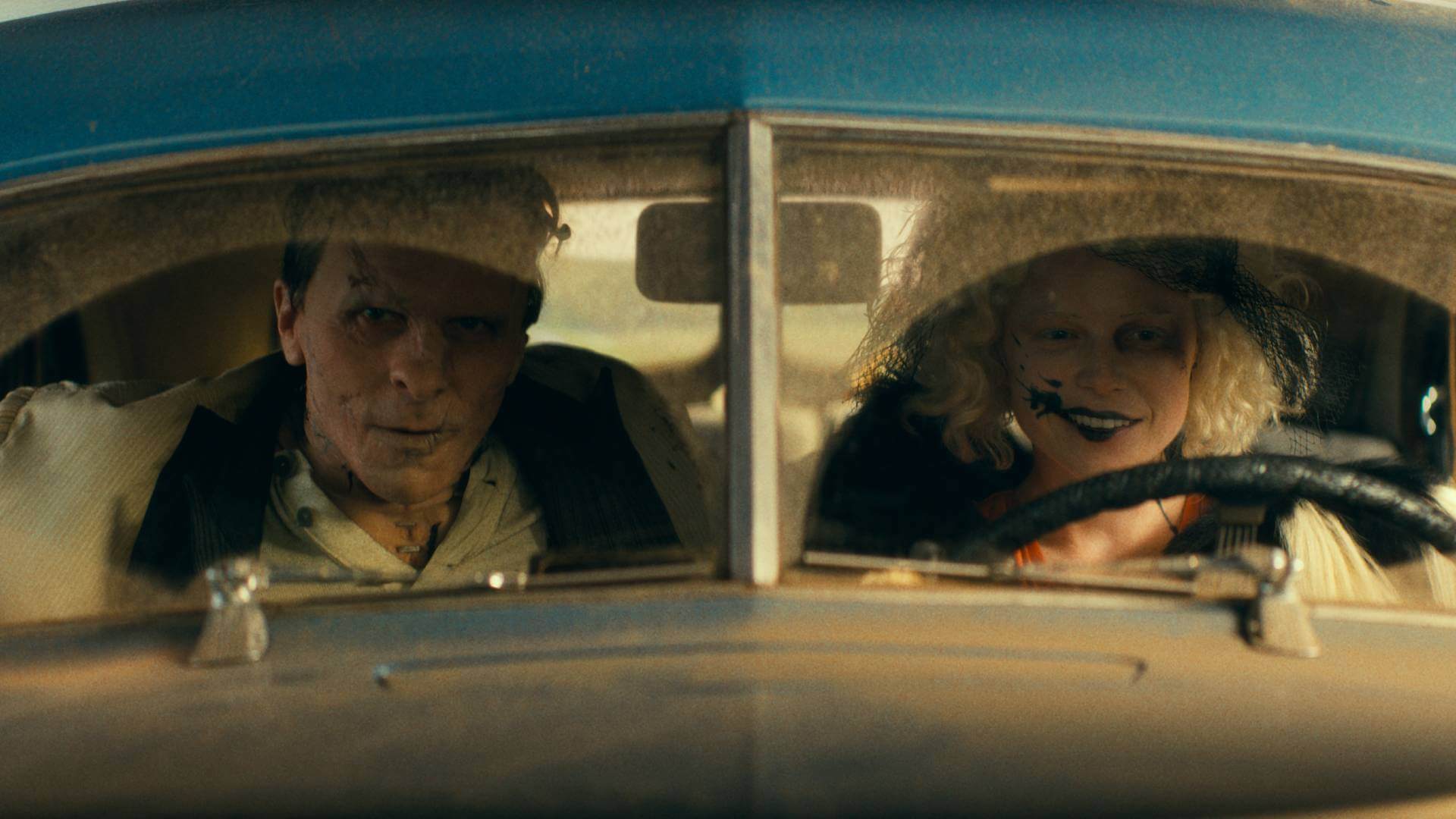
The rest of The Bride! is filled with scenes designed to upend our ideas about polite 1930s womanhood. Our heroine dances with abandon at a sexy queer nightclub; she fights off would-be rapists in an alleyway; she accidentally pushes a cop off a train car; she attacks a man for trying to sexually assault his date; she holds a movie star hostage; she shoots a different cop; she eagerly consummates her relationship with Frank; she drives the duo’s getaway car; she inspires a “killer bride” feminist movement; she bites yet another cop’s tongue out; she shoots a detective; she turns down Frank’s marriage proposal but refuses to let him stay dead after he’s shot in the head.
Plotwise, at least, she’s a very active character, and she also gets plenty of dialogue about agency. Her defining refrain is the Herman Melville quote “I would prefer not to,” which she deploys to point out how often women are coerced into doing things they don’t want to do. She ultimately reclaims her own identity by dubbing herself “The Bride,” rather than Ida or Penny or the Bride Of Frankenstein. If there were a checklist of things female characters are supposed to do in order to be “empowered,” The Bride! ticks them all.
Yet at the same time, The Bride! makes the mistake that a lot of mainstream feminist sagas make by prioritizing agency over interiority. Though The Bride’s story takes a lot of ass-kicking turns, emotionally, she largely remains a cipher—a woman defined by who she’s not and what she doesn’t want, rather than who she is and what she does. She’s like a photo negative of a character, rather than a full portrait, and while you could argue some of that is intentional meta-commentary from Gyllenhaal, the result is too blurry to satisfy.
That largely stems from the fact that the script adds one to many cooks to The Bride’s metaphorical kitchen. One of the boldest choices Gyllenhaal makes is to include the ghost of Mary Shelley (also Buckley) as an active player in this tale—a voice who worms her way into Ida’s head and then stays there as she gets her second chance at life; essentially writing a Frankenstein sequel in real time. It’s a fascinating swing for a movie that’s interested in how the novel has been reimagined throughout the past 200 years of pop culture. (The original Bride Of Frankenstein also dual casts Shelley and The Bride, while Young Frankenstein and the “Monster Mash” both get prominent references from Gyllenhaal.) And though it’s a little odd to have Shelley insult her totemic work by claiming it’s not actually what she wanted to write, the idea of refashioning Shelley as The Bride’s true “creator” is intriguing enough to give it a pass.
Except there’s another creator in the mix too, in mad scientist Dr. Cornelia Euphronious (Annette Bening), who raises some initial concerns when Frank arrives asking for a mate but changes her mind curiously quickly. Frank, of course, is also a big part of shaping The Bride’s identity, as she sets off on an explosive Bonnie And Clyde-inspired road trip with him. There’s also a lot of backstory for the dearly departed Ida, who was mixed up with an abusive mob boss named Mr. Lupino (Zlatko Burić) and his various lackeys. Plus, a third act twist reveals that Ida was also mistreated by a crooked detective named Jake Wiles (Peter Sarsgaard), who falsely promised he’d take Lupino down if Ida slept with him.
Where the original Frankenstein novel clearly juxtaposed a creator and his creation, there are so many different forces that shape The Bride that it’s hard to keep track of who she is outside of them. If this were solely a tale of Shelley and her new monster, it might be interesting to see scenes where the two battle over the same body. But, as is, the random moments where Shelley takes control just make it harder to get a sense of who The Bride actually is. The fact that she has very little memory of the violence she inflicts while she’s being puppeteered makes the question of agency even more muddled. Ditto the underexplored juxtaposition between who Ida used to be and who The Bride is now.
There’s also the odd diffusion of responsibility between Frank and Dr. Euphronious. Given that Frankenstein’s original monster was obsessed with the man who created him, why is The Bride’s story so focused on the man she was created for rather than the woman who created her? The Bride/Euphronious dynamic is underexplored from both ends, even as its existence pulls focus from the Frank/Bride dynamic the film halfheartedly wants to place at its center. So much of their twisted love story unfolds in montage that it’s hard to feel the full weight of their semi-earnest, semi-toxic relationship.
Even stranger, the most nuanced patriarchal dynamic in the movie—the exploitative relationship between Detective Wiles and Ida—is addressed via a single monologue from him and never at all from Ida’s perspective. Though there’s a lot to unpack in how abusive sexual power dynamics can come from men who otherwise present themselves as sensitive allies, the movie doesn’t really do much with that thread. Instead, it sticks with the more familiar imagery of cartoonishly evil men trying to sexually assault The Bride in public.
By the final act, it’s completely understandable that The Bride is so confused and angry about her life. (She pointedly shouts “Me too!” while describing what she’s been through.) It’s just that “confused and angry” are emotions, not character traits. Part of the reason the film feels off-kilter is because Buckley gives a committed performance of unmoored material, which makes it hard to find anything to hold onto at the film’s center. We’re told The Bride is special because of her “disobedient geometry,” but we don’t know what that means in relation to the actual personhood she’s been granted. If she’s solely meant to function as a metaphor for female rage, why does the film spend so much time on her quest for an identity? If she’s meant as meta-commentary about how fictional women are defined by men, why include two separate female creators in her backstory?
In a way, it’s an opposite problem from our last female Frankenstein story, Yorgos Lanthimos’ Poor Things. That film does a better job slowly building up the interiority and desires of Emma Stone’s Bella Baxter once she’s brought to life by her mad scientist father. Yet it gets so stuck exploring sexual autonomy as the cornerstone of empowered womanhood that its 142-minute exploration of female agency becomes repetitive rather than expansive. Where The Bride! tackles too many themes with too little sex, Poor Things tackles too few with too much.
The other films that have been roundly cited as comparison points for The Bride! are Todd Phillips’ Joker and Joker: Folie à Deux, which exist in the same pastiche-heavy, “sound and fury signifying nothing” canon. Yet perhaps the most interesting connection is Cathy Yan’s Birds Of Prey, which doesn’t retell Frankenstein but does follow a woman emancipating herself from the more famous man who defined her life. That’s a stylish, chaotic film that nevertheless always knows what its leading lady is thinking, feeling, and desiring. Questions of agency and identity are part of Harley Quinn’s story, but it’s her interiority—her personality—that’s truly front and center.
The Bride! never quite gets there. Though we spend a lot of time with our heroine, we never really get to know her; not as Ida, not as Penny, and not as The Bride. Still, Gyllenhaal’s project isn’t entirely without impact. When The Bride inspires a wave of copycat vigilantes, their aims are no clearer than hers; yet thanks to the film’s incredible makeup and hair design, they look striking as hell while they commit their feminist crimes. The Bride’s ink-blotch smirk and bright white bob create the sort of instantly iconic look that will linger long after the specifics of the movie have left the cultural consciousness. While The Bride may be more of a symbol than a person, at least Gyllenhaal—like her 1935 predecessor—understands the power of iconography.


 Keep scrolling for more great stories.