
A hilarious win-win for Reggie Dinkins viewers suggests some painful losses later in the season
Arthur and Rusty both try to break from the show’s comfy luxury trap.
Photo: Scott Gries/NBC
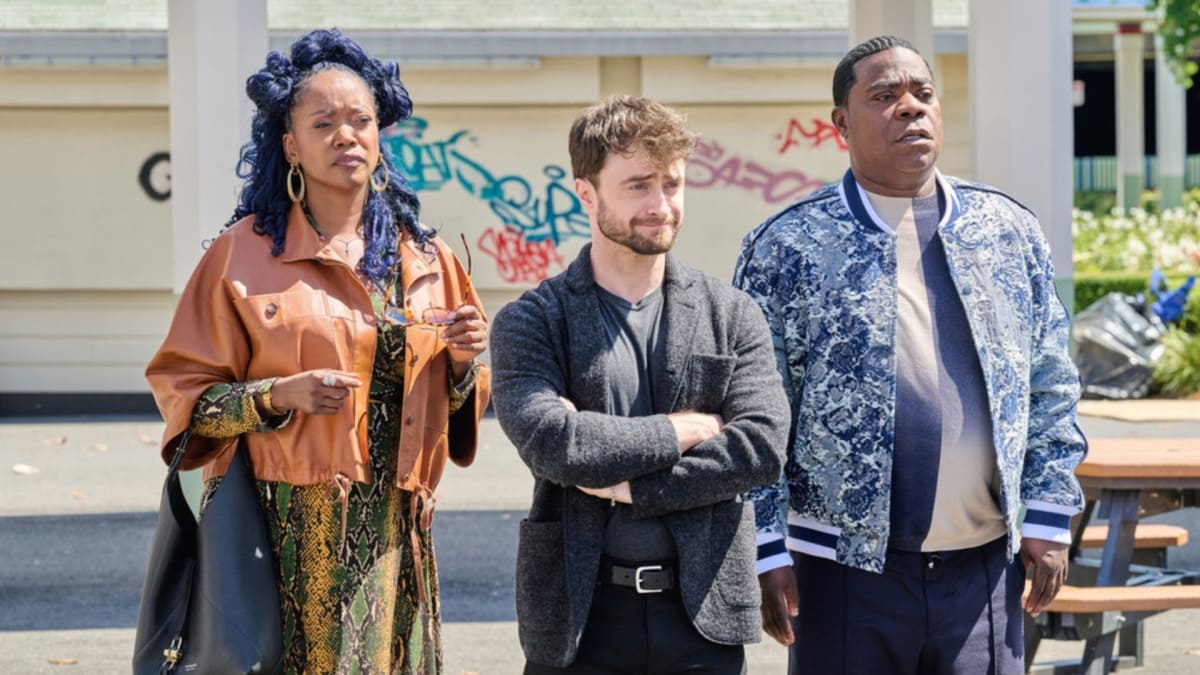
Late in an episode packed with potentially show-changing moral quandaries, Reggie and Monica reveal to Arthur Tobin’s cameraman (the unseen but pliable Marty), that they’ve just pulled off “a win-win-win.” “Our first one!,” Reggie exclaims as they embrace the return to Dinkins house status quo. The callback to the very first episode’s concluding deal between Reggie, Monica, and Arthur highlights just how The Fall And Rise Of Reggie Dinkins is planning to keep its loose, amiably low-stakes gang together.
A sitcom episode needs an inciting incident, and this week it’s Arthur’s video chat with his documentarian mentor, Vernon Bellow (played as a fussy scold who can’t work his Zoom filters by ever-delightful Broadway legend André De Shields). After Arthur goes to Bellow for absolution about his cushy and questionably ethical living arrangement with his film’s subject, the elder filmmaker (whose motto “There is no art without suffering” he proved by spending six months as a corpse to ferret out “corpse abuse at a small town crematorium” in his award-winning doc The Smell Of Silence) scoffs, “I mean, it’s not like you’re letting them pay for the film—that would be a betrayal of the most basic documentary ethics.”
But the broke Arthur is letting Reggie and Monica pay for everything, as inevitably comes to light when Monica interrupts the call to demand Arthur censor footage of her getting stuck in the elaborately disgusting pasta-eating mishap that gives “Spaghetti Loop” its title. (Reggie, doubling the joke, restates the arrangement with Arthur in the bluntest and most incriminating terms for Bellow to hear.) With an errant kitty face filter undermining his judgemental dudgeon, the natty Bellow storms off, branding his once-treasured mentee with an imperious, “Judas!” (Somewhat undermined by an errant spray of onscreen balloons, but Arthur’s still devastated.)
And since every inciting A-story needs a solid B, Rusty similarly undergoes a crisis of conscience when Brina, confronted by Rusty scarfing down her off-limits jam, accuses him of being a moocher. That both of these feints toward destabilizing change are resolved by the end of the episode isn’t surprising—that’s what traditional sitcoms do. What’s slyly satisfying about each resolution is how they circle back to restate narrative necessity, more than mere “because we need things to stay the same” convenience.

Rusty’s problem is, because it’s Rusty, more easily and buffoonishly resolved. Sure, he pays no rent and buys himself a Rolex on Reggie’s credit card for doing such a good job getting takeout (although the “crust-lovers pizza” is a kick and a miss), but he also performs immeasurable service in keeping the whole crew functioning. Brina’s frustration at suddenly having to listen to Reggie’s endless pedantry about both Godzilla movies and the 1970s Knicks is definitely the bailiwick of a slobby freeloader best pal and not a young, gorgeous fiancée who definitely also does not want to be the fourth in her stepson’s Catan game. (“For the last time, Enzo, I’m not trading my fuckin’ wheat!,” she yells at Carmelo’s most insufferable friend.) And the cutaway gag to the freshly coiffured Brina after a Rusty-less and energized Reggie’s lovemaking turns her hair to a windblown mess is a huge laugh.
As good as Precious Way and good ol’ Bobby Moynihan are in their roles, it’s nice to see Brina and Rusty woven more into the show here. Especially since their reconciliation is based on a deeper understanding of just how vital they are in their own ways to the Dinkins group dynamic. In a fine gag, that Rusty’s plan to earn his keep (using Reggie’s abandoned childhood amusement park’s deathtrap slide to finally cash in on his $1 million kicking foot insurance policy) is thwarted when Brina finds his meticulous scheme neatly written on the basement whiteboard. (“Find eraser” and “Erase whiteboard” are the last two, unerased steps.)
Arthur’s problem is trickier, and resolved more subtly. There are, as the silly but correct Vernon Bellow states, real artistic and ethical issues involved in allowing your documentary subject to not only pay for but also assert editorial control of your film. (Reggie further dooms Arthur in his mentor’s eyes by happily assuring that Arthur will be getting two lobsters for dinner because he’s so sick of steak.) As Arthur concedes, it was one thing when he was just a broken has-been taking a rich dong-dong’s cash for a vanity project. But the whole series has been about Arthur and Reggie realizing that they each need a real comeback, and that will only materialize if Arthur is allowed to make a real film.
“The Spaghetti Loop” addresses how the creep of affluenza has gradually eaten away at the filmmaker’s pretentious but genuine moral code. (Reggie’s fleet of AI-enabled massage chairs keep ambushing Arthur’s soul-searching.) More than that, Arthur’s acceptance as one of the Dinkins’ weirdo clan continues to force daily choices between art and friendship that, while great for Daniel Radcliffe and Tracy Morgan to mine for comedy gold, is a looming threat over a film with real stakes for both.

 Keep scrolling for more great stories.