Cultural Reset: YouTube megamixes were the last, gaudy flourish of a long mashup tradition, and their asphyxiation by copyright bots, slow‑core streaming, and social atomization doubles as an obituary for monoculture.
Associate Editor Casey Epstein-Gross’s columnCultural Resetfeatures regular deep dives into the impact of music on culture—and vice versa—in the 21st century from the perspective of someone born and raised within it.
My memory is a sieve. I remember almost none of my middle school teacher’s names, have to Google basic recipes every time I make them, and constantly forget why I walked into rooms. But ask me what song comes in right after Gotye sings the title line of “Somebody That I Used to Know” in Daniel Kim’s 2012 Pop Danthology, and I snap to attention like a suddenly activated sleeper agent. (Obviously, it’s Nicki Minaj as a cheerleader chanting “L! U! V! Madonna! Y! O! U! You wanna?”). Ever since I realized I still had the whole thing memorized a few years back, some bizarre part of me is always slightly hoping whoever I’m talking to will bring up Kim’s best-of-year megamix series, just so I can wheel out my most insufferable party trick: grabbing a laptop, opening it to Pop Danthology 2012, muting it, then belting my way from Adam Levine crooning “I’m at a payphone” all the way to the final Owl City chorus, complete with every beat‑matched jump cut and key change, all without looking at the screen once. Pop Danthology has utterly ruined early 2010s pop for me, because to this day, I cannot hear the opening lines of Adele’s “Set Fire to the Rain” without subconsciously expecting Katy Perry to burst in with the “Part of Me” pre-chorus—and that goes for every single song combination in the mix.
When I first stumbled upon this Rosetta Stone of bangers in 2012, I was 11 and not especially interested in pop. I liked it, sure—I’d cry along to Taylor Swift’s “You Belong With Me” while thinking about my crush like every other girl my age—but I wasn’t exactly begging my parents for Speak Now World Tour tickets. When it came to Pop Danthology, though, none of that mattered. I didn’t need to be an obsessive pophead to squeal with glee when Eva Simons’ “This Is Love” feature cut perfectly into Pitbull’s “International Love.” Hell, I hated Justin Bieber’s “Boyfriend” with a nigh moralistic passion; that half-whispered “so say hello to falsetto in three, two, swag” rap made me full-body cringe even back then. And yet the second Pop Danthology draped that verse over the bratty stomp of Cher Lloyd’s “Want U Back,” my whole brain lit up like a pinball machine.
I didn’t even have most of these songs on my own (bright orange) iPod Nano; they leaked in through gym‑class jump‑rope units and mall food courts and the tinny speakers of other people’s iPod Touches on the bus. I absorbed them like secondhand smoke: involuntarily, a little resentfully, and then, without quite noticing, intimately. By the time I clicked on Pop Danthology, I already knew every word to half its tracklist without ever choosing to. The mashup didn’t have to sell me on pop, it just had to rearrange what was already lodged in my head and show me how much of it everyone else carried around, too. I might not have shared my peers’ music taste, but that was fine; Pop Danthology was our lingua franca.
If you grew up online in the late 2000s and early 2010s, this probably sounds familiar. Maybe you were a Pop Danthology kid like me; maybe you worshiped at the altar of DJ Earworm instead; maybe you never once typed either into a search bar but you were living inside their raw material anyway. Mashups like these worked because they assumed something huge and invisible about the people watching: that we all carried around the same little jukebox in our heads, pre‑loaded with the year’s hits whether we wanted them there or not. The whole thing only works if you can clock a song from a single syllable or drum fill and, crucially, trust that everyone else can, too.
At 11, I loved Pop Danthology because it was clever and ridiculously well-made—because the transitions were satisfying and the choruses all hit at once and I felt like giddily kicking my legs in the air every time I heard it. Now, watching it from the wrong end of a decade of streaming and algorithmic listening, the nostalgia threatens to bowl me over. There’s a sense of grief in it, I think. We’ve lost something in the intervening years, and not just that style of pop music itself (although, to be clear, I do miss how fun that era was)—back then, there was still a pop culture commons sturdy enough to support the kind of stunt a mashup fundamentally is. There’s a reason the joking phrase “I’ve never had an original experience” has become popular among Zoomers on social media these days: all my private memories are woven out of the same raw materials as my peers’. In that sense, the year-end mashup was the musical monoculture’s mirror, reflecting back the sounds we’d all absorbed together in a strange sort of celebratory communion. When that mirror finally cracked, it wasn’t for lack of eager editors hunched over laptops making their own—it was for lack of a culture shared enough to see itself in the reflection.
THE MASHUP IS OLDER THAN you might think; it didn’t just show up one day in 2007 like Athena springing fully formed from YouTube’s head. The term is modern, but the impulse—to take existing pieces of music and combine them into something new—dates at least to the fifteenth century, when European composers wrote quodlibets: pieces that layered multiple borrowed melodies, usually folk songs, on top of one another. The most famous quodlibet is the 30th and final variation of Bach’s Goldberg Variations, published in 1741, in which he wove fragments of German folk tunes over his ground bass. The word itself is Latin: quodlibet, “as you like it,” or “what you please.” As in: this is our shared musical vocabulary, and we may do with it what we please.
But the form’s real education happened in hip-hop, long after Bach and long before anyone was slicing up high-res WAVs. What the Bomb Squad did on Public Enemy’s It Takes a Nation of Millions to Hold Us Back in 1988 was, in essence, the mashup’s philosophical blueprint: pure archaeology, the excavation of funk breaks, jazz stabs, sirens, spoken‑word clips, and atonal noise into collages so dense and deliberately chaotic that they made Phil Spector’s walls of sound look like garden fences. “We took whatever was annoying, threw it into a pot, and that’s how we came out with this group,” said producer Hank Shocklee. “That’s still our philosophy, to show people that this thing you call music is a lot broader than you think it is.” Every layer was a choice; every sample a tiny act of cultural conversation. Artists like the Beastie Boys and De La Soul (with Prince Paul on production) supplied the mischief: 105 songs sampled on the former’s 1989 Paul’s Boutique; the latter’s 3 Feet High and Rising pulling from psych‑rock to children’s music. This was sampledelia at its height, each record providing its own proof that the sampler could do far more than loop a four‑bar break.
All of this happened in a brief, exhilarating window when sampling was the default grammar of hip-hop production and nobody had yet established how, exactly, the law felt about it. That window slammed shut in 1991, when Judge Kevin Thomas Duffy opened his ruling in Grand Upright Music Ltd. v. Warner Bros. Records, Inc. with four words from the Bible: “Thou shalt not steal.” The case involved Biz Markie, who had sampled Gilbert O’Sullivan’s “Alone Again (Naturally)” without clearance. The ruling was blunt and devastating: sampling without permission was theft, full stop. The judge referred the case for criminal prosecution. (Biz Markie, to his eternal credit, titled his next album All Samples Cleared!) This wasn’t quite the end-all be-all for sampling, at least not yet—after all, DJ Shadow’s Endtroducing….. was the first album ever constructed entirely from samples, and it came out in 1996. But, then again, his samples were incredibly obscure, not the shared cultural memories that often populated pre-Grand Upright hip hop.
The Sixth Circuit doubled down in 2005 with Bridgeport Music v. Dimension Films: “Get a license or do not sample.” That decision is still often seen as the symbolic end of hip‑hop’s golden age of production, the moment the law drew a line around the communal musical vocabulary and declared it private property. Its shadow falls directly over the mashup. Every year-end megamix that would follow was, whether its creator intended it or not, something of an act of cheerful defiance against the legal regime that Grand Upright and Bridgeport had built. The lineage is clear: as DJ Earworm once said, “Every piece of music is composed of ideas from previous pieces of music. Mashups are just a bit more direct and honest about it. Originality is purely a matter of degree.”
THE MODERN MASHUP EMERGED from a specific technological moment: the late 1990s and early 2000s, when consumer-grade audio software like Pro Tools, Ableton Live, and even the free Audacity suddenly let anyone with a laptop isolate vocal tracks, manipulate tempo and key, and layer recordings. The internet—first Napster and other P2P networks, then YouTube—provided both material (acappellas, instrumentals, leaked stems) and distribution. In 2001, British DJ Freelance Hellraiser (killer name, by the way) combined the vocal from Christina Aguilera’s “Genie in a Bottle” with the guitar track from the Strokes’ “Hard to Explain” and called it “A Stroke of Genie-us.” It was crude, brilliant, and absurd; the gunshot that started the race.
What followed was the mashup’s wild‑west phase. In Belgium, the brothers David and Stephen Dewaele, AKA 2ManyDJs, released As Heard on Radio Soulwax Pt. 2 in 2002: 45 tracks built from elements of 114 different recordings, clearance for which required more than 860 emails, 160 faxes, and “uncountable phone calls” to 45 record companies over six months. In 2004, American producer Danger Mouse made The Grey Album, famously mashing Jay-Z’s The Black Album with the Beatles’ White Album. EMI, the Beatles’ label, sent cease-and-desist letters; in response, more than 170 websites hosted the album for free download on a single day—“Grey Tuesday”—in an act of electronic civil disobedience. “It is music,” Danger Mouse once said. “You can do different things, it doesn’t have to be just what some people call stealing. It can be a lot more than that.” Found art is still art, after all.
Then came Girl Talk, the mashup’s unhinged id. Gregg Gillis, a biomedical engineer from Pittsburgh turned professional disc jockey, made albums that used hundreds of uncleared samples—his 2010 release All Day contained a whopping 373—and released them for free online, as if daring the industry to sue him. Somehow, nobody ever did. The New York Times Magazine called his album Feed the Animals (which itself used over 200 samples) “a lawsuit waiting to happen.” Legal scholars debated endlessly whether his music constituted fair use. Girl Talk was the mashup at its most chaotic and gleeful, operating in the gap between what copyright law technically forbade and what the culture clearly wanted. The audience, it turned out, was too busy dancing to care about the fine print.
By then, the mashup had already begun its migration from the underground bootleg scene into the broader pop landscape, and in doing so it acquired a new, somewhat different form. If 2ManyDJs, Danger Mouse, and Girl Talk were auteurs, building full‑length albums around conceptual theses, the year‑end mashup makers were chroniclers, annual documentarians of the pop commons. Their job wasn’t to argue about what pop could be, but to hold up a mirror to what it already was.
DJ Earworm—Jordan Roseman, a music-theory and computer-science grad—started his “United State of Pop” series in 2007, taking the top 25 songs from the Billboard year-end chart and weaving them into a single cohesive track. The 2009 edition, “Blame It on the Pop,” was undeniably the cultural peak. It went viral in the way things went viral before we had a word for it: radio stations picked it up; it charted on Billboard; people who had never heard of a mashup in their lives forwarded it to everyone they knew. Built primarily around the Black Eyed Peas’ “I Gotta Feeling,” it wove Lady Gaga, Beyoncé, Taylor Swift, and 22 other artists into something fans still describe in almost religious terms. “My mind was blown. It wasn’t like anything I had ever heard before. My life changed forever that night,” one Reddit user recalled years later. “There was a sense of optimism that we had in 2009 that we just don’t see anymore. America was finally getting out of the financial crisis. Obama had just recently been elected president. Life was good, and this mashup perfectly encapsulates the mood of the times.”
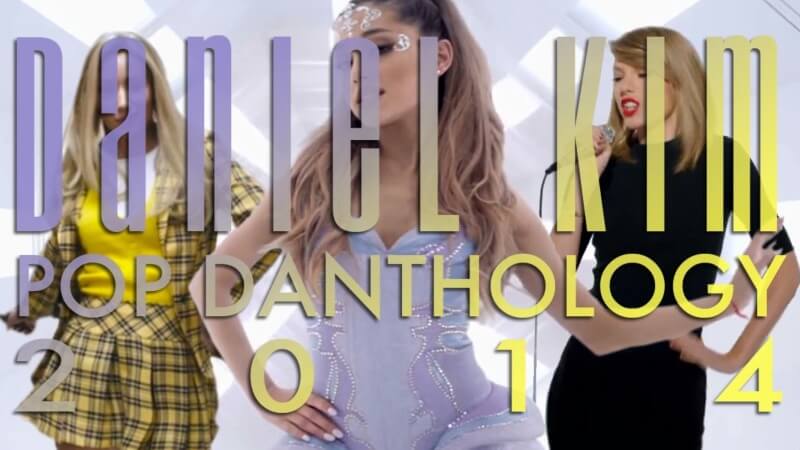
Daniel Kim operated in a different register. Where Earworm squeezed 25 songs into roughly four minutes, Kim built sprawling—yet still precisely engineered—eight-to-ten-minute megamixes with anywhere between 50 to 90 songs, accompanied by meticulously edited video collages. His mashups were long enough to get lost in, dense enough to catch new details in even on your fifth or sixth (or, in my case, six-hundredth) listen. I’ve already confessed my adoration of Pop Danthology, but it’s not just nostalgia driving my love for it; it’s also the pure craftsmanship involved. As a kid, I chalked it up to sorcery.
This was the era when the year-end mashup felt like an institution. Every December, Earworm and Kim and a handful of others would release their annual offerings, and the internet would gather to experience them like a secular ritual. You’d argue with your friends about which year was best (2009 was the purists’ choice; 2012 was the populists’—and fuck it, I guess I’m a populist). The whole thing had the communal energy of a neighborhood block party, except the neighborhood was the entire English-speaking internet.
But, well, every party ends at some point.
THE MASHUP DIED THREE DEATHS, and none of them alone would have been enough to kill it. It took all three converging in the same half-decade to finish the job.
The first death was legal, and it had a face. In 2015, Daniel Kim announced that he could no longer create and share Pop Danthology the way he used to. He split that year’s mashup into two parts and uploaded modified versions to YouTube, hosting the full cut on his own website. His original 2010 and 2012 videos—the ones lodged in my brain like a splinter—had already been removed by YouTube due to copyright strikes. (Someone later re-uploaded 2012’s, thankfully, but with one glaring omission: the section with David Guetta ft. Sia’s “Titanium” was now completely silent. Well, guess we know who sued.) By 2016, Kim was done. “I have one strike on my YouTube channel and two strikes on my SoundCloud,” he said. “There’s just no safe place to upload mashups anymore.”
Kim’s story is the human-scale version of a structural catastrophe. YouTube’s Content ID system, launched in 2007, created an automated dragnet that scans every upload against a database of copyrighted fingerprints; by 2018, Google had invested over 100 million dollars in the technology, and by 2024 it had paid more than 12 billion dollars to rights holders. In more than 99% of Content ID claims made in 2024, detection was fully automated—no human reviewed any aspect of it. The system cannot distinguish between a wholesale pirated upload and a transformative mashup that uses fifteen seconds of a Katy Perry chorus over an entirely different instrumental; it treats every use of copyrighted audio as presumptive infringement.
The cruel irony is that the mashup exists in a genuine legal grey zone. No American court has ever ruled that a mashup constitutes either fair use or infringement; no case has gone to trial. The question remains, legally speaking, open. But the platforms facing liability have no incentive to tolerate ambiguity. They—or more precisely, their algorithmic “employees”—default to removal.
These days, the cost of licensing samples legitimately can run up to $5,000 per sound recording and 50% of royalty revenues per musical work. For a mashup using dozens or hundreds of samples, legitimate licensing is essentially impossible. The mashup artist is trapped: can’t distribute without a license, can’t afford a license without revenue from distribution, and can’t get a court to confirm that a license isn’t necessary. The law doesn’t explicitly ban mashups, sure, but it does make them impossible to share—and in 2026, that basically amounts to the same thing.
The second death was musical, and it crept in so slowly that you can only see it clearly in hindsight. The golden age of the mashup, it turns out, coincided precisely with a specific pop era that was unusually amenable to being, well, mashed. During the EDM-pop boom of roughly 2009 to 2014, a staggering proportion of chart hits hovered around 128 beats per minute—the standard tempo for four-on-the-floor house and electro. David Guetta, Calvin Harris, Pitbull, LMFAO, Flo Rida, Avicii: they were all building on the same electronic production framework, and the songs they made were bright, melodic, structured around massive singable hooks and instrumental drops. When songs share tempos and keys, they’re far easier to layer. And when those songs are also built around big, isolatable, instantly recognizable vocal hooks? The mashup practically writes itself.
Between 2012 and 2017, though, the average tempo of the 25 most‑streamed songs on Spotify dropped by 23 BPM, settling at 90.5. Songs above 120 BPM plummeted from 56% to just 12.5% of top tracks. The primary culprit was the rise of hip‑hop and trap, which had infiltrated every genre on the charts by the mid-2010s. “Hip‑hop culture is the new pop culture, and our tempo ranges aren’t too fast,” producer Sevn Thomas, who worked on Rihanna’s “Work,” explained. Where the EDM-pop era had offered memorable fast-tempo tracks that layered naturally on top of each other, trap-influenced pop was rhythmically complex, more about vocal texture than big melodic hooks, and built around bass frequencies that clashed when combined. Stack two Carly Rae Jepsen songs and you get a party; stack two Travis Scott songs and you get a headache.
And, frankly, a lot of current hits feel like they’ve been run through the same Instagram filter—that big, expansive, Jack‑Antonoff‑ish sheen; the same swelling pads, the same tasteful reverb. It’s strange that pop itself has undeniably gotten more diverse, but the feel of it hasn’t. A massive study by Spain’s National Research Council analyzed more than 460,000 recordings from 1955 to 2010 and found what it called a “progressive homogenization of the musical discourse”: fewer chord changes, a narrower palette of sounds, and rising loudness over time. You used to be able to clock an exact song within ten seconds; now, a lot of tracks live in the same mid-tempo, moody blur, the soundscape somewhat indistinguishable from others of its kind. (The rise of sad girl indie pop, I think, was a huge perpetrator here—not knocking the quality of Taylor Swift’s folklore or Phoebe Bridgers’ Punisher or the like, but you can’t tell me they don’t all live in a very similar sonic world). For a mashup, that matters: if the component songs don’t have sharply distinct melodic identities, stitching fifty of them together feels less like a joyful collision and more like adding water to soup that’s already thin.
The third death was cultural—and, in my opinion, the most painful. Pop music, for most of the 20th century and the first decade and a half of the 21st, was one of the most powerful engines of imagined community in American life. The late 2000s was pop monoculture at its peak: everyone had access to the same songs because the internet had blown open distribution, but social media feeds and recommender systems hadn’t yet finished chopping that access into a billion personalized lanes. And every December, millions of people simultaneously experienced the same audio artifact in the year-end mashup—the thrill was not merely aesthetic, but social. It was a rush of synchronized recognition.
This, I think, is what the streaming era killed. Not intentionally—and not without compensating benefits, which I will get to—but the effect is unmistakable. The age of algorithmic recommendation systems replaced the broadcast model with something radically different: a personalized internet in which each listener receives a unique feed calibrated to their individual taste. Yet that doesn’t actually mean our tastes are getting more diverse: Spotify’s algorithms, as one extensive study demonstrated, are “associated with reduced consumption diversity”; they narrow what you hear, not broaden it. Another study concluded that “the presence of algorithms has contributed to reduced musical diversity and increased taste tautology among users.” In the end, the algorithm isn’t responding to your taste so much as constructing it, reinforcing it, walling it in.
Ironically, though, this isn’t driving everyone towards a unified consensus; rather, it’s pushing each individual further into their own stubborn, unique corner of the internet. Every kid’s on TikTok, sure, but their For You Pages likely differ: some watch only makeup tutorials, others see anime edits, others slowly become indoctrinated into incel culture; the algorithm ensures no one ever leaves their perfectly individualized bubble. In other words, the pop monoculture has been replaced by a constellation of micro-cultures, each orbiting its own algorithmic sun. This effect translates easily to music, too: as a result, the top songs on any given chart claim a smaller share of total streams than they did a decade ago. There are still hits, still songs that everyone knows, but the “everyone” is smaller, and the “knows” is shallower—and shorter, considering the parts of songs we recognize are often just 15-second clips, the exact length of a TikTok.
For a mashup artist, this is an existential problem. If you mash up what you experienced as the top 25 songs of 2025, how many will your varied audience recognize? 15? 10? If you’re lucky? You can see the strain in the few year-end mashups that remain. For instance, YouTuber AnDy Wu’s recent offerings, good as they are, cram 120 or 150 songs into 13+ minutes, because there are simply too many semi‑viral tracks to gesture at if you want anyone to recognize themselves in the mix (or, at least, if you want to avoid angry comments about obvious misses). These days, the mashup often feels like a collage of strangers rather than a reunion of friends. The lack of a commons forces mashup artists to make their collages longer and more crowded just to cover the fracturing terrain, at the exact moment when platforms are training everyone’s brain to flinch at anything over 30 seconds. Despite being of a relatively similar quality to Daniel Kim’s masterpieces (although bias has me saying no one can top Kim), Wu’s thirteen-minute 2025 megamix only has 276,000 views a month after release; a far cry from the near-instant millions Pop Danthology saw in its heyday.
THERE IS A TEMPTATION, at this point, to turn elegiac—to declare the death of the mashup a tragedy and the era that produced it a lost paradise. I won’t lie, part of me does feel that temptation strongly. I grew up in the mashup’s golden age, and my nostalgia for it is genuine and deep, silly as I know that is. When I listen to the 2012 Pop Danthology now, I am not hearing 55 songs from 2012; I am hearing what it felt like to be eleven and to live in a world where everyone shared the same vocabulary.
But nostalgia is a liar, or at least a flatterer. Monoculture isn’t inherently good; it’s hegemonic in nature, constantly reinforcing conformity. The songs “everyone” knew were overwhelmingly the ones that major labels promoted, radio programmers selected, and MTV put into heavy rotation. The “shared vocabulary” of pop was shared in the way that English is the world’s “shared language”—not because it was chosen freely but because it was imposed by power. The fragmentation that killed the mashup also empowered voices that the monoculture suppressed: K-pop, Afrobeats, Latin pop, hyperpop, bedroom pop, the kaleidoscopic explosion of micro-genres that flourish on Spotify and SoundCloud and Bandcamp. As someone who rarely listened to that Top 25 in the first place, I can’t pretend I don’t appreciate that greatly. I mean, niche music is the reason I have a job.
And yet something was lost, I think—not the content of the monoculture, but its function: the production of a kind of cultural unity that allowed strangers to recognize one another. Not to get all kitschy, but music is undeniably one of the oldest and most powerful mechanisms of social bonding. If you hum a tune and a stranger hums it back, you have established, in an instant, that you inhabit the same world. The mashup concentrated that feeling to a near-euphoric degree. It took a year’s worth of shared musical knowledge and compressed it into a single track, so that listening became an experience of continuous, rapid-fire recognition; a six-minute barrage of I know that one. I know that one too. That one’s garbage. Oh, my God, I love that one. Its disappearance leaves a gap in the cultural calendar that nothing has quite filled—not even Spotify Wrapped or Tiktok.
Sure, Spotify Wrapped, which launched in 2016, has partially absorbed the year‑in‑review function the mashup once served. At first, it was fun, at least in a casino‑lights way: a little slideshow ranking your obsessions, flattering you for listening to “niche” artists that millions of people are also “discovering,” all wrapped in shareable graphics pre-formatted for Instagram Stories. But these days it just feels like a marketing campaign built on industrial‑scale surveillance—the panopticon as party favor. Wrapped tells you a story about yourself using data you didn’t realize you were giving away, then nudges you to perform that story in public. It’s not communal at all, really. It tells hundreds of millions of people slightly different stories, every one designed to make the recipient feel special while silently reminding Spotify’s advertisers how exquisitely average and trackable each individual actually is.
And sure, in some senses TikTok is the mashup’s spiritual descendant: users take snippets of existing music and re-contextualize them, overlay songs with new visual meaning, create duets that layer new content onto old. But the resemblance is superficial. Where a DJ Earworm or Daniel Kim mashup was an eight-minute feat of craftsmanship that demanded sustained attention and rewarded repeat plays, TikTok content is 15 seconds and disposable. One is centripetal, pulling culture inward toward a center of coherence; the other is centrifugal, spinning culture outward toward an endless scroll of individual feeds, thinning the content itself in the process. The most recognizable “songs” of the year aren’t really songs; they’re 15‑second clips optimized for the For You Page. Unless you happen to hit the exact bar that got meme‑ified, you might not even realize you’re hearing the same track. Music, in that context, stops being an art form you live inside of and becomes a kind of branded wallpaper for your personality, a jingle for whatever micro‑identity you’re performing today. More precisely: the mashup aspired to permanence—and achieved it, if my perfect recall of every moment of a mashup from 14 years ago is anything to go off of. TikTok, on the other hand, aspires to disposability. Songs there have shorter life cycles than news stories do, and in today’s day and age, that’s really saying something.
To be honest, I don’t think the conditions that made the golden age of mashups possible are coming back. The monoculture isn’t asleep, it’s over—and good riddance to a lot of what it enforced. But every time I notice my own listening life shrinking to fit the walls of an algorithmically padded cell, I find myself reaching, almost reflexively, for a bootleg that hasn’t existed properly online in a decade. Not because I want 2012 back, exactly, but because some part of me still craves the sensation of hearing my memories collide, at high speed, with everyone else’s.
If there’s anything to salvage from the wreckage, it probably isn’t the mashup as a format (although I will defend all forms of found art ‘til the day I die); the old-school megamix is probably doomed, both legally and socially. It’s the idea that treating mainstream detritus as common property and arranging it so a crowd can hear itself in it is something worth doing. The platforms won’t pay for that, and the law doesn’t know what to make of it, but the hunger hasn’t gone anywhere. Somewhere out there, another 11‑year‑old is trying to make sense of a feed that swears her taste is uniquely hers. She won’t get a Pop Danthology. She’ll get whatever weird, ad‑supported substitute TikTok invents, probably. But she will still, on some level, be asking the same question the mashup was built to answer: is anybody else hearing this, too?
Casey Epstein-Gross is Associate Editor at Paste and is based in New York City. Follow her on X (@epsteingross) or email her at [email protected].


 Keep scrolling for more great stories.