Maika Monroe usually finds herself clearly sequestered on a single side of the scream-queen dynamic, running from or investigating killers with a screw loose rather than playing one herself. In films ranging from It Follows to Watcher, she’s been a paragon of paranoia and a perfect conduit for being creeped out. Victorian Psycho allows her a chance to explore the genre from the other direction, putting her bulging eyes, soft deliveries, and go-for-broke expressions towards going nuts. But director Zachary Wigon (Sanctuary) and screenwriter Virginia Feito, who adapts her own novel, don’t set Monroe’s gearshift up for success. Their period piece, chasing the kind of dissonant friction Yorgos Lanthimos revels in, is neither clever nor gruesome enough to shock or titillate, despite its lead performer seizing the rare opportunity for villainy.
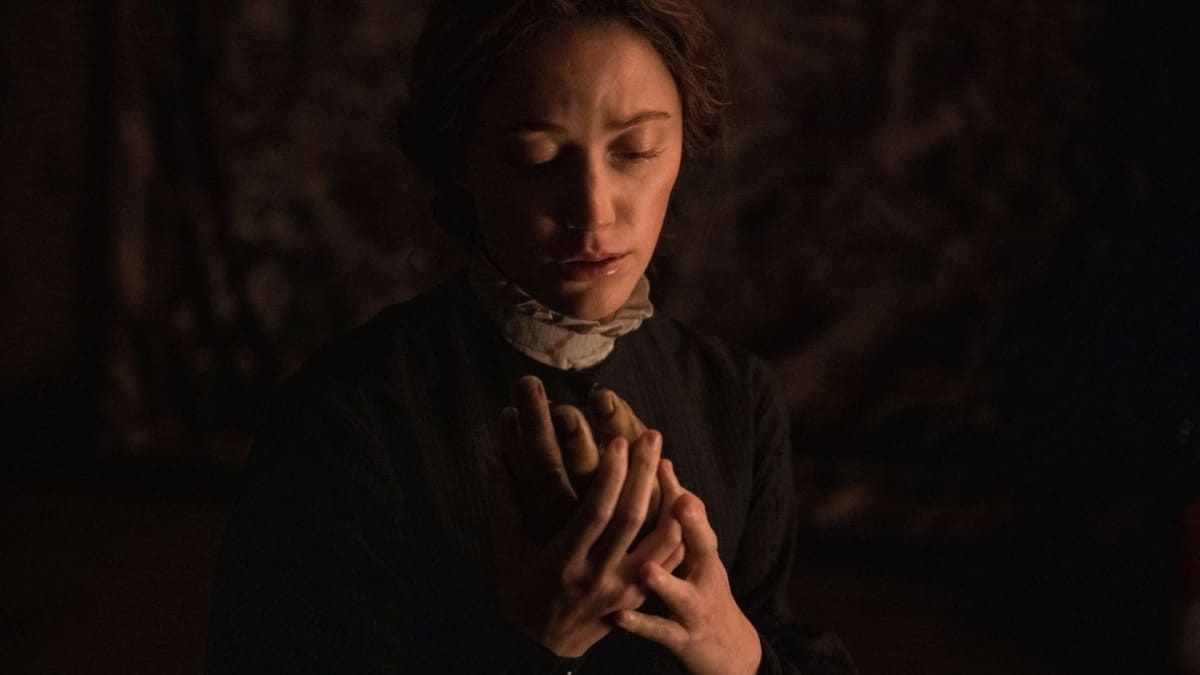
One of the biggest problems with the silly mid-1800s slasher—and its only real connection to its title’s inspiration, American Psycho—is that Winifred Notty (Monroe) simply cannot shut up. The endless internal monologuing from the governess, who arrives at the expansive Ensor House to care for the children of Mr. (Jason Isaacs) and Mrs. Pounds (Ruth Wilson), boasts a wryness that differentiates it from the stiff yuppie dissonance of Patrick Bateman. She’s a killer weirdo from the start, barely masking her madness in front of the suspicious parents, and not at all in front of the off-put kids (Jacobi Jupe, Evie Templeton). “Fred is the name of the demon that lives inside me,” she tells her charges, after they watch her bludgeon a wounded deer to death. It’s not a question of if she can hide the severed ears she’s secreted away in her luggage, but when exactly all hell will break loose.
But chopping the film up into cutesy chapters bloodied by Wigon’s overused stylistic flourish (a close-up SnorriCam-like shot moving in tandem with Notty’s tilted neck or various household props) trips up the tension and neuters the carnage. Monroe’s dedicated goofiness, switching from the tight smile of a mannered oddball to the half-lidded lunacy of a stereotypical serial killer, can only take Victorian Psycho so far, especially since her telegraphed murders aren’t especially shocking. Festooned with a few era-specific details—her master is into phrenology; the dim maid Ms. Lamb (Thomasin McKenzie) easily buys Notty’s story that a ghoul is roaming the grounds; a pineapple is the ultimate show of frivolous wealth—the film lacks rhythm or intensity, both of which are as essential to a horror-comedy as the missing horror and comedy.
Drenching it all in the dreamy golden beige of a Victorian-set upstairs-downstairs drama, occasionally spattered with blood, threatens us with nothing more dangerous than our drifting off to sleep, like a cat caught in a sunbeam. Even the juxtaposition of this aesthetic with Wigon’s more modern camerawork rarely raises the heartrate, not so much causing an interesting friction as simply chafing. Without the right atmosphere or developmental arc, Monroe’s unself-conscious performance (she jams her whole hand in her mouth like a demented Winnie-The-Pooh) is left stranded, like so many offbeat turns by her Longlegs co-star Nicolas Cage. The film can’t match her, even during its ill-conceived sanity-testing climax, which makes it all seem satisfied simply to gesture at Monroe and its plot’s half-hearted provocations rather than actually integrate them into the whole.
Victorian Psycho evokes, if anything, the kind of “Isn’t this titillating?” arrogance of Emerald Fennell’s Wuthering Heights, but without its genuinely over-the-top craft. In its place are whispers of ideas—the question of whether demons live inside these isolated and underestimated women, or whether their antisocial actions are driven by their place in society; the question of whether both Isaacs and Wilson’s hammy characters want to sleep with their killer nanny—and off-screen taboos. Neither are enough to give Monroe anything to stand on as she plays against type, and that novelty wears out with the second paragraph of voiceover.
Director: Zachary Wigon
Writer: Virginia Feito
Starring: Maika Monroe, Thomasin McKenzie, Ruth Wilson, Jason Isaacs
Release Date: November 13, 2026


 Keep scrolling for more great stories.