They say the kids aren’t reading anymore. But while the publishing industry has certainly changed over the past several decades—thanks to the ubiquity of e-readers, the rise of audiobooks, and, yes, the widespread influence of BookTok—it’s still trucking right along, churning out more titles than most of us could ever hope to read.
Nowadays, the real challenge is figuring out what titles are actually worth your time. So we’re bringing back our regular recommendation feature that’s based on what we’re actually reading right now. (Our books enthusiast Lacy Baugher Milas is cursed/blessed with the inability to read one thing at a time—finally, a win/failing from which everyone can benefit!)
As always, we invite you to contribute your own responses and recommendations in the comments—the best way to find out what’s worth reading is to hear from the people who are turning the pages.
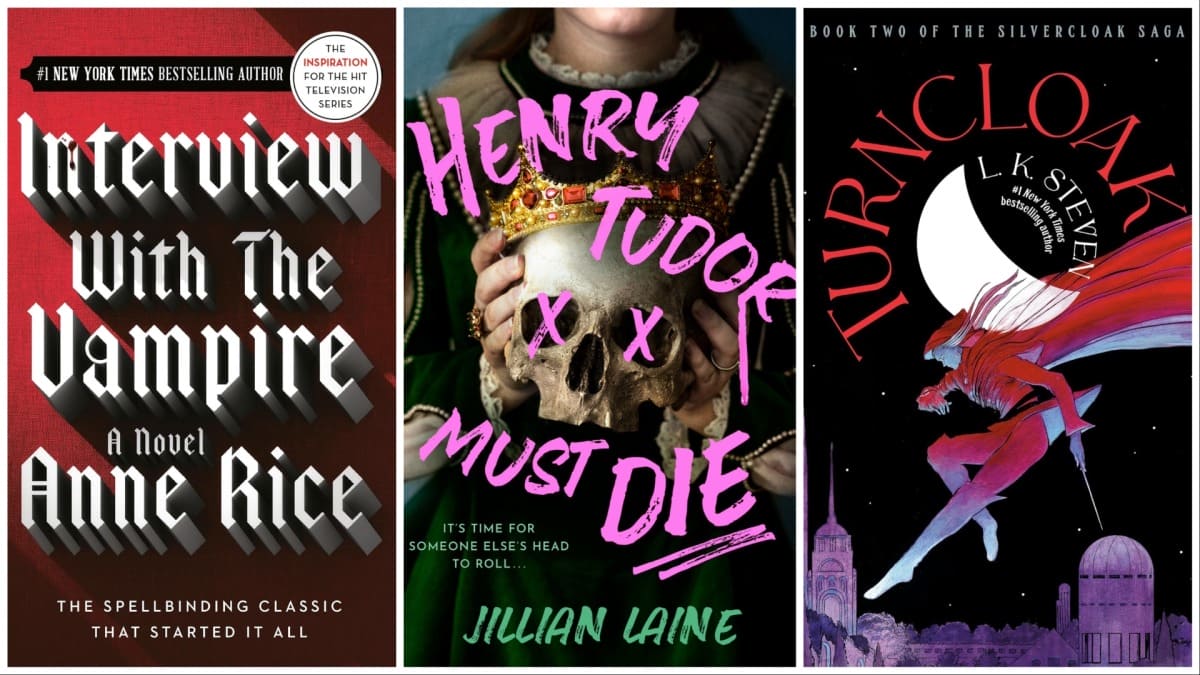
Turncloak by L.K. Steven
This sequel to last year’s excellent Silvercloak, Turncloak ups the stakes in almost every way over its predecessor, adding in new POV characters with subplots and arcs of their own and intensifying the ongoing war between the story’s primary rival gangs and the magical police force trying to stop them both. Saffron Killoran, an undercover Silvercloak agent whose attempt to bring down the Bloodmoons has gone horribly awry, is now convinced the only way to fix things is to turn back time by several decades and undo a lifetime’s worth of mistakes. It’s probably not a great idea, but it makes for some desperate and compelling character moments.
The Silvercloak Saga is L.K. Steven’s first adult series, which is reflected in its darker subject matter, frequent murder, and spicy sexual interludes. It’s perhaps flown a bit under the radar when compared to some other big-name fantasies and BookTok favorites, because this series absolutely deserves more attention than it’s been getting. Fair warning: this sequel drops readers right back into the action following that book’s harrowing cliffhanger, so learn from my mistakes and refresh your memory on everything that’s already happened before you dive in.
Henry Tudor Must Die by Jillian Laine
Stories about King Henry VIII and his six wives never really go out of style. This year alone, several well-known authors have offered fresh literary takes on the Tudor clan, including The House Of Boleyn by Tracy Borman and Alison Weir’s The Boleyn Secret. (Philippa Gregory, usually very dependable in this category, wrote a book about 15th-century duchess Eleanor Cobham instead.)
But the most original retelling of this well-trod tale to hit shelves in recent months has to be Henry Tudor Must Die by Jillian Laine, an alternate-history feminist revenge fantasy that reimagines several of Henry’s wives as members of a coven-esque secret society known as the Hellebore Sisterhood. Their goal? Henry Tudor, threat to women, must be stopped at all costs. The story involves a little bit of literal magic, a few faked deaths, and a deeply satisfying friendship formed between a group of women that history loves to remember by setting them at odds. (Anne Boleyn and Catherine Of Aragon, besties? More likely than you’d think!) It’s a bit silly at times, but super fun, especially if you happen to enjoy things like Six: The Musical.
Interview With The Vampire by Anne Rice
I said I started a Vampire Chronicles reread in honor of The Vampire Lestat hitting our screens earlier this summer. The fact that, actually, oh, reading the first book has only now really become a priority is a testament to the unending TBR stack that lives next to my nightstand.
Still, Interview With The Vampire holds up. Atmospheric, dark, and lushly written, it’s amazing to consider that this is a book that’s turning 50 this year. Revisiting it after having watched the show has been an interesting experience, though, and a reminder of just how hard the AMC adaptation has worked to shake up and flesh out the story of Louis de Pointe du Lac, who is, and I’m sorry to say this, nigh on insufferable at times in this first novel. It’s also interesting that while Lestat casts a long shadow over the events of this story—and in our pop culture in general—his actual role in Interview is fairly limited, and the character is most often presented through little more than a lens of resentment and fear. Claudia is so much more monstrous than I remembered her being, though, which was a delightful surprise.


 Keep scrolling for more great stories.