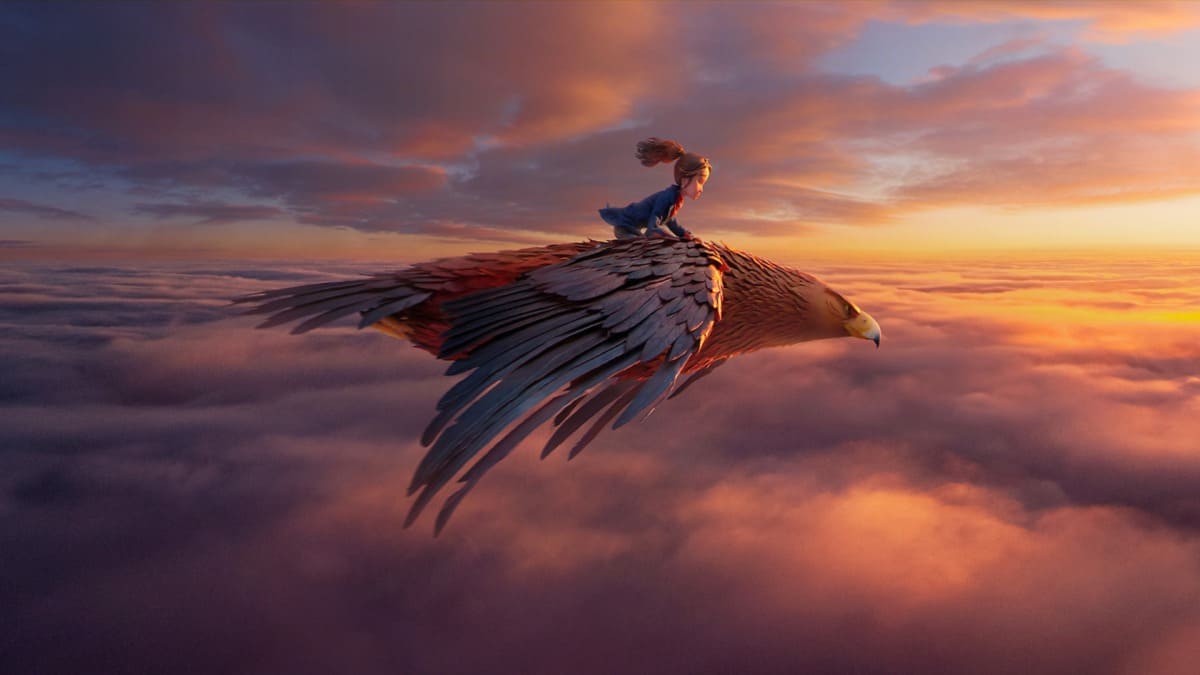
In the 1980s, movies made for all age audiences, or even those directed at children, weren’t just about the Carebears. Many of them, both animated and live-action movies, also wrestled with loss like Wildwood, an aspect that’s missing from many present-day family-friendly movies which are sanitized to be as inoffensive as possible. So much of these films’ animated style looks colorful and smooth with bubbly body parts that lend themselves well to CGI, but also look closer to toddler toys with no sharp definitions or edges they can hurt themselves on. Neither the Minions nor the Toy Story franchises deal with the loss of a child. Some kids’ movies of the 2020s are more concerned with internal issues, like feeling out of place (Inside Out 2, Encanto), learning to grow up using changing into a monster as an allegory (Turning Red, Luca), or learning to acclimate to a new world around them (The Wild Robot) if they’re not goofy riffs on popular video games (The Super Mario Bros., Sonic The Hedgehog, A Minecraft Movie). These are not necessarily stories about taking part in a magical war, learning grown-ups can deceive you, or learning to accept death as part of life, which feel closer to classic kids’ stories like The Lion, The Witch And The Wardrobe than today’s family fare.
Just a few decades ago in the handdrawn era, Don Bluth, a one-time Disney animator who struck out on his own, tackled heavier subjects in movies like The Secret Of NIMH and The Land Before Time. The Secret Of NIHM is about a mouse mother seeking medical help for her sick child, turning to an escaped group of supersmart lab rats that once included her deceased husband. On her journey, she escapes from a murderous cat, is captured by a human family, and witnesses a murder when the rats turn on each other, to say nothing of watching her children nearly drown to death in the mud because no one will help her.
To a lesser extreme, the adorable dinosaur series The Land Before Time starts out pretty violently as the main character’s mother is killed by a T. rex and an earthquake rips many dino families apart. The makeshift pack of young dinosaurs must then brave the terrain to find their new home in the promised land, the Great Valley, but Little Foot still grieves his mother’s death. In both movies, our heroes are faced with their own mortality and their family’s, a pretty tough subject for any film, let alone a kid’s movie, and it’s a subject that’s part of the fabric of Wildwood. Alexandra’s evil is rooted in loss, and Prue telling her to let go is to bring the character back to the natural world away from the dark magic and need for control, or the perceived power over death.
Wildwood also shares quite a bit of creative DNA with a movie like Labyrinth, the David Bowie and Jennifer Connelly fantasy about a young girl who has to rescue her baby brother from the clutches of a Goblin King, who, not unlike Alexandra, is an imposing regal figure with magic of their own. While not scary or as heavy as some of Don Bluth’s earlier works, both Labyrinth and Wildwood are lessons in taking responsibility for one’s actions. No one else can save their baby brothers except these older sisters. Prue even goes an extra step to give her parents a magical sleeping tea to spare them from any danger as well, taking solo responsibility to save her brother Mac and the magical realm in the process. There’s a bit of The Goonies, E.T. The Extra-Terrestrial, and Time Bandits in how these kids are on their own adventures, away from the safety of home or their parents. There’s even a few visual references to other grown-up adventure epics like Lawrence Of Arabia when Curtis uses his sword for the first time to admire himself, and later in battle once the sword has been bloodied, to see how his time in the magical realm has changed him and forced him to grow up.
Laika’s never entirely shied away from darker themes. Deception is at the heart of Coraline, a cautionary tale about an evil force that manipulates a lonely child. In Kubo And The Two Strings, the main character must care for his ailing mother who later dies protecting him from his vengeful aunts, not too dissimilar to Little Foot’s loss in The Land Before Time, or even Bambi when his mother falls to the hunter. Kubo’s ultimate strength comes from his memories of his lost loved ones, acknowledging both the loss itself but also the power in remembering those who loved us. While the rest of Laika’s output—Boxtrolls, ParaNorman, Missing Link—is more about outsiders fitting in, Wildwood has much more on its mind. It’s using fantasy to talk about death and responsibility without losing the story’s sense of magic or its technical achievement. Because it’s so well-done and so well-told, Wildwood can bravely forge through these tough scenes without talking down to its audience or sparing them the gravity of its characters’ journey.