With so many new books hitting shelves on a weekly basis, it’s impossible to keep up with all the good stuff you know you should be reading. But since publishing is often so focused on supporting new releases, lots of great and underrated titles across genres can get lost in the shuffle. Welcome to The Backlist: a series that dives into recent older releases that deserve their moment in the sun. (Yes, there will be themes.)
For our inaugural edition, we’re embracing the spirit of the season. Spooky season, that is. The A.V. Club’s Horrors Week kicks off on Monday, with deep dives into the world of scary movies, TV shows, and books. But we’re getting started a little early with this guide to some recent great haunted house stories you might have missed the first time around.
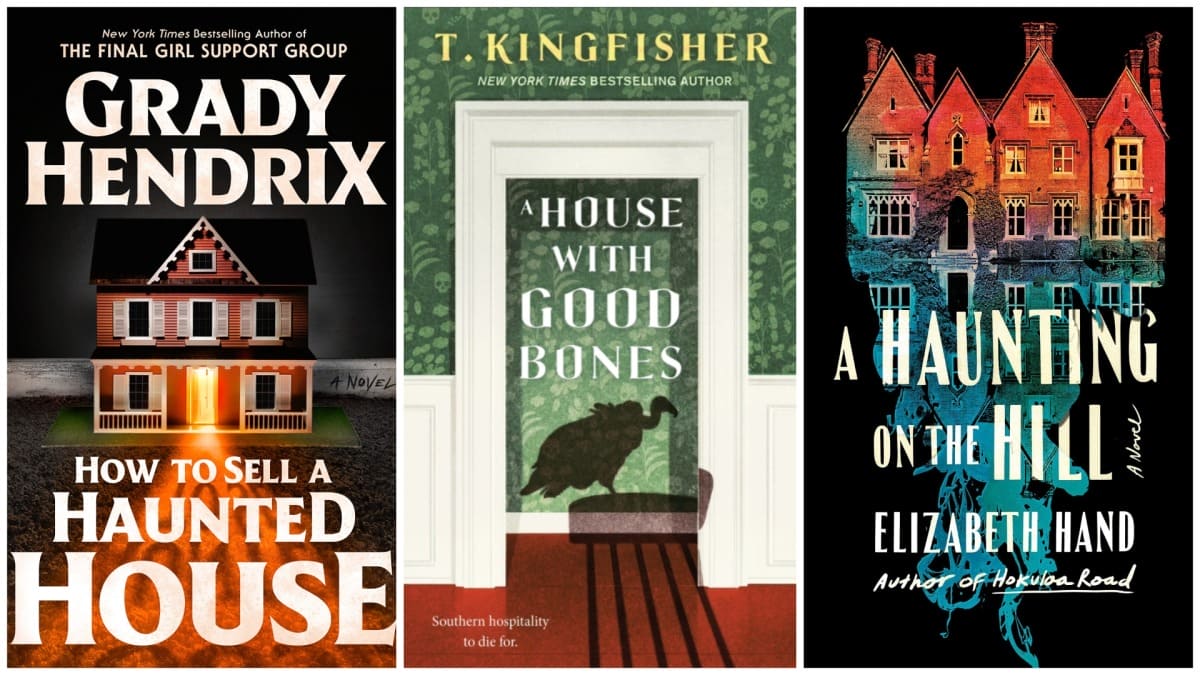
How To Sell A Haunted House by Grady Hendrix (2023)
Grady Hendrix is an author known for his unconventional takes on familiar horror fiction tropes, as evidenced by popular reads like The Southern Book Club’s Guide To Slaying Vampires and The Final Girl Support Group. How To Sell A Haunted House is basically what it says on the cover: Hendrix’s comedy-horror read on the familiar haunted house story.
Tackling the myriad ways that death can render the most mundane of locations—a family home—haunted by the things left behind, it’s a deeply human story of estranged siblings squabbling over an inheritance that just so happens to have some disturbingly creepy dolls and ghostly happenings involved. (The dolls are so creepy!) Like the rest of Hendrix’s books, Haunted House is shot through with sharp humor and biting dialogue, plus some surprisingly bloody shocks.
A Haunting On The Hill by Elizabeth Hand (2023)
Shirley Jackson’s The Haunting Of Hill House is a classic in the world of horror fiction for a reason. A pioneer of psychological horror, Jackson traded external monsters for internal terrors, focusing on existential, character-driven questions of madness, truth, and paranoia. Jackson’s novel has inspired countless imitators and multiple TV adaptations, but Elizabeth Hand’s book A Haunting On The Hill is the first Hill House-related work that actually comes with the approval of the Jackson estate.
Intriguingly, Hand’s book is very purposefully not a sequel, but rather more of a template. Set 60 years after Eleanor’s death, it follows the story of Holly, a struggling playwright who ends up staying in Hill House for a month. Her girlfriend and their struggling troupe of actors come to help rehearse her new play, and a series of creepy, supernatural disturbances begin to take place.
A House With Good Bones by T. Kingfisher (2023)
Kingfisher is the pen name of children’s author Ursula Vernon, the identity under which she regularly churns out delicate, heartrending fantasy stories (Nettle And Bone is a must-read) and sharp-edged horror tales. A House With Good Bones falls squarely into the latter category, a Southern Gothic tale about the complex bonds of family and the occasionally literal monsters that lurk in our closets.
The story follows Sam, an archaeoentomologist who returns home to stay with her mother when a dig is delayed. But things are not quite the way she remembers them. There are no more insects in the garden, and a black vulture has taken up residence on the family mailbox. As Sam digs into her past—literally and figuratively speaking—she learns that some secrets should probably stay buried.
The Handyman Method by Nick Cutter and Andrew F. Sullivan (2023)
A psychological thriller that is essentially about home repair (yes, really), The Handyman Method feels a bit like a Black Mirror episode that hasn’t been made yet. It follows the story of a young family who moves into a house in an up-and-coming neighborhood that turns out to need some work. Enter everyone’s worst nightmare: YouTube.
Dad Trent begins following a show called Handyman Hank, which seems to have answers to all his problems. But as seemingly innocuous home repair advice shifts into creepy subliminal (and not so subtle) messages about toxic masculinity and violence, things take a dark (and gory) turn. One part genuine scares and one part send-up of DIY culture, it’s….dare I say, a frighteningly original tale.
The September House by Carissa Orlando (2023)
Buying a property that turns out to be haunted is like one of the foundational plots of horror fiction. They’re everywhere and often only differ in the kind of home inhabited by things that go bump in the night. But Carissa Orlando’s version of a haunted house story is something quite different. It begins where most stories of its ilk end: Narrator Margaret already knows her house is haunted.
But there’s no way she’s giving up her gorgeous Victorian dream home because of some pesky ghosts. Sure, the walls drip blood every September, and spectral voices shriek about something nasty in the basement. But every house has its issues, doesn’t it? When her husband Hal leaves, exhausted by this annual ritual of terror, Margaret must scramble to keep the truth of the house’s dark secrets from her daughter Katherine when she arrives to track her father down.
The Hacienda by Isabel Cañas (2022)
This recommendation is for everyone who loved the oppressive vibes and rich historical setting of Silvia Moreno-Garcia’s Mexican Gothic. Set in 1820s Mexico in the aftermath of the War Of Independence, this story follows Beatriz, who marries a mysterious widower after her general father is executed. But Hacienda San Isidro isn’t the escape she hoped it would be. In fact, it’s downright weird. Her new husband’s sister won’t enter it at night, and the housekeeper regularly draws strange glyphs on the walls. And that’s before Beatriz starts hearing voices and having visions.
The similarities to both the aforementioned Mexican Gothic and Daphne du Maurier’s Rebecca are obvious—Rodolfo’s wife even died suddenly and mysteriously—but Cañas infuses her take on these classic tropes with a thoughtful understanding of Mexico’s postcolonial history, caste issues, religion, and folklore.


 Keep scrolling for more great stories.