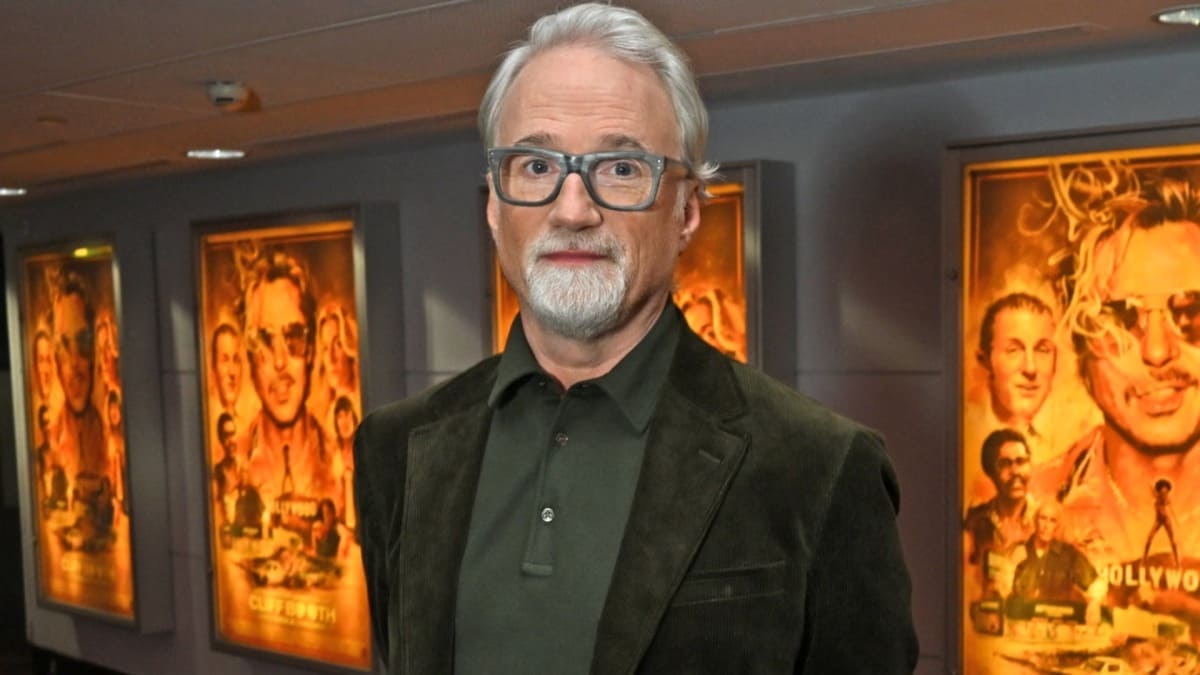
David Fincher "could see" Cliff Booth being his last movie

The director's probably unserious claim follows his admission of AI use in his final film for Netflix.

David Fincher

As creatives and film fans continue to publicly express disappointment and/or give collective side-eye to his admitted AI use in The Further Mis-Adventures Of Cliff Booth, David Fincher is thinking out loud about calling it a wrap on his directorial career. We reported earlier this week on Fincher’s appearance on The Ringer‘s Big Picture podcast, where the director discussed the antiseptic AI use that so clearly appeals to his infamous perfectionism, which casts a poignant shadow over comments he made later in the episode alluding—unseriously, perhaps—to no longer directing films. In a conversation with Ringer‘s Sean Fennessey, Fincher expressed weariness about directing another feature after Cliff Booth, citing a shift in his priorities as his career hits a new, Netflix-free plateau. “I worry about my priorities changing. I mean, my priorities have already changed,” he said. “In all seriousness, I could see this being my last movie. Not because I hated it or not because people didn’t get it… but, you know, I’m 64.”

At the center of this conversation is Fincher’s enthusiasm for AI, which, like your estranged aunt who posts AI images of the president skipping rope with Jesus Christ or whatever, stems from a blend of self-expression and convenience. “The greatest disservice that’s ever been done to cinema is the idea of trying to industrialize the process,” he said. “Storytelling is an intimate thing, and everybody does it differently […] the process of having to populate that space, that storytelling space, with eighty people because it’s decided that that’s how the conveyor belt assembly line runs, I don’t know that I can stomach that.” The convenience factor stands out at one point in the interview, when Fincher said he and his Cliff Booth star, Brad Pitt, angled to trim their shooting schedule to ease the physical rigors of filming for the sixty-year-old fellas. “I don’t wanna work more than 10 hours. I mean, we work 12-hour days on this, you know?” Fincher said, recalling conversations with his crew. “You know, it’s eight o’clock at night. I need to be in bed.”

Fincher went on to endorse AI as a means to overhaul what he calls “industrial storytelling” by streamlining its more onerous aspects, such as additional dialogue recording, and by eliminating the need to transport trailers, cameras, and other production gear during location shoots. “I find that one of the things I bristle at so much—I’m not anti-humanity and I’m not anti-paying people to do work,” he said, “for 100 years, there has been a knee-jerk, which is if you have a real problem, throw manpower at it. Well, in the twenty-first century, that’s no longer the solution. The solution is to be more streamlined in your thinking.” As for the future, it’s doubtful we should brace for Fincher’s announced retirement any time soon. After sounding energized by the subject of filmmaking despite complaints that the industry is in a “holding pattern,” Fincher, in his typical sarcastic manner, said, “okay, okay,” when Fennessey pressed him to promise that Cliff Booth would not be the last film he ever made. Meanwhile, somewhere not too far away, Clint Eastwood could be seen raising an amused eyebrow for no reason whatsoever. 

 
Join the discussion...
Keep scrolling for more great stories.