This holiday season, sci-fi lovers who want to get swept away to an extraterrestrial world can enjoy the dizzying heights of James Cameron’s last Avatar installment. But those who can’t make it through that film’s three-hour runtime might also consider Ella McCay—a lighthearted gubernatorial comedy that somehow feels more alien than a whole community of Na’vi.
Thus is the curious case of James L. Brooks, the legendary Mary Tyler Moore Show and Simpsons creator who went on to write and direct cinematic classics like Terms Of Endearment and As Good As It Gets. In his heyday, Brooks had a gift for combining the rhythms of screwball comedy with a touching humanism that made his prickly-sweet projects feel like nothing else out there. But starting with 2004’s Spanglish, that balance began to wobble. The characters in Reese Witherspoon’s 2010 dramedy How Do You Know behave so strangely, it may as well take place in an alternate dimension. And though the 85-year-old writer-director clearly wants to recapture the magic of Broadcast News with his first film in 15 years, Ella McCay is another delivery straight from the uncanny valley.
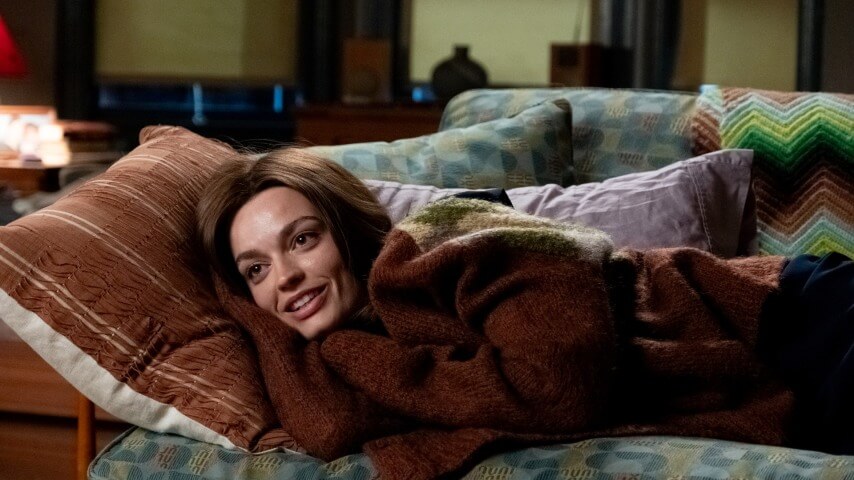
It’s not that there’s one particularly egregious extraterrestrial element about the 2008-set political comedy, which charts three chaotic days in the life of Ella McCay (Emma Mackey), the 34-year-old lieutenant governor of an unnamed state. It’s that everyone acts about 10% off from a screwball comedy character and 15% off from an actual human being, leaving the film and its ensemble stuck in a dramedy no man’s land. One of the recurring “jokes” is that Ella struggles to hear her State Trooper driver (Kumail Nanjiani), even though he’s speaking at a normal volume and she’s just in the backseat. Another involves a (weirdly wholesome) sex scandal that’s introduced like it’s going to be a big deal and then resolved like it’s nothing.
That “all set-up, no payoff” feeling is all over Ella McCay. Brooks spends a lot of time detailing Ella’s unhappy family backstory—from her womanizing dad (Woody Harrelson) to her long-dead mom (Rebecca Hall) to the steely aunt who helped raise her (Jamie Lee Curtis). But it never adds up to a cohesive portrait of a complicated woman. Ella’s politics are vague (she’s pro-moms, anti-weed, and weirdly obsessed with cavities), her talents are ill-defined (she cares about her constituents!), and her communication skills are so poor it’s a wonder she’s made it in politics at all. Ella’s deep longing to be “normal” doesn’t ring true when she’s already so basic; a Cathy cartoon by way of Rory Gilmore.
It’s a disconnect that throws off the stakes of the story. Though Ella’s anti-establishment approach supposedly makes her a dogged thorn in the side of the political elite, she mostly comes across like a timid pushover who kowtows to the wishes of her image-conscious husband (Jack Lowden) and her gladhanding boss Governor Bill (Albert Brooks). In her personal life, meanwhile, she’s presented as an overburdened eldest daughter who will drop everything to go check on her troubled little brother Casey (Spike Fearn) when he doesn’t show up to one of her political events. Only when she arrives at his apartment, it’s clear they haven’t spoken in over a year—a detail that further adds to the weird alien quality of the film’s emotions.
The truth is that Brooks’ off-kilter dialogue has always required a powerhouse performer like Debra Winger or Holly Hunter, someone who can grab the reins of the material and wrestle a beating human heart out of it. Mackey, however, never rises above being placidly likable in a “Netflix rom-com heroine” kind of way. She delivers what’s asked of her, but there’s no extra sparkle to her performance, no sense of depth lurking beneath the whimsical surface. Perhaps because of that, the supporting actors around her go as big as they can to compensate. Unfortunately, they go big in such different directions that no one generates actual comedic chemistry with each other.
But Brooks has enough filmmaking muscle memory that there are still moments in Ella McCay that work—from a tearful phone call between Ella and her aunt to some enjoyably cynical barbs from Governor Bill. Simpsons star Julie Kavner delivers the film’s most locked-in performance as Ella’s curmudgeonly assistant Estelle, who also doubles as the saga’s quirky narrator. And there are times where the story finds a kind of West Wing charm to its idealized version of politics as a place where gumption still matters.
If anything, though, the movie works best as a sort of you-have-to-see-it-to-believe-it curio. The agoraphobic Casey gets a subplot with his ex-girlfriend (Ayo Edebiri) that’s one of the strangest things put to film this year. At one point they slap a wig on 35-year-old Lowden to try to sell him as a 17-year-old. Brooks is inexplicably passionate about how a state cop skirting a “no overtime edict” might make for poor optics during the 2008 financial crisis. And there’s a scene where it’s unclear if Ella is giving an impassioned speech because it’s something she believes in, or because she literally has a traumatic head injury.
It all adds up to a movie that isn’t screwy enough to be a screwball comedy nor deep enough to be a dramedy. Ella McCay sees a bunch of people who have seemingly never met a human before attempting to celebrate the human spirit; it’s a funhouse mirror version of reality that only gets more confusing the longer it goes. It’s a film that can’t be understood, just experienced. As one might tell the blue protagonist of Avatar, “Forget it, Jake, it’s Ella McCay.”
Director: James L. Brooks
Writer: James L. Brooks
Starring: Emma Mackey, Jamie Lee Curtis, Albert Brooks, Woody Harrelson, Jack Lowden, Kumail Nanjiani, Ayo Edebiri, Spike Fearn, Julie Kavner, Rebecca Hall, Becky Ann Baker
Release Date: December 12, 2025


 Keep scrolling for more great stories.