Sundance Film Festival is wrapping up its storied run in Park City, Utah, just a few months after founder and frequent festival emcee Robert Redford died. Sundance is bringing a chapter to a definitive close, preparing to start anew in Boulder, Colorado in 2027, perhaps becoming a less isolated and dense collision of indie film nerds, industry players, out-of-place marketeers, and unflappable skiers. But regardless of what that move brings, 2026’s festival offers a familiar selection of documentaries with dry descriptions, dramas from some of the smallest filmmaking communities in the world, and Hollywood talent striving to make their tiny film stand out amid the packed program. The A.V. Club‘s most anticipated movies of Sundance 2026 count bleeding-edge genre films and long-gestating lost films alike as we unearth the hidden gems among the 90 feature films that made the cut.
While we’ll be covering Sundance 2026 from Chicago, publishing dispatches and features throughout the festival’s run from January 22 to February 1, we’ll still be watching as much as the poor parka-clad souls standing in line one last time in Utah. As the festival begins, our preview can help prepare prospective ticket-seekers for what’s in store, ranging from timely immigration documentaries, insightful artist biographies, searing Japanese delinquent dramas, and the greatest party of Black luminaries ever held.
Barbara Forever
Barbara Hammer’s prolific work already put her life front-and-center, and Brydie O’Connor’s documentary about the pioneering lesbian experimental filmmaker completes the referential cycle, making Barbara Forever into a visual biography run through with Hammer’s aesthetic and ideological fascinations. That means it’s very gay and very naked—body-based and poetic in its focus as opposed to the structural filmmakers that made up the majority of her avant garde contemporaries in the ’60s and ’70s. Her early projects feel like a filmed sexual awakening; her final films find beauty and energy in the end of life. With her spiky dandelion hair, addiction to cameras, and unrepentant openness (a prime example is her doing a version of Subway Takes decades and decades ago), Hammer offers something rare to a nonfiction filmmaker: An electrically watchable subject who was constantly documenting her own life. The resulting archival assemblage is therefore more than just her life story, but her life story viewed in a similar fashion as she perceived it, full of loving relationships, professional slights, artistic triumphs, and great sex.
Big Girls Don’t Cry
A charmingly contained Kiwi coming-of-age drama, Big Girls Don’t Cry sees writer-director Paloma Schneideman capture a moment on the cusp—a teen encountering her own queerness for the first time, exploring the shadier elements of the internet, and trying to grow up too fast. The posturing of puberty bleeds into the anonymity of being online—Sid (Ani Palmer, an excellent newcomer) plays at being one of the cool kids in person, while catfishing through instant messenger and Omegle. She’s got no real safety net, either. Her drunk single dad (Noah Taylor, perfectly scuzzy) is ill-equipped and her big sister brought a flirty exchange student home to stay with them. This small-scale collision drives Sid to some questionable decision-making, captured with an understated yet evocative style. Reminiscent of Cate Shortland’s Somersault and 2024’s Sundance charmer Dìdi, Big Girls Don’t Cry is both bittersweet and nostalgic, filled with memories that might dance around your mind as you lie awake at night.
Burn
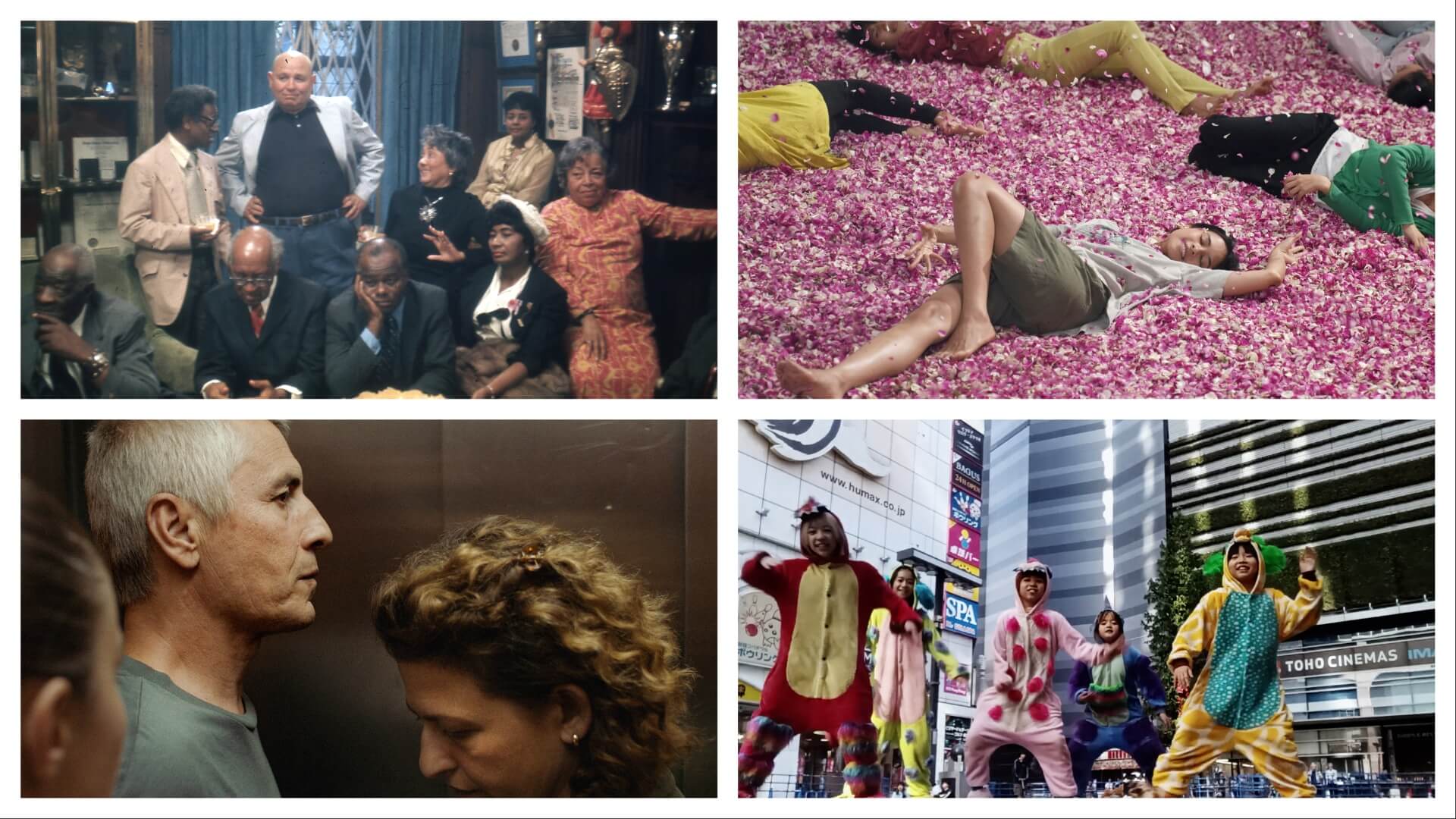
A visually chaotic and inventive runaway saga smackdab in the Kabukicho red-light district in Shinjuku, Tokyo, Burn is like a nightmarish, Requiem For A Dream take on a side quest from the Yakuza games. Plenty of silly humor interrupts the harrowing story of the stuttering Ju-Ju (Nana Mori) and her gang of eccentric street kids, but writer-director Makoto Nagahisa fills Burn with bright, pink, digitized pain. As Ju-Ju and her Peter Pan troupe of suicidal children develop drug dependencies and get pimped out by their gold-toothed, self-appointed guardian, Burn‘s style alternates between in-your-face intensity and security-cam distance. The image flips and spins and deteriorates, through love hotels and karaoke rooms, as these kids try to survive the onslaught of exploitation that surrounds them—and is still, at times, more desirable than going home.
Everybody To Kenmure Street
A shockingly timely documentary from Felipe Bustos Sierra, Everybody To Kenmure Street draws an optimistic portrait of what community action can do when immigration officials aren’t shooting on sight. When, in the summer of 2021, a Home Office dawn raid targets a pair of Muslim men in Glasgow on the first day of Eid, an indignant neighborhood pours out onto the street in response. The ensuing and escalating protest eventually takes over the community, growing from the unassuming seeds of babysitting exchange groups and apartment WhatsApp chats. Compiled from news footage, endearing reenactments, and a diverse spread of phone-camera angles befitting the grassroots activism at its core, Everybody To Kenmure Street makes the most of its populism. Every new interview of a local, angry, protective community member who didn’t even personally know the men who were grabbed—they’re friends of friends, colleagues, local students, mosque attendees, civil rights lawyers—is a heartwarming piece of evidence added to the other side of a scale weighed down by countless breaking news stories in the U.S. Add in a contextualizing history of Kenmure Street and Glasgow’s relationship with immigration reform, and the documentary is equally inspiring and illuminating.
Levitating
Imagine one of those movies where a community has to hold a massive fundraiser—a battle of the bands or a car wash—to save a school or rec center. Now imagine these anti-gentrification themes and Disney Channel dramatics flowing through a rural world of Indonesian trance parties, where an up-and-coming spirit-channeler must work with his crush (and muse) to protect a local holy place. This is Levitating, which writer-director Wregas Bhanuteja injects with both spiritual specificity and a Stephen Chow-like absurdity. Clever and winningly silly, the film’s endearing effects keep the hypnotic set pieces from ever feeling exhausting or repetitive—and when the hero is acting as a conduit for spirits ranging from leeches to bedbugs to turtles and fire ants, there’s little limit to the animal-based choreography the film can roll out. At times, there’s a little bit of an old-school kung fu film to Levitating, but it’s mostly a coming-of-age story with a far more interesting vocation taking the place of “aspiring musician” or “wannabe artist.”
Once Upon A Time In Harlem
You wouldn’t expect filmmaker William Greaves, of the stunning meta-documentary Symbiopsychotaxiplasm: Take One, to be making waves at Sundance this year—in part because he’s been dead since 2014. But his son David Greaves finally arranged footage shot by his father into a staggering work of archival magic and historical fun: Once Upon A Time In Harlem answers the dull question of “Who would you invite to your ideal dinner party, dead or alive?” with one of the coolest shindigs ever thrown. Held at Duke Ellington’s house in 1972, the party that Greaves filmed assembled a few dozen legends of the Harlem Renaissance, shot in interviews, small gatherings, and in the split-screen chaos of a party. Like any party, there are bores and pompous doofuses, wallflowers and the most interesting people you’ve ever met. It begins with an engrossing looseness, then comes into focus as you realize that the old man noodling on the piano is photographer James Van Der Zee; that the guy holding court with a poetic recitation is 96-year-old Leigh Whipper, founder of the Negro Actors Guild Of America. History and humanity fill the warm halls and cozy den of the get-together, a rapturous reckoning with one specific movement and with the endless movements that make up our continuously shifting culture.
Paralyzed By Hope: The Maria Bamford Story
Maria Bamford is such a “comedian’s favorite comedian” that Judd Apatow and Neil Berkeley made a whole documentary about her, one filled with comedy luminaries singing her praises. Even Netflix’s Ted Sarandos makes an appearance, admitting that his love of Bamford led to “the least disciplined thing” he’s ever done as an executive: Renew Lady Dynamite for a second season. But seeing Stephen Colbert shake his head in awe at some of the bits Bamford pulls off isn’t the draw of Paralyzed By Hope: The Maria Bamford Story. It’s having Bamford and her family walk you through the life and mental health struggles that have, for decades, built up her raw and ridiculous act. Her routine has always incorporated impressions of her dad, her mom, her sister, so seeing how those people have reacted over time to this coping mechanism is fascinating—an extension of a career that’s been all about the push-and-pull of being publicly vulnerable. The doc adds in plenty of behind-the-scenes moments from the comedy world about success (whether that means going after movies, or getting dropped from Target ads) that gives it an insider’s touch, but it’s the personal access that makes this one striking.
Shame And Money
Most of us are just one wrong move, one twist of fate, away from our lives changing irrevocably. That existential instability, derived from economic precarity, is the centerpiece of German-Kosovan filmmaker Visar Morina’s Shame And Money. Observing the slippery slope slid down by a farming family after getting screwed over by a relation, the social realist drama (reminiscent of Asghar Farhadi and Ken Loach) sees a multi-generation household in frictionless freefall, where a self-determining couple (Astrit Kabashi and Flonja Kodheli) find themselves suddenly thrust into working as janitors and domestic laborers. A powerful nuts-and-bolts film about the ways that immigrants are thrown to the wolves—by housing, by employment, by their own relatives—and still must internally strive to maintain a sense of dignity, Shame And Money is scripted with subtlety and shot in tense frames and long takes. A unique, gripping score and an allergy to melodrama keeps the narrative engrossing, and the central performers lend gravity to the plight of people who could be anyone without a nest egg—and that’s more and more of us every day.
The Last First: Winter K2
If you were thrilled to get sweaty palms throughout Free Solo, The Last First: Winter K2 will make your blood run cold. Amir Bar-Lev’s documentary tracking the COVID-driven rush to summit K2 in the winter—a feat that marked the last frontier for extreme mountaineering—The Last First finds three interlacing narratives linked to the parties preparing to climb: One, an Icelander and a Pakistani father-son team; two, a group of Nepali Sherpas led by a brash celebrity; and three, a large group of ill-prepared novices who paid an expedition company for the experience. Threads of corporate malfeasance and influencer-driven tourism compile with the impossible conditions and competitive drama, making The Last First a far more complex and compelling story than a simple summit rush. Harrowing on-the-peak footage and an expert’s rundown of the mechanics behind the climb make it as accessible—and disturbing—as these films come.
Time And Water
In Time And Water, Icelandic writer Andri Snær Magnason tells a story, conducted by Fire Of Love director Sara Dosa, framed as a time capsule. A joint eulogy for a “dead” glacier and a brief history of Magnason’s own glaciologist grandparents, a dense and decades-spanning collection of home videos combine with stunning nature footage (at times, this does for ice what Architecton did for rocks) to sing a dirge for humanity and nature, both declining at a similar rate. Through images of his country’s stark and harsh landscapes, as well as close-ups of the kaleidoscopic ice formations that help define them, Time And Water flows forward in dribs and drabs—Magnason’s family aging with the imperceptible constancy of a glacial melt. It’s a touching idea, to memorialize the tactile and ancient things lost to climate change, and all the more moving when linked to the most intimate losses all of us will one day face.


 Keep scrolling for more great stories.