
Frederick Wiseman understood the subtle architecture of humanity
Through his documentaries on systems and the individuals consumed by them, he made complete portraits of humanity in miniature.
Photo: Zipporah Films
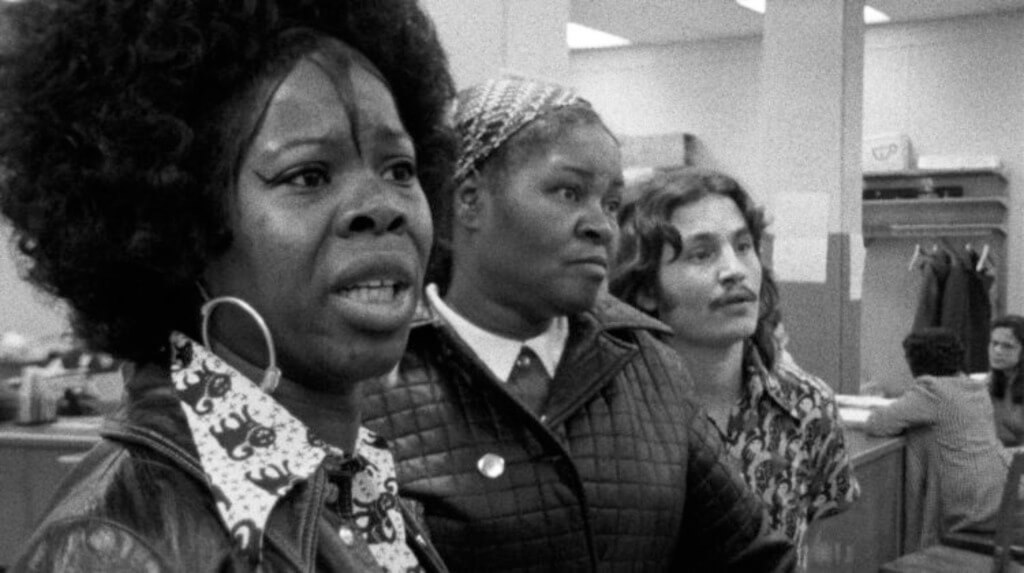
We meet many people in Frederick Wiseman’s films. The crass American diner sticking his face into a plate of haute cuisine and taking a big whiff in Menus-Plaisirs, Les Troisgros. The migrant worker telling a harrowing story about her daughter’s journey on foot to America in In Jackson Heights. The Black security guard slowly losing his patience with the racist ranting of an elderly white man in Welfare. The former schoolteacher, naked and shivering, shoved into a bare cell in Titicut Follies. And yet, none of Wiseman’s documentaries are really about these individuals.
The Thin Blue Line director and fellow documentary legend Errol Morris used an entomological metaphor to describe Wiseman’s work, writing in 2011 that he “has poked his camera into some truly nasty termite pile[s] and watche[d] with bemused satisfaction as the termites scurry around carrying odd parcels and such.” Where many documentarians would zoom in to focus on one particularly industrious (or lazy) insect, Wiseman could see the whole colony.
His films are about people in general, their follies and worries and the things they do to get through the day. He loved to film closeups of faces, cutting between the individuals in a crowd as they reacted to a speech or a performance or a long-winded lecture from a teacher or a supervisor or a judge. But why, his films ask, do they carry these specific burdens, and why do they cope with them in the ways that they do? That’s where the systems come in.
 Keep scrolling for more great stories.