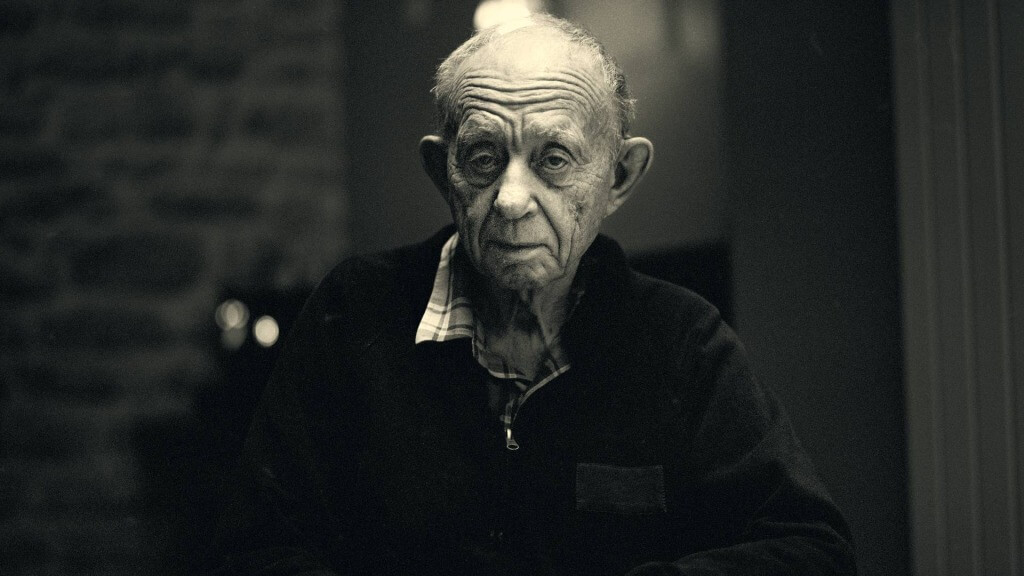
R.I.P. Frederick Wiseman, documentarian who observed human cost of institutional failure

The director of landmark documentaries free of narration and talking heads, including Titicut Follies and Welfare, Frederick Wiseman was 96.

R.I.P. Frederick Wiseman, documentarian who observed human cost of institutional failure

Frederick Wiseman has died. The documentary filmmaker best known for capturing people trapped in the grinding gears of corrupt institutions for more than half a century passed peacefully, his family announced today. He was 96. 

“For nearly six decades, Frederick Wiseman created an unparalleled body of work, a sweeping cinematic record of contemporary social institutions and ordinary human experience primarily in the United States and France,” Wiseman’s production company, Zipporah Films, announced in a statement. “His films—from Titicut Follies (1967) to his most recent work, Menus-Plaisirs – Les Troisgros (2023)—are celebrated for their complexity, narrative power, and humanist gaze. He produced and directed all of his 45 films under the banner of Zipporah Films, Inc.”

Born in Boston, Massachusetts, on New Year’s Day in 1930, Wiseman was the son of a lawyer, Jacob, who helped Jews escape from European nations engulfed by Nazism, and an aspiring actress named Gertude. Initially following in his father’s footsteps, Wiseman attended Williams College and Yale Law School, graduating in 1954 before being drafted into the army. Upon returning to the United States, he took a job teaching law at Boston University’s Institute of Law and Medicine. That’s when he began to show his mother’s influence as Wiseman made his first steps outside the court and classroom to produce Shirley Clarke’s The Cool World, a fictional narrative drama that cast real Harlem kids and gang members. He followed it with his first documentary, Titicut Follies, in 1967. Shot over 29 days in Massachusetts’s Bridgewater State Hospital for the Criminally Insane, Wiseman’s camera observed staff abusing and degrading patients forced into inhumane living conditions. The film shocked the Massachusetts government, which accused Wiseman of breaking an “oral contract” that gave the state final cut and violating the patients’ privacy and dignity. As a result, the film remained banned from public screenings until 1991. 

Titicut Follies set the standard for how Wiseman would make his “reality fictions,” as he called them, over the next 60 years. Unlike his contemporaries, Wiseman’s films were free of narration, diegetic music, on-screen text, or talking-head interviews. In 1968’s High School, Wiseman again spent approximately a month as a fly-on-the-wall, observing but never commenting directly on how those within the institution interacted. The action caught on film would be the story, but Wiseman quickly realized the key to his style was in the edit, where he could juxtapose moments for dramatic and comedic effect. He’s never in the movie, but, as he told The A.V. Club in 2015, “I’m all over the movie, because I’m making all the choices that go into it.”

“It’s a combination of luck and good judgment in different proportions in different times. And then knowing how to use it, and that’s a function of your general experience. So much of these movies, particularly in the timing, have nothing to do with film,” Wiseman continued. “It has to do with deluding yourself into believing that you’re understanding what you’re seeing and hearing in the rushes[…]So I have to convince myself, whether correctly or not, that I understand not only a sequence, but all the sequences in order to make the judgment whether it’s useful to me and how I want to edit it and what its relationship is to other sequences I’ve selected.”

With the backing of PBS and various grants, including a Guggenheim and a MacArthur Fellowship, Wiseman continued making films about the shortcomings of bureaucracies and institutions that, ostensibly, are designed to help people. Welfare, his 1975 documentary, showed the realities of the welfare system that traps people in the Sisyphean struggle of attempting to receive the bare minimum of government aid. But his boundless curiosity wasn’t confined to governmental failures. His 1981 film, Model, shows the inner workings of a New York modeling agency, Zoli; in 1995, he directed Ballet about the American Ballet Theatre. He also directed several short films, including 2022’s A Couple, which he made shortly after the death of Zipporah, his wife of 65 years. He continued making movies well into the 21st century, producing well-regarded documentaries, including In Jackson Heights and City Hall, before officially retiring after 2025. 

He is survived by his two sons with Zipporah, David and Eric, and three grandchildren.

 
Join the discussion...
Keep scrolling for more great stories.