It’s tough to divorce Game Of Thrones from Ramin Djawadi‘s goosebumps-inducing main-title theme. The show ended in 2019, but the haunting orchestral track can still transport viewers to Westeros’ devious politics, gory violence, mythological creatures, and life-or-death stakes. The opening credits—first deployed after the undead wights killed the Night’s Watch rangers in the series opener—helped set up the intensity and the horrors to come. GOT‘s Targaryen-centric prequel, House Of The Dragon, continues to utilize the familiar tune to usher in its own bold storylines and scale with each installment. Listening to the song again is like reuniting with an old buddy; it’s oddly comforting because you know exactly what to expect once it ends: more wars and Machiavellian schemes to acquire that spiky Iron Throne and conquer the realm. But HBO’s latest spin-off treads a refreshing new ground.
Compared to the dense and somewhat exhausting tone and scope of GOT (at least late in its run) and HOTD, A Knight Of The Seven Kingdoms is less daunting and more fun—and not just in a “Here are quips from Tyrion Lannister or Tormund Giantsbane to balance out the brutality” type of way. It offers a respite from the usually lengthy installments, bloody fights, and labyrinthine plotting. Djawadi’s beloved score doesn’t appear fully in these episodes, but it plays a vital role in the premiere, immediately conveying this new show’s cheekier approach. Hedge knight Dunk (Peter Claffey), mourning the loss of his longtime mentor (whom he just buried in the pouring rain by himself), decides to compete in a tourney in his honor. Slinging his master’s sword around, Dunk envisions himself fighting gallantly when the camera zooms in on his pensive expression and the familiar rousing cello notes start to play. The score feels like a cue to ask whether Dunk will evolve into a warrior and if another map of his travels around Westeros is about to roll out. Instead, the song cuts off within seconds to reveal that the only thing Dunk is battling is diarrhea.
This hero’s journey is markedly different from other GOT favorites, but it isn’t any less compelling. Dunk doesn’t beckon followers or admirers in the same way as Daenerys Targaryen (Emilia Clarke), Jon Snow (Kit Harington), or Rhaenyra Targaryen (Emma D’Arcy); he isn’t on a vengeance mission like Arya (Maisie Williams) or Sansa Stark (Sophie Turner); and, unlike Cersei Lannister (Lena Headey), he isn’t hungry to kill others to secure a mighty leadership position. He’s just a guy from Flea Bottom who wants to prove his mettle, even when the odds are stacked against him. Switching the POV from the deathly politics of the royal court or the drama of kings and queens to those who live under their thumbs gives Seven Kingdoms a distinctive purpose. Series co-creators Ira Parker (Better Things, HOTD) and George R.R. Martin (who authored the Tales Of Dunk And Egg novellas) bring a grounded element into a fantasy world of fiery beasts, a gigantic ice wall, greenseers, and frozen zombies. (For all those who want more GOT characters like Hot Pie or Podrick, this is the show for you.)
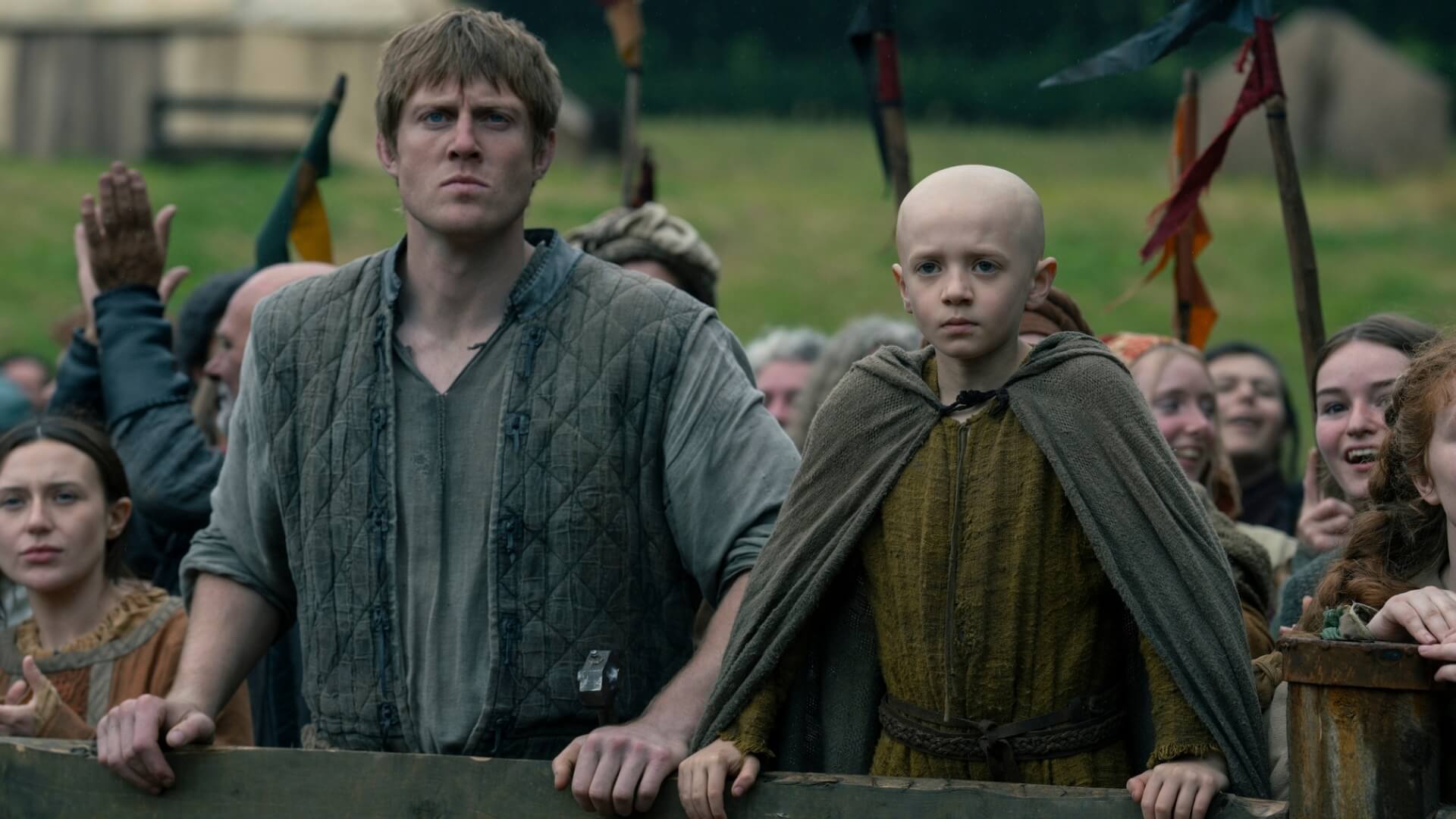
Parker and the series’ writers rely heavily on lighthearted humor and visual gags to sell this charming version of Martin’s universe, which is a reprieve in and of itself. (Dunk shimmying and getting drunk with Daniel Ings’ Lord Lyonel Baratheon in his tent is a premiere highlight.) Seven Kingdoms quickly becomes a two-hander between the tall knight and a precocious young boy who calls himself Egg (Dexter Sole Ansell). As Dunk prepares to joust, he takes Egg on as squire, unaware of the kid’s life story. But it doesn’t matter just yet because Dunk—sweet fella that he is—takes Egg under his wing. In only 30 minutes or so, episode two foregrounds their unexpected and wholesome friendship as the show’s beating heart. Game Of Thrones delivered a few memorable onscreen duos (Jamie Lannister and Brienne of Tarth, Arya and the Hound, Tyrion and Bronn, etc.). But the Seven Kingdoms‘ protagonists seem to connect on a much more human level without hidden agendas, and both of them truly lean on each other because of it. This relatively microscopic scale, along with two sincere lead performances, makes it easy to forget it’s the same Westeros we’re used to seeing.
Seven Kingdoms is also notable because it doesn’t demand homework to be understood. Most IP-driven pop culture wears out over time because of an unrelenting requirement to keep up. Take the Marvel Cinematic Universe, which had to introduce the Spotlight feature on Disney+ to tell (somewhat) standalone stories in Echo, Ironheart, and Wonder Man after a barrage of movies and TV originals that contributed to superhero fatigue. But here, unlike HOTD, which kicked off by telling the audience about its connection to GOT and establishing a timeline, Seven Kingdoms doesn’t spell out those details. There’s still much to glean about Egg’s background, why he chose to follow Dunk to Ashford Meadow, and where their adventures together will lead them. With other potential GOT spin-offs on the way, Seven Kingdoms has positioned itself well as a delightful palate cleanser.
Saloni Gajjar is The A.V. Club‘s TV critic.


 Keep scrolling for more great stories.