That’s never more clear than in the week I’ve come to unaffectionately think of as “Video Game Commercials Season,” centered in 2026 on this weekend’s Geoff Keighley-planned adstravaganza, Summer Game Fest. The Happy Honda Days of video game marketing will inevitably feature some interesting games during its extended ad roll over the next few days—even if I’d love to see the show really lean into its strengths, and tack on an onscreen tally of how much cash Keighley and his team were collecting for each minute of deployed trailer space. But the fact is that, at 42, I’ve simply watched too many slickly cut video game trailers to believe anything I can’t actually put my hands on—which is why I wanted to take a second here to bless those designers who put their code where their mouths are, and actually release gaming demos alongside these big, flashy commercials.
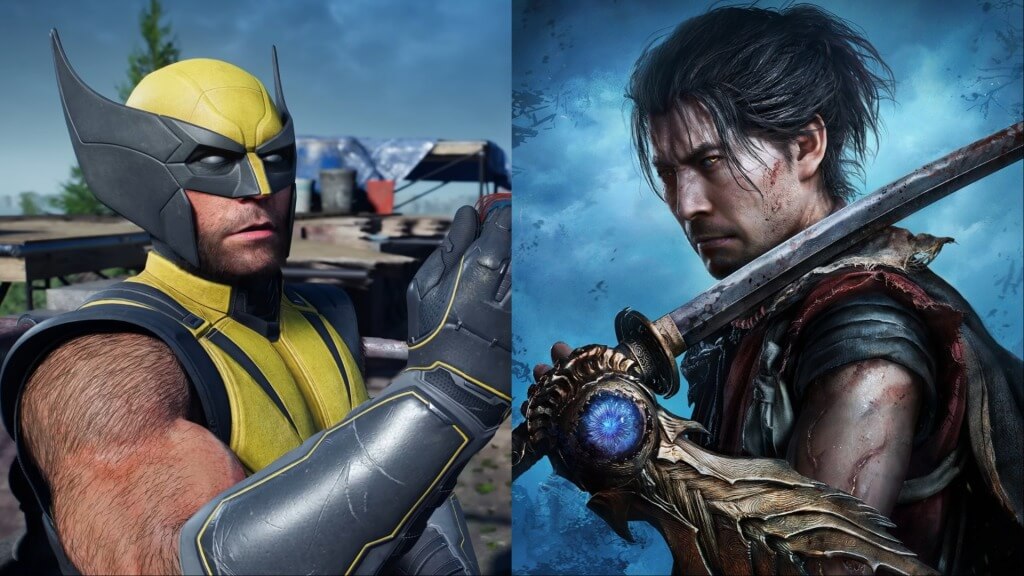
Take, for instance, Sony’s recent State Of Play, which helped kick off SGF Week on Tuesday, and whose trial pickings were grimly slim. Although the studio showed off hefty chunks of its biggest upcoming titles—including an extended look at Insomniac’s Wolverine, and then the full first 20 minutes of God Of War: Laufey, a game already set to light certain retrograde brains ablaze by daring to posit a Mom Of War opposite Santa Monica’s previous two God Of War games—the only actual demo available was for Capcom’s Onimusha: Way Of The Sword. (And, yes, this is also where we can briefly lament that almost every game shown off in the showcase was a sequel, spin-off, or built from existing IP—although Onimusha, at least, has been gone from gaming for two full decades at this point.) This isn’t entirely surprising, given that Capcom has gotten really good at leveraging demos in its own favor over the last couple of years, teasing players with looks at Pragmata’s complex dual-style gameplay, or letting new Monster Hunter players get a handle on the latest installment’s quirks and changes. It’s of a piece with the company’s recent and ongoing renaissance, which has been built around deeply satisfying play—i.e., the kind of thing that only really sells itself in demo form.
Way Of The Sword fits snugly into that mold. Although the game’s story and look both feel pretty boilerplate—for a version of “boilerplate” that includes Buddhist temples being ripped apart by zombie-esque monsters, leastways—the play itself is slick as hell: As legendary swordsman Miyamoto Mushashi, the player moves through a death-filled forest into the aforementioned temple, learning to parry, deflect, and evade monstrous attacks in ways that are intuitive to learn but which have big, dramatic effects on the pacing of a battle, allowing large-scale melees to quickly be turned in the player’s favor. The whole thing culminates in a full boss battle that tests all of the recently deployed defensive strategies, and which feels genuinely thrilling in a way that watching the game’s trailer—which mostly emphasized what a gray and grim palette the whole thing has—didn’t; it’s the kind of game I might not have taken a second look at, if I hadn’t had a chance to put it through its paces myself.
And it’s not like I don’t think Laufey or Wolverine will be good—even if my brain has a mild, knee-jerk revolt at the concept of a version of the ragin’ Canuck not voiced by Cal Dodd (or Steve Blum, in a pinch). But if I watch video of Logan or Laufey slicing away at their various semi-generic foes and think it looks oddly weightless, does that really tell me anything about how it’ll feel in my hands? The Wolverine footage features him making these big, operatic leaps to chop guys apart, but in the moment, will that feel thrilling, or like the video game is getting to do all the really kickass parts of being Wolverine? I won’t know until I can actually get my claws on something—anything!—that communicates what the game feels like in motion, just like all I have to go off of, when trying to figure out how Laufey fights differently from her ex-husband-because-of-dying, Kratos, is what I can see. At the risk of scrambling metaphors completely, it’s the equivalent of trying to judge a film from a handful of promotional stills—yes, you can make a few assessments about things like art design or direction, but stripped of the medium’s most powerful motive force, the whole thing feels hollow.
Which is, of course, of a piece with Summer Game Fest as a whole, as “marketing” and “actual gaming information” continue to pursue ever more gnarly and entangled forms. (A quiet reminder, by the way, that it’s totally valid to skip Keighley’s big-budget show in favor of the many other, less-cash-heavy showcases taking advantage of ambient hype levels to get their messages out this week.) Demos grew out of a time when there was no way, barring a rental or a visit to a friend’s house, to find out whether a game was actually worth playing—so why not let players find out for themselves? You could argue that the proliferation of online video has obviated some of that need, leading to your Nintendo Directs, States Of Play, SGFs, etc. But I remain obstinately unconvinced. We play games to play games, and to that end I’ll say it loud: Blessed be the demomakers.


 Keep scrolling for more great stories.