It’s impossible to watch Apple TV’s increasingly frustrating Hijack and not think about what the film version would have been. Maybe it’s even better to think about it in reverse: Could Die Hard have worked as an eight-hour streaming show? The answer is an obvious no, and the same holds for other cinematic influences of Hijack. You can’t have a bus that can’t slow down for eight hours of television. Of course, there are ways around this. The best way is to embrace an episodic structure, placing obstacles to be overcome and loops to be closed within chapters of the season instead of just stretching them out. And that’s where Hijack frustrates most of all: the lack of satisfaction on an episode-by-episode basis. So while it may be foolish to compare a TV show to films, this one so adamantly plays as a movie broken up into chapters instead of a season of television that it makes the comparison inevitable.
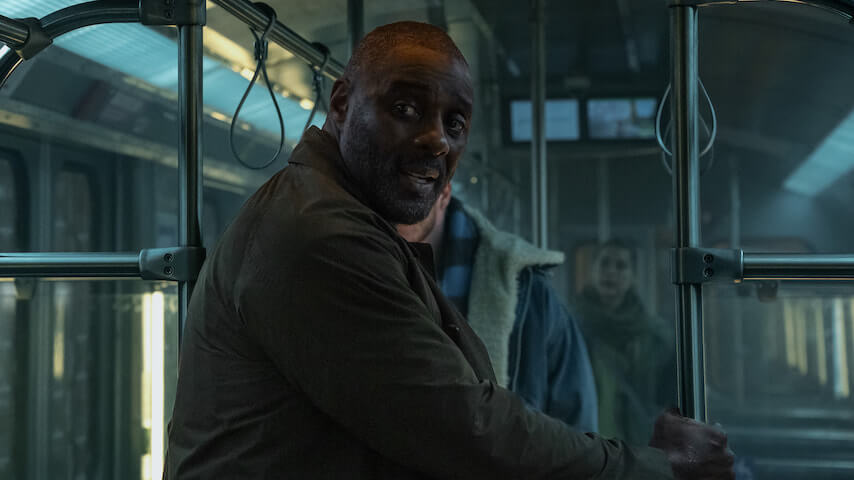
So what did we learn after the third episode of Hijack’s second season? The biggest reveal is that the action this season centers on the death of Sam’s son, Kai, who he believes was killed by John Bailey-Brown, one of the power brokers behind the Kingdom hijacking in the first season. It’s the anniversary of Kai’s death, a fact that someone is using to force Sam to hijack the train and demand the release of JBB. Sam isn’t a hijacker; he’s a puppet who’s being framed.
While the reveal that Sam hasn’t done a full heel turn is important, it doesn’t come with enough tension or buildup. Most people who have ever watched a TV show presumed that Sam Nelson didn’t just go rogue and kidnap a train full of Germans to get revenge on the man who killed his son. And most people who have ever watched a TV show knew that Sam didn’t blow up an innocent passenger at the end of last episode.
To be fair, there were a few reveals in “Baggage” beyond the reminder that Idris Elba isn’t the villain of this piece. In fact, the biggest news may be that there are more insidious players aboard this Berlin commuter train. While the revelation that poor, nosy Freddie didn’t go boom isn’t a surprise, it is a little bit shocking that the guy does actually end up murdered by another passenger. It felt likely since the beginning that anyone who put a plan like the one that’s unfolding on this train in motion wouldn’t count on only Sam Nelson to pull it off. Not only is there at least one person on the train willing to do some truly dirty work, but there’s someone watching Marsha. (And the two kindly neighbors who try to scare him off couldn’t be more suspicious. Take the bet that they’re not as innocent as they seem.)
An important context for the show overall does resurface this episode: Sam Nelson isn’t a superspy. As much as people wanted Idris Elba to play James Bond over the years, that’s not this guy. He’s a business negotiator. And negotiators aren’t used to making kidnapping demands, roughing up conductors, or talking tough with German cops. Mistakes like when he lets a passenger see Freddie’s dead body and then go back to the train—unless he knows she won’t say anything, which is possible given that she looks more dazed than panicked—could be chalked up to emotion and stress. Sam is shaken, not stirred.
So is the rest of the train, which we know now has a bomb strapped underneath it by someone other than Sam. As the explosive device moves past another Berlin train station, the passengers see Freddie’s lifeless body on the platform, with one even filming it on their phone. Rumors have been circulating all around Berlin that something crazy was happening underground in that city, and those murmurs are only going to grow louder.
And maybe that will finally give this season some tension. One of the biggest problems has been the lack of defined characters and roles. Season one milked its thrills out of a relatively simple, terrifying conceivable question: If you were on a plane that was being hijacked, what would you do? There’s no such relatability in season two because the writers have spent three hours setting up the pieces instead of playing the game. Now that it’s clear Sam is being manipulated into playing the bad guy, the rest of the passengers have to slide into bigger roles to question, fight, and raise the stakes. And we need to understand everything that’s happening to Sam, including how he got here, to put ourselves in his shoes. To avoid further stagnation, Hijack needs to stop reading the rulebook and actually start playing.
Stray observations
- • Train movie of the week! Check out Tony Scott’s last flick, Unstoppable, with Denzel Washington and Chris Pine. It’s based on the true story of a runaway freight train in Ohio and the two ordinary guys who averted tragedy. It’s a reminder that Scott made the kind of robust blockbusters that we don’t see that often anymore (because these scripts have been turned into eight-episode TV shows).
- • No one trusts Peter Faber, right? Toby Jones is a fantastic actor, but he has a certain presence that just makes the characters that he plays more suspicious. Faber not only knows more about the dynamic between John Bailey-Brown—it’s revealed this episode that MI5 has been protecting him—but it seems likely that he’s a step ahead of everyone in that control center in other ways too and possibly even behind the whole thing.
- • Maybe one of the reasons this season has been disappointing through three episodes is that this plan seems insane. To break out an international villain from MI5 custody, some malevolent power goes to the lengths of forcing a businessman to hijack a train with 200 passengers who could overcome him if even a few got understandably suspicious. And there’s a bomb on the train too? Hopefully, the writers build up speed to make the questions of the logic of Hijack easier to leave at the station.
Brian Tallerico is a contributor to The A.V. Club.


 Keep scrolling for more great stories.