Michael Shannon and Jason Narducy are becoming a part of R.E.M.’s legacy, one album at a time
Q&A: The Oscar-nominated actor and prolific guitarist sat down with Paste to talk about playing R.E.M. albums in full before taking Lifes Rich Pageant on the road this week.
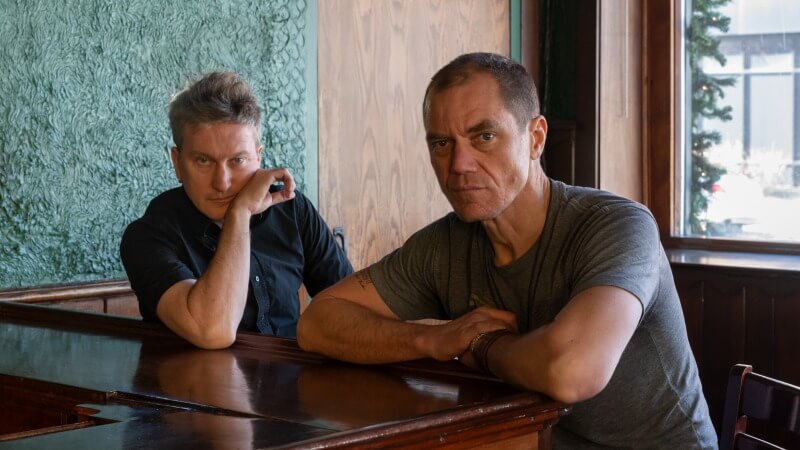
You’d be foolish to try and predict what ideas will take off in 2026, but few American bands are as bankable as R.E.M. Hell, this very magazine was founded by Atlanta guys who came of age when Murmur not only yanked meaning from language, but language from meaning. That’s why Michael Shannon & Jason Narducy and Friends, a supergroup touring vehicle playing R.E.M.’s music, one full album at a time, is a cover band that works. But it’s not really a cover band. Even Michael Stipe says so. It’s a bunch of pals—members of Sunny Day Real Estate, Wilco, the Mountain Goats, and Poi Dog Pondering, alongside an Oscar-nominated actor—burning down stages all over the country by singing the high-caliber rock and roll sophistications of Athens’ most beloved export.
R.E.M. haven’t faithfully gigged since the early 2010s. They got back together to sing “Losing My Religion” at the 2024 Songwriters Hall of Fame induction ceremony and then again with Shannon and Narducy at the 40 Watt Club, but they’re done for good and have told the world as much. So for folks like me—R.E.M. fans who were pre-teens when the band called it a day—Shannon and Narducy are carrying a necessary torch. You can’t put a price tag on a conduit. They sing “Driver 8” like they’re hosting the coolest karaoke party of all time. Narducy’s tone gets bright like Peter Buck’s and Shannon sounds like Michael Stipe, though they’ll be the first people to tell you they don’t sound anything like those guys. It’s not an uncanny similarity but, if you close your eyes while Shannon’s crooning, that low-larynx resonance will put a Stipe-sized image in your head.
Shannon and Narducy met years ago at the Hideout in Chicago. Robbie Fulks brought them together, because he was using his weekly residency at the venue to play a new album all the way through every Monday. When Shannon and Narducy were in the building, they did Lou Reed’s The Blue Mask with the former on vox and the latter on guitar. Soon enough, a friendship formed and, in-between acting gigs and other band obligations, the duo started doing classics by the Smiths, the Velvet Underground, and the Modern Lovers together around Los Angeles. But their faithful play-through of Murmur at the Metro in 2023 changed everything, landing them on late-night talk shows, in publications like The Guardian, and on bills across the US. The buzz kept growing from there. In 2024 and 2025, Shannon and Narducy played Fables of the Reconstruction. They asked the crowd every night if they should do Lifes Rich Pageant. Given the fact that they’re about to tour Lifes Rich Pageant, you can imagine the response they received.
Lifes Rich Pageant was a transportive, transformative album for R.E.M. The band liked John Mellencamp’s radio-ready tone—booming drums, strident guitars, that middle American rumble. Bassist Mike Mills said there was an urge to abandon the band’s previous “murky feelings and sounds” for polished rock and roll and clean, well-articulated lyrics. So they hired Mellencamp’s producer, Don Gehman, to make it translate, and Lifes Rich Pageant arrived in 1986 as R.E.M.’s most potent record yet. Stipe, one of rock and roll’s greatest communicators, sang about genocide (“Cuyahoga”), political incarceration (“The Flowers of Guatemala”), voting (“Begin the Begin”), and the Confederacy (“Swan Swan H”) while Mills, guitarist Peter Buck, and drummer Bill Berry made the mix sound sweet and slippery and seasoned with streaking countermelodies and cymbal accents. The band even tossed in a cover of the Clique’s “Superman” and had Mills sing lead on it. R.E.M. were just four guys 40 years ago (and still are), yet Lifes Rich Pageant sounds superhuman in its vividness.
Narducy and Shannon have something great going on here. Two good friends who love a band so much that they’re willing to devote all of their free time to singing their songs? There’s not enough magic like that in the world. Even R.E.M. themselves have bought into it, joining the duo on stage for “Pretty Persuasion” in Athens and Brooklyn last February. “Listening to the fellows and hearing their interpretations of these songs live for the first time, one of the things that was remarkable to me was how much they studied and really did their homework, but what they’re doing is not mimicry at all,” Stipe told Mojo in 2025. “It’s not a cover band. It’s much greater than that.” Shannon and Narducy aren’t embodying R.E.M., they’re emphasizing the band’s significance. And, whether they agree with me or not, they’ve played a good part in sustaining R.E.M.’s legacy in the 2020s. And they’re doing it in chronological album order.
By my count, Narducy’s told so many people about his love of Document that it’s become one of his defining character traits. (And who could blame him? “It’s the End of the World As We Know It (And I Feel Fine)” is a glorious madcap overload worth building a personality around.) But I wanted to chat with him and Shannon about delivering the Georgia proverb of R.E.M. to good people all over the place before they hit the road. Below is my conversation with them, edited for clarity.
******
Paste Magazine: Jason I know that you’ve told the story a couple of times about Document changing your life. Michael, what’s your story here? When did you find R.E.M.?
Michael Shannon: I’d say Document was the entry point for me. My cousin had it on cassette and he put it on when I was visiting him. We were hanging out in his room and I said, “Dang, who is that?” He’s like, “Oh, this is R.E.M.” Up until that point, I’d been pretty solidly a Phil Collins, No Jacket Required guy.
Jason Narducy: You’re giving me ideas, Mike.
Shannon: I cannot sing like Phil Collins. There’s nobody on earth that can sing like Phil Collins. That’s not possible. I do not understand how that man sang, the way he can sing. Not that I can sing like Michael Stipe, either, or sing like anybody, for that matter. But Document blew my mind. And then I went backwards and forwards. Green, Lifes Rich Pageant, Out of Time, Fables [of the Reconstruction]… I think Document was a record that really broke them out. I mean, I don’t know the facts and figures—the statistics—but “The One I Love” is definitely the song I remember being a huge, big deal.
Obviously you’re getting ready to tour Lifes Rich Pageant and you’re going in order. Document is up next in R.E.M.’s discography. It being such an informative record for the both of you, have you started thinking about playing those songs?
Narducy: No, it’s No Jacket Required. [Laughs]
Shannon: We’ll probably do Document. Really, though, it’s not about our wishes and dreams. The reason we’re still doing this is because people seem to want us to do it. We had a pretty strict policy of just picking a record, playing it once, and that was it. The mysterious thing about all this is it was never our intention to go touring around the country, playing these records. It’s something we do because people seem to want us to do it. On the Fables [of the Reconstruction] tour, I would ask the crowd during the second set, “Should we do Lifes Rich Pageant?” And they would let us know how they felt about that. I’ll probably do the same thing on this tour.
You book that first Metro show on a whim and sell over a thousand tickets. At what point does it actually set in that you didn’t have to do gigs here and there—that you could go on tour and make this project a living, breathing thing in other parts of America and even in the UK?
Shannon: It was really a surprise. Jason, correct me if I’m wrong, but after the Murmur show, there was that festival in San Francisco, right?
Narducy: Sketchfest.
Shannon: Sketchfest, yeah. They were the first ones to reach out.
Narducy: They actually emailed me before we played Metro. They read about the show and thought it was a great idea. And, to your point Michael, it wasn’t our idea. I started getting emails from around the country, Minneapolis was one of them. It was like, “Oh, we’ll try nine shows.” That’s a pretty conservative tour, especially when two of them are in San Francisco and then we fly to Minneapolis. We’ve gotten much better at routing these days. I think we all want to keep this fun, because we all have other bands and other work to do. This has been so joyous and surprising at every turn. If it continues to feel that way, and if Mike wants to keep singing, I wouldn’t want to stop—unless it becomes a grind, or something that’s just not fun anymore.
I’m a Split Single fan, Jason. You’re in—
Narducy: Oh, my gosh.
You’re in a couple of bands. You work with a lot of people, like Bob Mould and Superchunk. Doing this gig with Jon Wurster, John Stirratt, Vijay Tellis-Nayak, and Dag Juhlin, what do you get from this configuration and this idea that you can’t get any place else in your work?
Narducy: If you can give me just five seconds, I’m still grappling with the fact that I found the Single Split fan.
“Last Goodbye”!
Narducy: [Laughs] This is sacred stuff to Michael and I, this music. It’s this combination of working our asses off to get inside it and try to create something close to the spirit. You can’t sound like R.E.M., no one can sound like R.E.M., but if we can capture some of the spirit that their music has and perform it in a way that lets the audience know that we don’t take any ownership of it… There could be a real temptation to [take ownership of it], but it’s really important for us to treat it a certain way. And certainly there’s a little bit of pressure—a beautiful pressure—when the band and their management are watching and helping and making suggestions. It was their manager’s idea to play Bloomington, [Indiana], because that’s where the band recorded Lifes Rich Pageant.
But it makes it all that much more important for us to be aware of the most respectful way to do this. And with my other music work, that is not the case at all. With the Bob Mould band, it’s 120 minutes of fury—we like to say “three hours of music in 80 minutes.” In Superchunk, it’s a different sound and different style of songs. In Sunny Day Real Estate and these other bands that I’m fortunate to play with, it’s original music and you can do what you want with that. With these songs, we want the crowd and the band itself to feel good about it. It takes a different kind of care, a different kind of preparation.
Shannon: It’s like balancing a Faberge egg on your nose for three hours. The songwriting is so incredible, because the band is inimitable. You can’t imitate them, but the songs themselves, they’re a part of the canon. Just because the band themselves isn’t going to go out and play them anymore, that songwriting is so strong. Billy Strayhorn isn’t playing “Lush Life” anymore, but that doesn’t mean somebody shouldn’t be playing “Lush Life.” I consider R.E.M.’s songwriting on par with [Bob] Dylan—the people that are considered to be the masters of the trade. And I think that’s something they were actually quite proud of, getting the Songwriters Hall of Fame nod recently. I mean, I think they were proud enough that they got together and performed a song, which is a big no-no for them. I think that meant a lot to them, and I think it’s well-deserved. The songs should be played. We’re not the only band playing R.E.M. songs. There’s heaps and heaps of bands playing R.E.M. songs. We’re just one of them, which is as it should be.
Narducy: When we were in Bristol last August, the guitar player from a great R.E.M.—I don’t want to say “cover band,” but a band that plays R.E.M.’s music—reached out to me to grab a pint before the show. And I did, and it was really fun to talk to this guy about very inside-baseball voicings and sounds. It’s a world I have very little knowledge of, so to talk to somebody that is so deep in it, it was really fascinating. He said, “You know there’s about 20 working Oasis cover bands in the UK?” And I said, “When you say ‘20 working Oasis cover bands,’ do you mean they make their living from it?” He said, “Yeah!” I said, “Is it affected now that the band reunited and is playing stadiums?” And he said they have even more work now. It’s a fascinating world. It’s cool that people want to celebrate R.E.M.
Michael what you were saying about the Songwriters Hall of Fame nod and them being so proud of it that they got back together for the night… My favorite R.E.M. song is “Pretty Persuasion.” The fact that the guys got up on stage with you two to play that together and sing it with y’all, that had to have been a dream, yeah?
Shannon: The dream… Yeah. You know, I remember thinking, when they were up there, particularly when Michael was up there, that I wanted him to enjoy doing that as much as possible. It’s weird. I wasn’t really absorbing it in a way of, “Oh, I’m finally getting what I want.” I was like, “Oh, I hope he’s enjoying this.” And he seemed to, because he did it three times. We played Athens twice on the Fables tour, and the first night he came up, he said, “I’m going to sing the backline, the harmony.” On the second night he came up, he’s like, “No, I want to do the frontline.” I said, “OK.” And then he showed up in Brooklyn and did it again. For me, it’s very meaningful.
Narducy: It’s another one of those things about this project that wasn’t planned. When Michael Stipe first came on stage in Athens, Peter Buck was already up there and playing with us. And he leaned over to me and said, “I did not think Michael would do that.” They hadn’t even talked about it. And Bill Berry was coaxed on stage by Dag Juhlin. I love that it just happened. Michael, what was Peter Buck’s quote after they walked off stage?
Shannon: “People have been offering us millions of dollars to do this, and we just did it for free.” They’re people, they’re actual human beings. They’re deeply human, which I think is one of the reasons for their appeal—their humanity and longevity. They’re not trying to be slick or put one over on anybody. And they’re very in touch with their emotions. It was a spontaneous thing. Very spontaneous.
R.E.M. is one of those bands that got better with each album. The songs kept getting better. By learning how to play Lifes Rich Pageant, what do you know now about the band and the music that maybe you hadn’t before you touched tracks like “Fall On Me,” “I Believe,” and “Swan Swan H”?
Narducy: There’s a clarity to Lifes Rich Pageant that maybe hadn’t been there before. It’s a big sound, but it’s not super-produced or anything. I would actually say Fables even has more production moves and concepts, but the songs are so massive and the clarity that came with a different recording approach allowed Stipe to tell very direct stories. There’s a number of songs on Lifes Rich Pageant that, after learning them, I like more. “I Believe” is one of them.
Shannon: I think they made a big move with Lifes Rich Pageant. The first three records seem to be of a certain feel. In Lifes Rich Pageant, the feel seems to really shift. There’s a lot of mystery. On the first records, there’s a certain obscurity to them, and that all goes out the window with this one. This is a very full-bodied, full-throated, hot-blooded record. Not that R.E.M. are violent people, but they seem to be on the warpath a bit—like, “We got something to say.” When you think about it, the band was highly respected and lauded from the get-go, from Murmur. People were in awe of them, but they weren’t hugely successful—financially, or anything. They kind of toured themselves into oblivion. They played so much, and they were exhausted, and they weren’t having a lot to show for it financially. This record, I feel like it begins the transition into them being the supergroup they became. You can hear it.
The Michael Shannon & Jason Narducy and Friends tour begins February 11 in Denver. Get tickets to a date near you here.
Matt Mitchell is the editor of Paste. They live in Los Angeles.


 Keep scrolling for more great stories.