
Mt. Everest is too staggering to recreate, it can only be documented
The world's tallest peak just works best when we really get to see it.
Photo: National Geographic Documentary Films
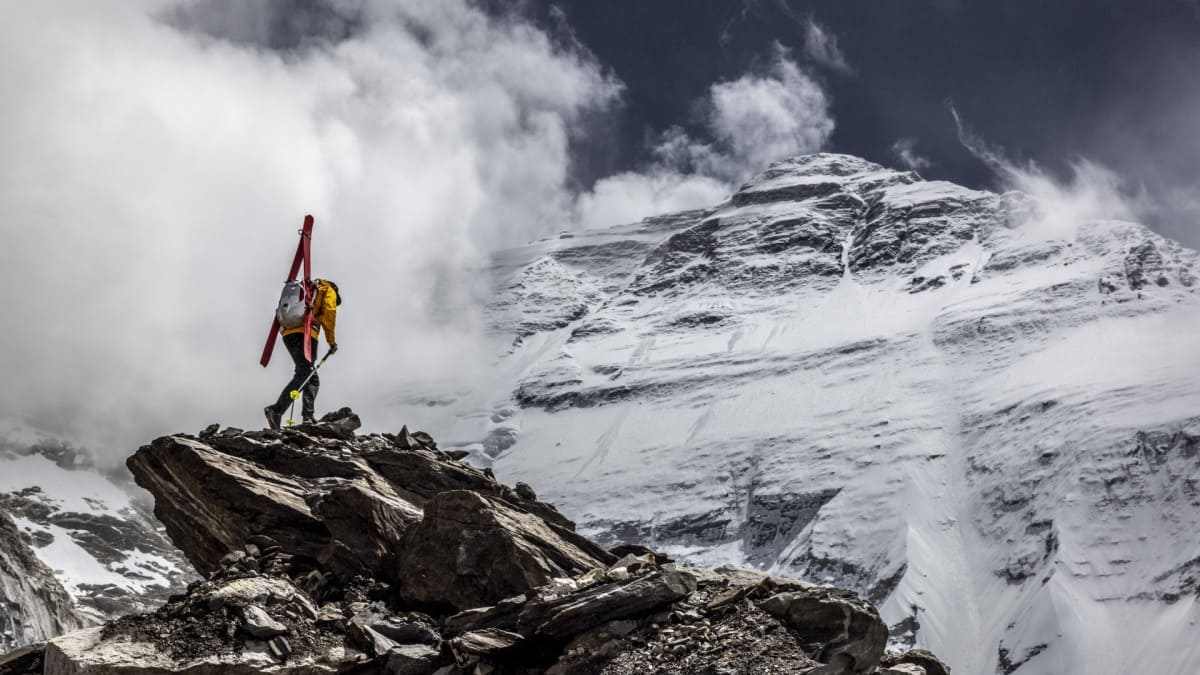
When asked why he wanted to climb Mount Everest, George Mallory famously said “Because it’s there.” With this quip, Mallory captured the innate allure of Everest. He was also unwittingly describing a problem for filmmakers. Everest, the tallest mountain in the world, really is there, and while Mallory died during his 1924 attempt to summit it, many people have made it to the top in the century since. Hundreds have died, just like him, while trying. There’s so much incredible majesty, and the high stakes that come with it, that Hollywood can’t really compete with Everest’s awesome reality. Documentaries, however, can.
Two films out this October make the difference between fiction and nonfiction films about Everest very clear. The first, Tenzing, is a biopic about Tenzing Norgay, the Sherpa who in 1953 became the first person to summit the mountain alongside mountaineer Edmund Hillary. The second, Everest: The Other Side, is a documentary about mountaineer Jim Morrison’s mission to summit the mountain’s seldom-climbed North Face and ski back down despite—or perhaps because of—the many tragic losses he’s endured. (There’s a third mountaineering film this month, Apple’s documentary The Last First: Winter K2, but it’s about the world’s second-highest mountain rather than Everest.)
Tenzing, which stars Tibetan actor Genden Phuntsok as the title character supported by Tom Hiddleston’s Hillary and Willem Dafoe as the leader of the British expedition, is perfectly serviceable. By centering Tenzing, who frequently has been portrayed as a sidekick to the white climbers, the film is a worthwhile historical corrective. While the stars weren’t actually 8,000 meters up the face of Everest during filming, the movie filmed in Nepal and does boast some gorgeous footage of the real Everest and the surrounding Himalayas. Some of the most impressive, effective parts of Tenzing are the establishing shots where Everest dwarfs the actors in the foreground. This sense of awe does not always extend to the narrative. As the movie flashes back to Tenzing’s upbringing, romance with his late wife, and struggles to become a full, respected member of the climbing team, the uniqueness of Earth’s tallest mountain gets buried under familiar biopic beats, with some sports-movie tropes thrown in there, too.
Other narrative Everest movies, of which there are surprisingly few, have the same issue. Obviously Ice Road: Vengeance, a sequel to the Liam Neeson-led Netflix actioner, isn’t striving for grandeur. The Climb, a biopic of French-Algerian Nadir Dendoune, who summited Everest with no mountaineering experience in 2008, is charming but goofy. Everest, the 2015 movie about the 1996 Mount Everest disaster famously documented in John Krakauer’s Into Thin Air, is probably the best-known movie about the mountain and one of the ones trying to convey its impact. An all-star cast whose ranks include Jake Gyllenhaal, Josh Brolin, Robin Wright, Jason Clarke, and Keira Knightley is somewhat wasted as Everest tries to recreate the harrowing thrills of a real-life tragedy. At times, Everest is effective. The jagged peaks and bottomless crevasses are intense, the frozen limbs gross, and a sequence where a dying Rob Hall (Clarke) says goodbye to his pregnant wife (Knightley) via satellite phone is genuinely affecting.
 Keep scrolling for more great stories.