
Return To Silent Hill for the series' worst film adaptation yet
Two decades after first bringing the horror games to the big screen, Christophe Gans puts the final nail in their coffin.
Photo: Cineverse
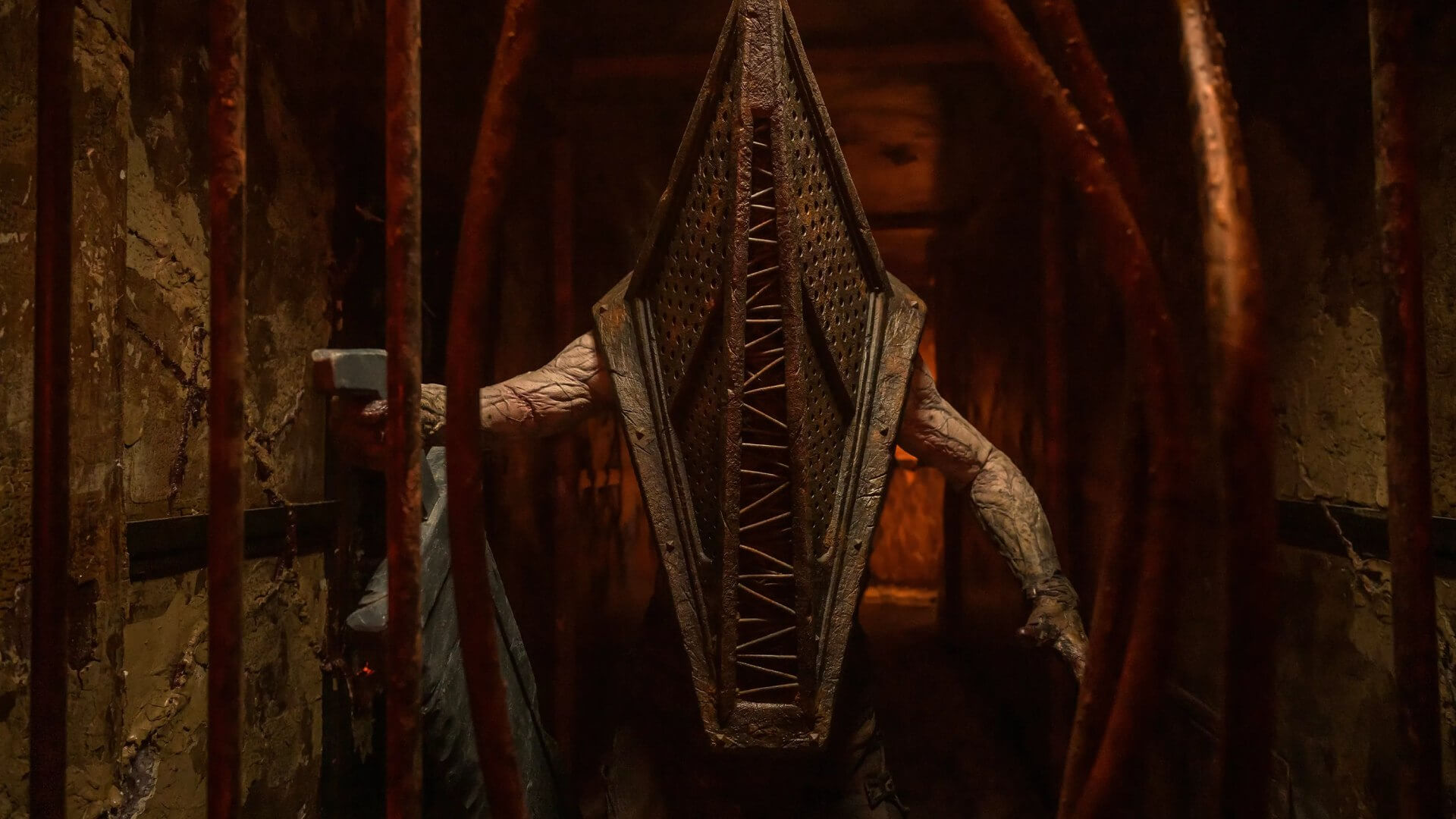
Typically, reunion tours are reserved for beloved acts getting up in front of fans old and new in order to, hopefully, instill something aside from pure nostalgia into their playing of the hits. A bit of age-earned gravitas, or time-honed virtuosity, or at least some erosion of self-seriousness might add depth to the fan service. But that can sometimes be wishful thinking, and the trip down memory lane can be a sobering one—a depressingly staid and cynical attempt to recapture a fleeting magic, every failure to do so exposed by the glaring house lights and an extra-attentive audience. This is what befalls writer-director Christophe Gans, who shuffles his way back to the Silent Hill franchise two decades after first bringing the games to the big screen (the series’ on-screen hopes later fully dashed by the messy production of its sequel, Revelation). Somewhere between a reboot and a remake, Return To Silent Hill is the worst film of the franchise so far, and a reminder that you can’t go home again—even if your home is the haunted hamlet of Silent Hill.
While Return To Silent Hill takes most of its plot from Silent Hill 2—where James Sunderland (Jeremy Irvine) is summoned to the spooky town by his late love Mary (Hannah Emily Anderson)—it never strays far from the images of Gans’ original adaptation. This is the film’s biggest mistake: Somehow, 20 years of technological development and filmmaking experience has made every single facet of this film uglier and duller than 2006’s Silent Hill, probably because this time around, Gans’ team worked with a fraction of that movie’s $50 million budget.
When drunken pseudo-punk painter James, looking a bit like if Tim Robbins was in Supernatural and hadn’t slept for a month, stumbles back to the idyllic lakeside town where he first met Mary, he finds it a rotted, ash-covered, hyper-digital wasteland. But it doesn’t feel abandoned, per se, just empty—like how so many green-screen-heavy films can’t shake the sense that they were predominately shot inside a warehouse. Each frame is so sparsely filled and every shot is so wide that there’s no creepiness or claustrophobia in its bare monotone; when James crashes over a trashcan, it’s not a tension-breaking shock, but the obvious bumblings of a fool. This style evokes late-era Stranger Things, where each new shot is entirely disconnected from the preceding one, where an actor’s only direction is to stand on a dot and trust that FX artists will salvage things in post. It is through this blurry and ugly blizzard of blue-gray mush that James trudges, driven only by his need to run through a list of recognizable touchstones—a staticky radio, for example—from the game.
 Keep scrolling for more great stories.