For almost the entire time that Sega was in the console business, they were trying to make the internet work for them. A search for some kind of advantage over the competition combined with a desire to leverage new, more powerful technologies—a trait the company had developed in the arcades, where they first found prominence—led them to the online world. Except said online world was still so nascent in the games scene, still so undeveloped, that it was a difficult thing to even advertise or promote or develop around.
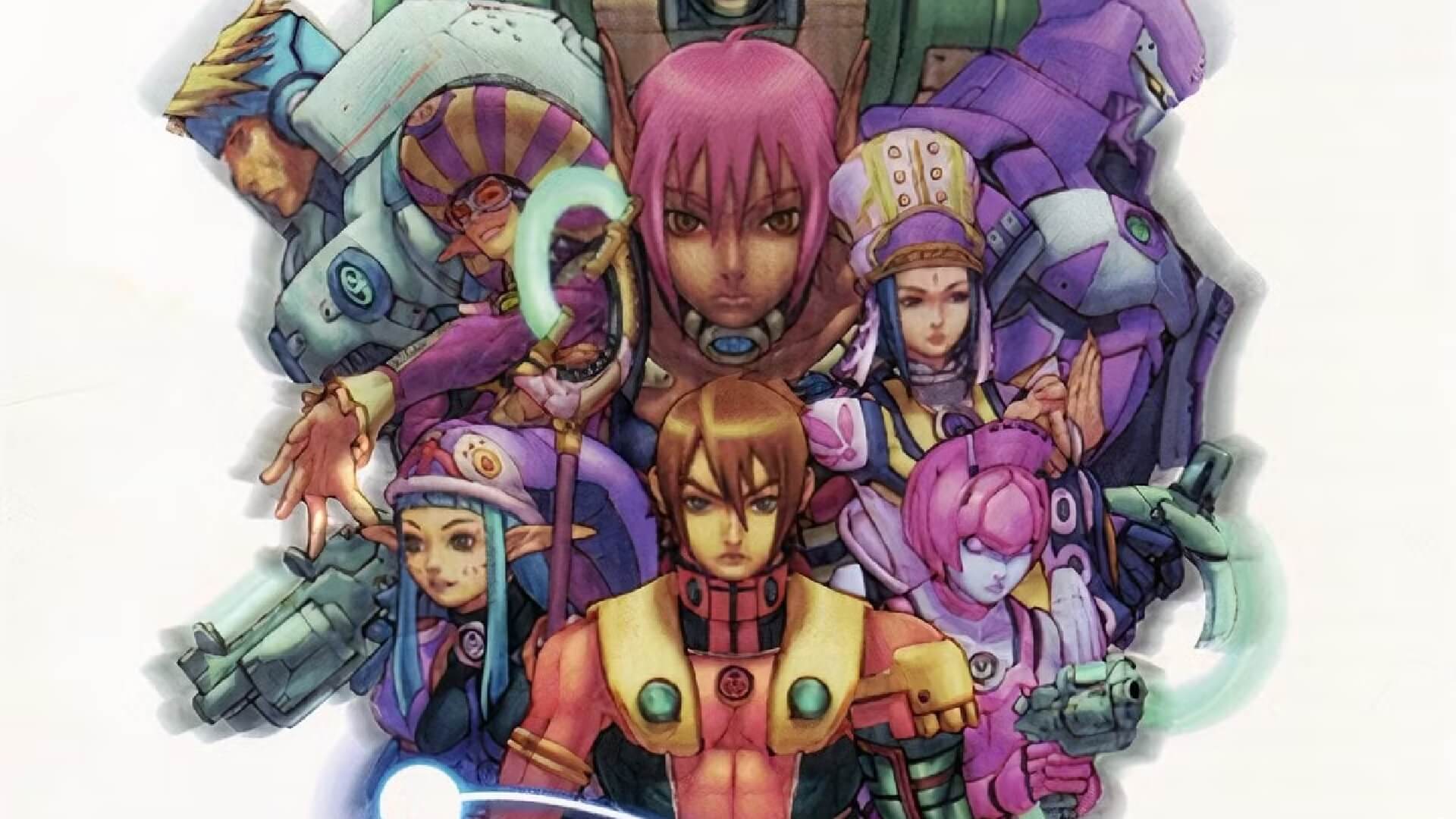
In December of 2000, Sega would release Phantasy Star Online in Japan. It was, in many ways, the culmination of those decade-spanning efforts to utilize the internet for something that would stick, the final product from lessons learned over the course of multiple projects and multiple consoles. It’s an exceptionally important game that helped lay the foundation for online console gaming for years to come—and it’s also just a great time even all these years later, even if the world it takes place in seems so much smaller now. But the important thing is that it didn’t just happen. Phantasy Star Online didn’t come out of nowhere, but from dedication to the idea that something fruitful would come from Sega’s work with the internet and connectivity, eventually.
Sega Net Work System—otherwise known as Sega MegaNet, after the Genesis’s Japanese name Mega Drive—was Sega’s first foray into utilizing online capabilities in a console. It used dial-up internet and required that a modem be purchased—the Mega Modem, naturally—and did this all the way back in 1990. The modem connected with the expansion port in the back of the console, and then you could plug it into a phone jack in order to achieve those sweet, sweet 1,200bit/s speeds. Luckily, games were also a lot smaller back then, so while it wasn’t exactly a quick download, you weren’t trying to shove multiple gigs of game data onto the specialty cartridge you would buy for Sega MegaNet titles.
In what turned out to be fitting, one of the most prolific series available through the MegaNet was Phantasy Star. Phantasy Star II had a number of text-adventure spin-off titles featuring characters from the base game, which meant that, of the 42 games released for MegaNet, seven of them were in the Phantasy Star line.
While announced for North American release, it never did get there, and the redesigned Model 2 Mega Drive/Genesis removed the EXT 9-pin port that the modem connected to thanks to the failure of the system to catch on. Between the service only receiving so much support and the price of the hardware and subscription necessary to make it all work, it just didn’t stand much of a chance in 1990, even if it did give you a heads up about the news and the weather in addition to a downloadable library of games. It was like the Wii well before the Wii. MegaNet did receive a release in 1995 in Brazil, however, which Tectoy’s licensed version of the Mega Drive was able to utilize, so, like with so many other Sega products, it wasn’t actually dead even if it seemed that way because Brazil was around to keep it alive. (If you want to see how much Brazil loved Sega, check the Sega Master System Wikipedia page sometime, go to the “Lifespan” section, and note when production of the system stopped in the country.)
MegaNet would give way outside of Brazil to the Sega Channel, which used cable television connections, such as through Time Warner Cable, to deliver downloadable games to users, by way of a coaxial cable and adapter for the Genesis. Nintendo tried something similar in the same era, albeit by going the satellite route with the appropriately named Satellaview, but neither quite took off like either industry giant hoped. Sega Channel did pretty well, though, when you remove the lofty executive expectations from the mix, with a quarter-million subscribers ready to try out demos and download games from a rotating list of 50 titles in their living room. But the late-life release of the service combined with its cost—$15 in 1994 is more like $33 now, which wouldn’t seem like that much if Sega wasn’t in the middle of turning their attention to the Genesis’ successor system, the Saturn—caused this one to flame out, too. And that was the case even though it was at first the only way you could get your hands on the excellent Alien Soldier in North America. Ah, well, at least we have the Video Game History Foundation keeping the Sega Channel alive in the present.
Speaking of the Saturn, Sega was ahead of the game here, too, and just like before, maybe a little too ahead of the game. The Saturn never established a user base as significant as the Genesis and MegaDrive, so that was one problem, but another was just that playing games online on a console was pricey in the mid ‘90s. You could get the Sega Net Link attachment for your Saturn at a cost of $199, or in a $400 bundle with a Saturn well after the system had experienced some significant price cuts, and then in 1997 Sega began to bundle the Net Link with games you could play with it: Sega Rally Championship and Virtual On: Cyber Troopers NetLink Edition. The Japanese equivalent at the time actually had more compatible games and was known as the Sega Saturn Modem, but while the Saturn was more successful there, it’s not as if it changed the hearts and minds of a generation of people unsure of how into this whole online gaming thing they were supposed to be.
Which brings us to the Dreamcast, by which time Sega had learned many valuable lessons about online play. For one, expecting people to pick up a modem and connect their console to the internet that way just wasn’t going to work. As Sega’s Akio Setsumasa told Polygon in a 2020 retrospective, “at the point where it was decided that we were going to make a game for the Dreamcast, we decided that network games were going to be the next big thing, so we requested the inclusion of a modem in the hardware. We knew that if the modem was an optional peripheral, nobody would play the game.” The Dreamcast came with a built-in modem—the first console to make that choice—and the result was that you could play online without having to buy an expensive add-on or with the userbase being split or any of what got in the way of full adoption and support in the past.
ChuChu Rocket! isn’t just a great game, but it was also a test for Sega’s internal developer, Sonic Team, to create an online multiplayer game on the modem-enabled Dreamcast. As programmer Yasuhiro Takahashi told Polygon in that same retrospective, “We were all part of Sonic Team so we were able to gain the necessary network knowhow through ChuChu Rocket!’s development. Through ChuChu Rocket! we figured out how to offer four-player online multiplayer gameplay, so we were able to use that experimental knowledge to build PSO. It’s because of ChuChu Rocket! that we realized we could make a game that offers online communication between four players.”
Sega had tried online game distribution on 1200bit/s modems. It had attempted online multiplayer. It had tried to convince people to pay subscriptions and for add-on modems to be able to harness the latest technology. None of this worked, in the sense that none of it made Sega richer and more successful nor at the center of the gaming universe where Nintendo and Sony took turns sitting across these eras. However, all of these attempts taught Sega a little bit more about what online could be and how it could be utilized, what worked and what did not, and what decisions should be made at the console level in order to support these dreams of an online-enabled console that people actually wanted to play. All of that led to Phantasy Star Online, and if you ever experienced it—or ever played any of the many games it influenced, like Capcom’s Monster Hunter series, or even Phantasy Star Online’s many followups from Sega—then you know that the wait for online gaming that worked was worth it.


 Keep scrolling for more great stories.