If you’re looking for recommendations outside of the previews you’re glimpsing from San Diego Comic-Con, why not try a cozy murder show starring one of TV’s hottest new villains or an engrossing novel 20 years in the making?
The role was Norton’s first series lead gig and he made the most of it, earning the moniker of Hot Priest a few years before Andrew Scott. His time on Grantchester was bookended with roles in series like Doctor Who, Happy Valley—where he first showed just how menacing he could be—and Netflix’s House Of Guinness, in which he got to combine his swooning and imposing qualities. Now he’s wreaking havoc in Westeros on House Of The Dragon as Ormund Hightower, proving that a civil war can always become more fragmented. But even if you’re enjoying Norton in his more villainous register, Grantchester is still worth a look; it’s where the actor first teased his depths by playing a member of the clergy determined not be a saint, but a flesh-and-blood man who wants to help others without completely sublimating his own needs.
Sidney’s arc ends in the fourth season (in clumsy fashion, as the internet has already informed me) with the arrival of a new attractive man of the cloth (which is often leather), Will Davenport (Tom Brittney), who ministers to the flock for seasons four through nine before Alphy Kottaram (Rishi Nair) takes over. Alphy’s time genially fighting crime in Grantchester is set to end along with the broader show on August 2. You can stream all episodes, as I do, on PBS Passport (which rules), but Netflix also has the first four seasons.
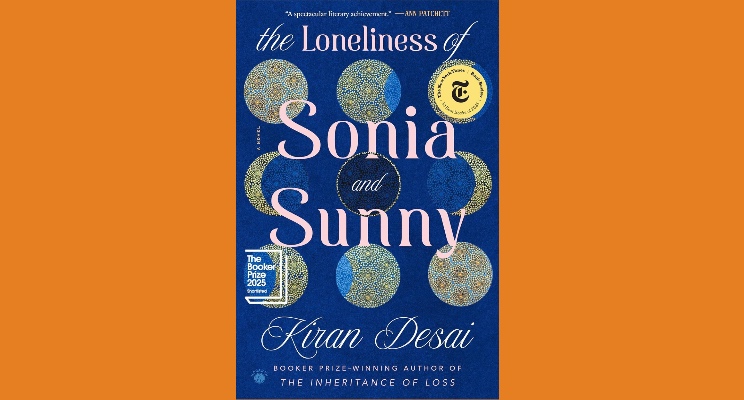
Saloni Gajjar: The Loneliness Of Sunny And Sonia by Kiran Desai
Years before Sonia Shah and Sunny Bansal glimpsed each other in an overnight train, their families had devised and promptly dismissed a plan to get them hitched. It briefly seemed like a good fit: Sunny, a recent Columbia University graduate, had just started as an Associated Press editor in New York City; Sonia was hours away in snowy Vermont, studying at a fictional college and daring to dream of becoming a writer. What nobody in their homes back in India realized—or thought enough to prod—was how forlorn and sunken Sonia and Sunny were across the globe, or that, in the future, they were destined to end up together.
In her sprawling, Booker Prize-nominated 2025 novel, Desai lavishly details the depths of The Loneliness Of Sonia And Sunny. Their universes collide through acquaintances and coincidences, but they don’t actually meet until halfway through the almost 700-page book. Instead of focusing solely on their romance, Desai gives ample space to their internal and external struggles (Sunny’s melancholia and family issues, Sonia’s depression and visa problems), so we know them inside and out by the time they fall for each other. There’s an in-depth focus on their parents, relatives, friends, neighbors, and previous partners. Desai beautifully fleshes out Sonia and Sunny’s respective worlds. Or rather, their worldviews, molded by an upbringing in a burgeoning India and further remolded when Sonia and Sunny moved to the U.S. in the mid-’90s to pursue their American dream.
But the two youngsters get stuck in different ideas of home over the next few years. This novel captures a sentiment long observed in immigrant stories about a constant push-and-pull between trying to belong to two countries and cultures at once. However, Desai’s comprehensive prose is so colorful and absorbing that it’s impossible not to get transported to the places her protagonists occupy and attach themselves to: Sonia’s childhood home in Allahabad, the claustrophobic living space she shares in Manhattan with a much older, emotionally abusive artist boyfriend, or the resort hotel in beachy Goa where she tries to write a book. Then there’s Sunny’s fanciful mansion in New Delhi, a cramped Jackson Heights studio that his mother despises, and the shack in Mexico where he escapes to after a family tragedy.
The Loneliness Of Sonia And Sunny, which Desai took almost 20 years to complete, presents an intrinsic understanding of the clashes between Indian tradition and modernity in the early aughts. Sunny’s widowed mother seeks a fresh start, but doesn’t quite know where to find it. Sonia’s mom wants out of a loveless marriage, and society brands her an oppressor for it. Sunny’s doctor best friend, tired of coming home to no one, succumbs to an arranged marriage. Sonia’s single aunty joins a convent because at least the nuns will take care of her in old age. The Loneliness gives even its tertiary characters so much dimension, you can’t help but care about the outcome of the two young girls, Vinita and Punita, who work as domestic help for Sunny’s family.
Akin to Min Jin Lee’s Pachinko and Janice Y.K. Lee’s The Expatriates, Desai crafts a moving tale of survival and identity, but with an unabashedly South Asian perspective. As for the central pair, after struggling to fathom their own selves, Desai ensures that Sonia and Sunny find a home in each other. The Loneliness might not be the easiest read—admittedly, it can meander—but even its detours are well worth savoring.



 Keep scrolling for more great stories.