
A Shakespearean roguelike and bad times on submarines headline the latest Steam Next Fest
Other standouts include a musical RPG and chess-themed Balatro.
Image Credits: AP Thomson, Iridium Studios
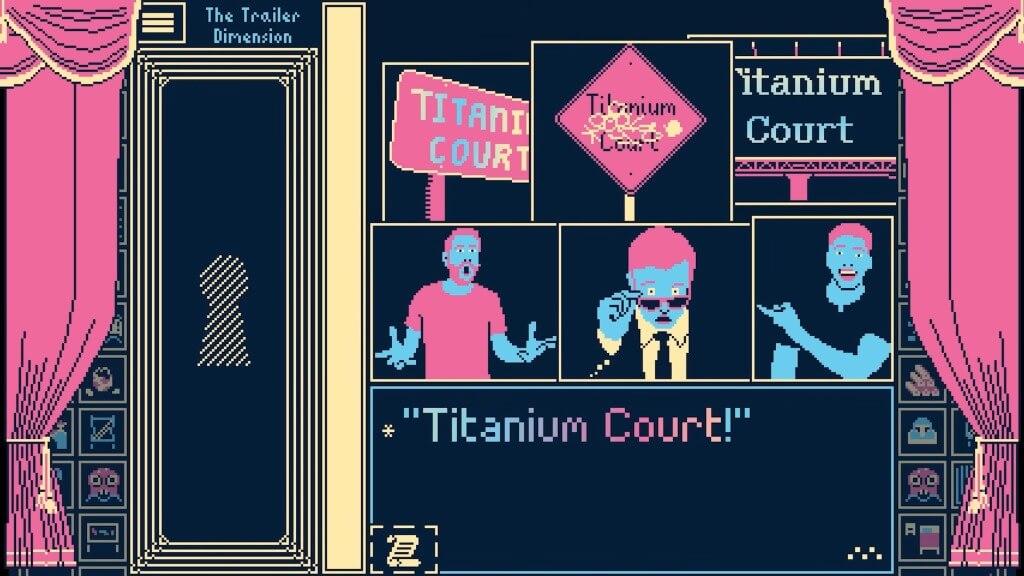
Steam Next Fest has become a fixture for discovering what’s on the horizon in the world of games, with its thousands of demos offering a chance for previously under-the-radar games to find an audience. Many viral hits have gotten their start here. As an event, it’s heavily skewed towards games of a certain size—smaller to mid-budget—but this makes it a useful tool for getting a pulse on what’s in vogue outside of the shrinking AAA sphere. A central theme across some of the most interesting games from this February’s Steam Next Fest, which starts today, shouldn’t come as a surprise: Roguelikes are still very popular. The good news is that despite this kind of run-based experience being so prevalent, some of these demos make it clear that we haven’t seen everything this sub-genre has to offer yet.
The game that best sums up this untapped potential is Titanium Court, a bizarre mashup of resource management, match-three mayhem, tower defense, and A Midsummer Night’s Dream-inspired whimsy. After a very meta opening, you play as a displaced woman who takes on the role of Queen Titania, tasked with defending her keep from incoming invaders. To crudely summarize, this is more or less a strategy game where the topography of the battlefield is determined by your choices during match-three puzzle sequences. For instance, if you match three forest tiles, you’ll gain resources in the form of wood while causing those trees to disappear from the map. The ability to morph the surrounding terrain lets you build up moats (by maneuvering water tiles around your base) or take out enemy battlements in advance by lining them up and clearing them. Once you’ve used up your turns during the match-three sequence, the battle begins, and your automated troops defend your castle or storm the enemies, depending on which role they’ve been assigned. While this central push-and-pull is engrossing and unique, what really sets the game over the top is its puckish presentation, with dialogue, pixel art, and characters that are very in keeping with the Bard’s comedies. It turns out the best way to spice up a well-worn formula is to add a little Shakespeare.
The other standout roguelikes weren’t quite as unique as this one, but they still managed to do something new with familiar influences; specifically, they owe a lot to Balatro. For starters, there’s DiceVaders, a sort of pseudo-sequel to the deckbuilder StarVaders where you play as that game’s bad guys, the aliens. As its name suggests, this is a “dicebuilder” where you attempt to juice up your odds. Each turn, you roll D6 dice whose numbers correspond to columns, allowing you to score whichever units you’ve placed in those corresponding grids. It’s not all up to chance, though, and the key is to manipulate your rolls while combining them with various artifacts and unit abilities to build a big score. As for where Balatro comes in, DiceVaders has a similar scoring system that includes a base number and a multiplier: Just like in LocalThunk’s hit, the name of the game is using the power of multiplication to generate a total with a whole lot of zeros at the end. The different unit and artifact types have abilities that allow for creative solutions, and while the math can sometimes become a bit tough to follow, it feels great to blow past a level’s score threshold. There are also lots of ways to minimize the inherent randomness at play by using resources that let you nudge a dice one column over or reroll entirely. It’s a brainy and distinct twist on familiar ideas.
 Keep scrolling for more great stories.