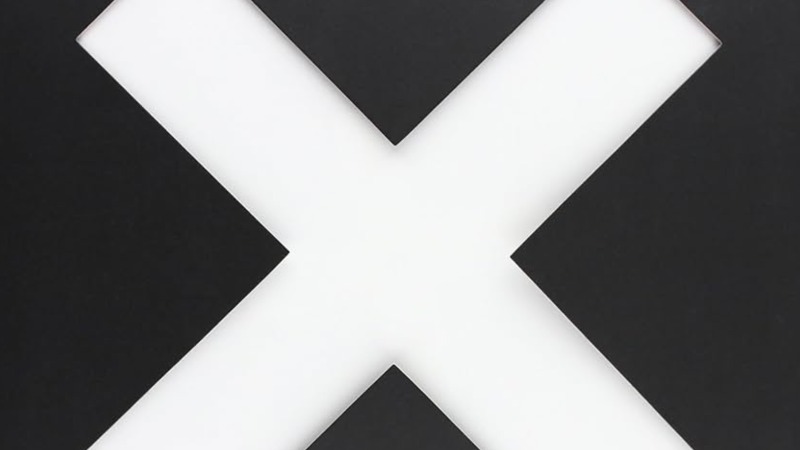
Read any coverage of The xx around their debut and you’ll quickly learn that critics, media, and fans alike truly believed the soft-spoken then-four-piece to be Britain’s greatest export since penicillin and the Beatles. “The band with the world at their feet”—as The Guardian called them in 2010—burst seemingly out of nowhere in 2009 with their self-titled debut, which would later go double platinum in the UK and even win the Mercury Prize. Skip ahead to 2011, and band figurehead Jamie Smith (now known to the world as Jamie xx) was already working with figures like Drake, with Rihanna even sampling the album’s “Intro.” But it’s only now—16 years, innumerable high-rolling sync and licensing placements, and one final gasp of virality on TikTok later—that the dust on xx has finally settled. The album, now reissued on a deluxe version with a handful of scattered bonus tracks, has often been framed as a sacred text throughout these past 15-odd years of indie and pop music. With that kind of history weighing it down, it’s no surprise that the deluxe version doesn’t feel as fresh today as the initial album did in 2009. But the music I heard on that reissue has problems that go beyond the mere passage of time. To put it bluntly: has xx always sounded this limp and dull?
It is, perhaps, a bit revealing that “Intro” came to be the track with the longest lifespan, considering it’s the only song with no sung lyrics, and it never climaxes beyond some noodling guitars and an airy stomp-clap. It is the album’s shortest track, which is felt when it just meanders towards a paltry end, never expanding on the brief moment when Sim and Croft do some vocalization that briefly introduces something fluid and exciting. Even though the track was meant to be just an introduction, in hindsight, its mass popularity feels fairly telling of the broad appeal of The xx, in the sense that even their biggest hit utterly lacks dynamics, managing to both begin and end inconsequentially.
There are undeniably fascinating sonic moments throughout the record, like the brilliantly restrained droning bass on “Fantasy.” But the substance is nonetheless lacking, a truth too baldfaced for even the aesthetic polish to hide. “Shelter,” one of the record’s longest tracks, drones on and on between an aimless drum build and an utterly disappointing guitar chorus. Others are just confusing, like the emulation of a tabla on “Basic Space.” These elements might have sounded fresh at the time, when critical audiences were drowning in piles of loud landfill indie rock. Yet even considering that backdrop, it’s confusing how an album this glum was able to so aggressively captivate masses.
It’s baffling how much of the album is built around a single plucked guitar note and a kick drum. “VCR” takes this formula and adds a quiet music box melody, making the song feel like a hypnotic lullaby. Often, the guitar parts are riffing lines that a 14-year-old who got his first guitar from Christmas would come up with: banal, three note repetitions played with a shocking sloppiness. “Crystalised” adds a second guitar to the mix, aiming for a Reed-Morrison interplay, but vague three note runs and quick strumming never coalesce into anything greater than the sum of its dreadful parts.
At no point do Croft and Sim sound like they are fully awake. Sim’s singing on “Fantasy,” heard through dense layers of reverb, sounds like a drugged-out nightmare, before the hefty low-end drone and a drawn out guitar melody plays the track off into nothingness. Their performances are pleasant to an infuriating extent. Their alternating duet on “Basic Space” feels aimless, like they’re each singing with no one and no melody in particular. It’s not that they’re bad singers, but that they are clearly capable vocalists who intentionally opted for this bland, apathetic tone—and that might be worse. Similarly, The xx as a whole clearly demonstrates themselves as a technically proficient band, able to conjure immensely specific sonics to build their desired Just soundscapes. But by the end of the record, you’re almost begging for them to merge away from the slow lane they’ve spent 40 minutes driving in.
Nearly every step of The xx’s origin story seems at once like a miraculous lottery draw and an absolutely mundane walk in the park. Childhood friends Oliver Sim and Romy Madley Croft began playing together as teenagers before meeting Jamie Smith and Baria Qureshi (who was ejected from the band soon after the release of xx) at the Elliott School, where they were all studying music. Young Turks, a nascent imprint of XL Recordings, signed the band, built them a studio, and gave them two-and-a-half years to slowly develop a record. As a result, many of the songs on xx were written many years prior, when Sim and Croft were teenagers. The band’s story—a testament to the merits of patient artist development—doesn’t exactly excite, but it’s worth considering the immensely rare amount of artists that are afforded such a vast array of luxuries and perfect domino falls.
The xx were the latest in a long tradition of gloomy responses to flashy originators: punk and its goth daughter, rave and its IDM son, and so on. Just look at what they were playing against—in the years prior to the xx’s Mercury Prize win, Franz Ferdinand and Arctic Monkeys were each awarded the prize for their new-age rock star post-punk freakouts. XL Recordings, the partner label to Young (which released xx), spent the aughts releasing stadium and club classics from the White Stripes, M.I.A., and Dizzee Rascal. In other words, it’s not that The xx were totally without peer. Sleek dance outfits from the turn of the century like Metro Area and the humbler side of DFA Records seemed to share similar attitudes towards minimalist chic. Signs of a calming public consciousness came with the release of Adele’s 19, nabbing the XL label some rare mainstream commercial success. But it was the rise of The xx that marked a real turning of the tides towards a headier alternative market, one that they slowly began to dominate as the decade stretched on.
Somewhat ironically, it’s the few loose tracks on the deluxe reissue that make up the most compelling material on the release, particularly considering the fascinating light they shine on The xx’s original influences and headspace. A restrained cover of “Teardrops” removes the rowdiness of the Womack & Womack original, even though it was already a calm record for its era. Their cover of Kyla’s “Do You Mind,” also borrowed by Drake for “One Dance,” draws a clear diagram of the band’s relationship to dance music. Oliver Sim and Romy do a decent job reinterpreting Aaliyah on “Hot Like Fire,” redirecting Timbaland’s minimalist percussions towards the scant guitar arrangement. These tracks do prove that The xx were truly something unique, that their processes and ideas were ones both previously unconsidered and certainly worth pursuing. Unfortunately, however, they also suggest that the foundations that defined The xx were—and still are—far more interesting than the final product churned out.
It’s not exactly The xx’s fault their material has served as inspiration in some boring places. The trend of interesting genres and sounds—swing jazz, ambient, lo-fi hip-hop—being relegated into everyday muzak is a long and evil history. Just listen to this royalty free track titled “Soft Background Music,” featuring a quicker iteration of the same guitar-kick drum interplay that outlines the entirety of xx. It doesn’t help that The xx have probably been featured in more CW shows and TikTok life hack tutorials than any of their contemporaries, but even without taking those particularly egregious syncs into account, the way the band’s sound has been politely and anonymously filtered through mainstream consciousness feels almost unparalleled—and that’s saying something. The xx’s innovations feel buried in their own mystique, unattractive for the average Pure Heroine fan to actually figure out what’s going on. It’s the age-old monkey’s paw, in which the innovation of an album is tarnished as its influence grows larger and larger. xx is far from the only victim of this phenomenon, but plenty of progenitors still sound great to this day, no matter how many thousands of stock music composers have borrowed from them. But if one removes The xx from their role as a load-bearing influence, all their debut will sound like is a misguided attempt to paint the sky a bleak shade of gray.


 Keep scrolling for more great stories.