The sky is empty because all the stars are in Christopher Nolan’s flashy adaptation of The Odyssey. But for this week’s AVQ&A, we look beyond Homer and towards other tales in the canon. Film editor Jacob Oller wants to know: What literary classic deserves the AAA film treatment?
As always, we invite you to contribute your own responses in the comments—and send in some prompts of your own! If you have a pop culture question you’d like us and fellow readers to answer, please email it to [email protected].
The Divine Comedy
The dire Netflix film In The Hand Of Dante did do one thing right (beyond its lively cameo performance from Martin Scorsese): It reminded me how cool a film working within the reality and the fantasy of Dante Alighieri could be. Not only did his Divine Comedy—Inferno, Purgatorio, and Paradiso—help define our modern visions of heaven and hell, they were early self-insert fan-fiction, filled with gossipy observations and contemporary moralizing about local politicians and religious figures. These stories are imaginative world-building masterpieces filled with the kind of hyper-personal details that could easily be updated or specified for a modern audience, blending the inner turmoil that would woo an Oscar-hungry actor and the expressive settings that a big budget could support. It’d be a body horror extravaganza, venturing down into the depths before rising into the light—like if Darren Aronofsky merged the holy highs of The Fountain with the torturous lows of Mother!. (For the record, I do not think Aronofsky has what it takes to do this. But somebody does!) [Jacob Oller]
Moby-Dick
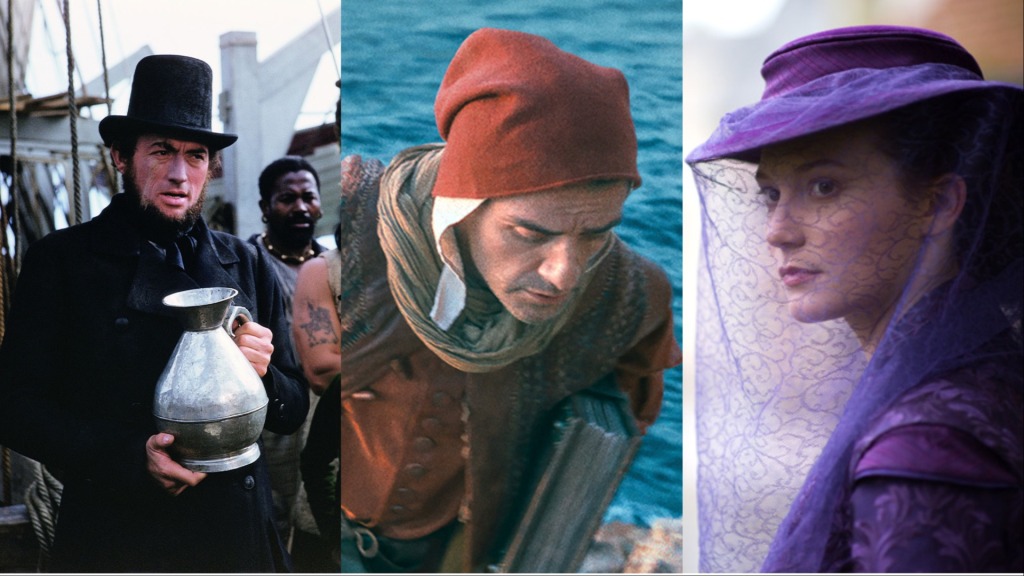
Like most people who read Moby-Dick for the first time this year, I can’t shut up about it. Part of the reason is, aside from John Huston’s 1956 film adaptation starring Gregory Peck as Ahab, there isn’t a great adaptation of the Pequod’s trials to cure my monomania for more Moby-Dick. The reasons for this are obvious: While the last 200 pages would make for a real corker, Herman Melville’s sprawling narrative—unreliably narrated by potentially numerous sailors—is far more interested in whale-ship life and the white man’s hubristic attempt to tame the sea than Ahab’s pursuit of his White Whale. That salty dog doesn’t even enter the story until about three-quarters of the way through. Still, why do we have a Ron Howard movie about the “true story” behind Moby-Dick, and an Oscar-winning drama about Brendan Fraser’s obsession with an essay instead of a straightforward adaptation? It has more to do with the expensive impracticalities of seafaring filmmaking. Still, it’s hard not to watch Master And Commander and imagine what a technically gifted craftsman like Peter Weir could do with Melville’s masterwork. We’re sure it’s already many directors’ White Whale. Maybe Christopher Nolan is available. [Matt Schimkowitz]
Madame Bovary
Call it recency bias—for me, not the world of literature—but I read Gustave Flaubert’s novel earlier this year and was struck by how modern and hilarious Madame Bovary was. Emma Bovary spends the novel chasing dopamine, spending well beyond her means, and ignoring her child. Her thought process feels not far off from that of many people I know, and the sexual element was even more pronounced than I expected. There have been adaptations of this novel before, sure, but none have caught on the way that this most recent The Odyssey adaptation or even some of the works based on Jane Austen’s novels have. I could totally see Madame Bovary getting a major IMAX push à la Emerald Fennell’s Wuthering Heights, but it might be even more interesting to go the Clueless or the She’s The Man route. Move the action from 1830s Rouen to a modern mid-sized American city and imagine Emma as a woman who ended up a tradwife but secretly wishes to be Carrie Bradshaw. I would happily buy an IMAX ticket to that a year in advance. [Drew Gillis]
A Tale Of Two Cities
“It was the best of times, it was the worst of times, it was the age of wisdom, it was the age of foolishness…” What better time to revisit Charles Dickens’ classic story of love in the time of revolution and unrest than right now? Split between Paris and London, the story follows the release of Manette from the Bastille after 18 years, finally meeting his long-estranged daughter, Lucie. She attracts the attention of a French aristocrat in London, and the two start an idyllic life before the French Revolution disrupts their plans. There are forces beyond these characters’ control and an unrelenting sense of tragedy and unfairness as multiple fates become intertwined in the chaos—all great dramatic fodder between tense court accusations and escapes. Yet, the last major Hollywood production was a passable MGM adaptation back in 1935 with Ronald Coleman, followed by a less successful British 1950s adaptation starring Dirk Bogarde. Clearly, this old story about trying to find love and enjoy life in a time of unending chaos could use a fresh coat of movie magic, a swoon-worthy passionate cast, a small army of period costumes, and some extravagant production designers. [Monica Castillo]
Pale Fire
I’ll start by acknowledging that anyone who tells you that Vladimir Nabokov’s 1962 novel Pale Fire is fundamentally unfilmable is probably dead-on: A nested meditation on poetry, commentary, identity, and dozens of other ideas kicking around in the Lolita author’s head, the book defies any easy effort to bring its storytelling-by-footnote approach to the screen. But that inherent messiness is also the kind of thing that I’m drawn to in adaptation. I can imagine big monsters or epic battles just fine all on my own, but I love to watch filmmakers struggle with questions like “How do I adapt a story told through a poem and a commentary on that poem written by a possibly delusional madman?” C’mon, Denis Villeneuve: You know you stuck all those references in Blade Runner 2049for a reason. Call up Ryan Gosling, sell him on dual roles as John Shade and Charles Kinbote, and let’s make something profoundly weird. [William Hughes]


 Keep scrolling for more great stories.