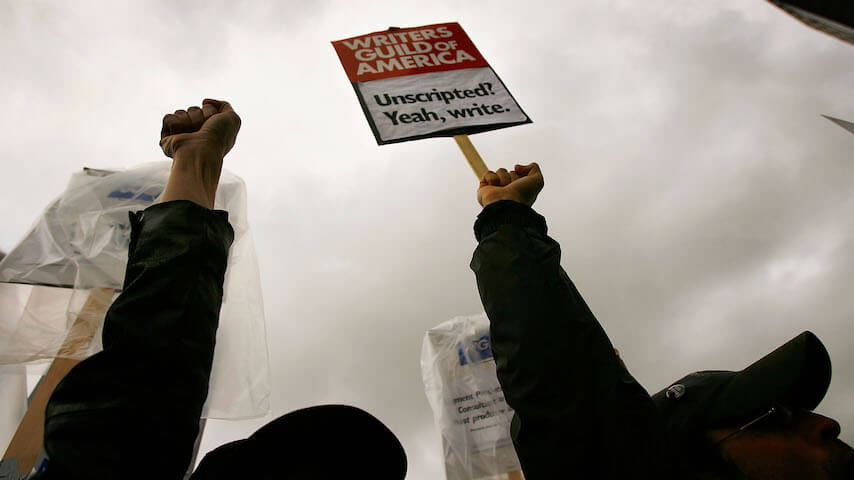
Back on Saturday, we reported that the Writers Guild Of America West—the union that represents most of the writers working in Hollywood at any given moment—had decided that 2026 was not going to be 2023 in terms of launching a big, protracted fight with the studios. (To be fair, the WGA already has a big, protracted fight on its hands, as it’s currently facing a strike from its own employees, so maybe it felt its big, protracted plate was a little full.) The Guild announced over the weekend that it had reached a deal with the AMPTP, the trade group that represents Hollywood’s major studios during union negotiations, more than a month before the current contract deadline was set to expire. Even beyond that, the new contract is apparently for four years, rather than the standard three, meaning the WGA is letting the studios go one whole extra year without worrying that a work stoppage will get in the way of making movies and TV.
So, what did the WGA get for that pretty notable concession? THR has a new piece today detailing at least some of the terms of the contract—most notably a massive cash infusion to the union’s flagging health fund, with a reported $321 million going into the plan’s coffers, courtesy of the studios. This is per a statement the WGA sent out to its members on Wednesday, summarizing the new contract, which is still awaiting ratification. That also includes reveals that minimums for writers will move up across the board, and an increase in residuals for streaming shows. (The new provisions include both increased royalty payments and more requirements for streamers to disclose their earnings from shows, allowing for better tracking of the online royalties; you may recall this was a major sticking point in the run up to the 2023 strikes.)
As for the biggest sticking point—one that’s only going to get even stickier over the next four years this contract covers—the contract summary was fairly light on language about artificial intelligence. It did note that, in addition to the protections won in the 2023 contract (including promises to disclose use of AI in material provided to a writer, and not to force writers to use AI tools themselves) it will now be slightly more onerous for studios to license out writers’ work for future AI training. (“Companies must give the Guild written notice if they license writers’ work to train a commercial GAI system in order to create outputs, and the Guild can request discussion with the company about the license, including any remuneration for writers.”)
So, yeah: Not the firestorm of conflict that broke out a few years back, as the industry as a whole still seems pretty worn down from the 2023 strikes. But fans of drama and conflict could still be in luck: SAG-AFTRA’s contract from that same round of battle expires on June 30 (right alongside the Directors Guild’s), so there’s still plenty of time for some serious recriminations to suddenly break out.


 Keep scrolling for more great stories.