“Bandcamp feels like the indie game equivalent of music.”
That’s how Alpha Chrome Yayo, the composer behind the jazzy, night drive vibes of Promise Mascot Agency’s soundtrack, describes the online music store Bandcamp. He speaks of it fondly, a common sentiment among video game composers when asked about the site. It’s a platform that has provided a home for diverse work within the video game music space and beyond, and one that composers have largely enjoyed using. And, like any home, change can be worrying—and a recent one is leaving some composers worried about its future.
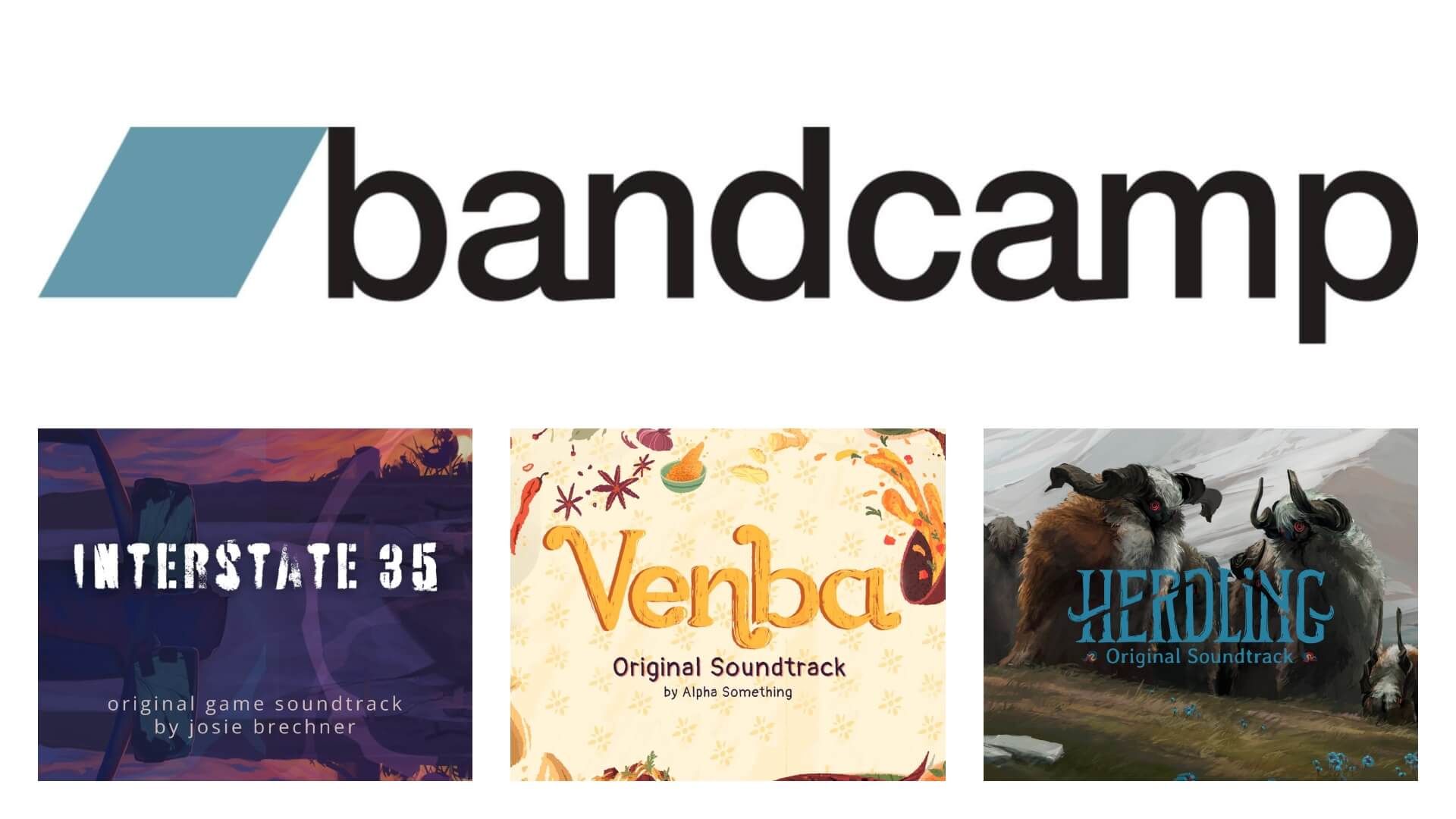
Bandcamp is already known for its importance to the independent music scene, having a long history as a vibrant hub of weird and awesome music that exists outside the mainstream, but what’s less known is its relevance to the independent game scene. Bandcamp frequently covered video game soundtracks from big and small studios in the past, helping promote the work, and has become the de facto storefront to host many of them. “In the indie game space, Bandcamp is kind of like the presumed headquarters for the soundtrack, at least in this moment in time, since I started working in games,” explains Josie Brechner, a video game composer who’s worked in the space since 2016 and has created original soundtracks for games including Interstate 35, Extreme Meatpunks Forever: Bound By Ash, and Rhyolite. Bandcamp also has another connection to the larger video game space: Fortnite and Unreal Engine developer Epic Games purchased Bandcamp in March 2022, then sold the music store to Songtradr in October 2023. Roughly half of Bandcamp’s staff at the time were laid off in the process.
Despite the Epic disruption, Bandcamp’s main appeal to artists and fans hasn’t changed. While buying whole albums has become foreign to most consumers today, as streaming services like Spotify and Apple Music have fundamentally changed people’s relationship with music, album sales is what Bandcamp prides itself on. Bandcamp stands out amid its digital counterparts by making a point of encouraging consumers to directly support their favorite artists through album and song sales rather than streaming numbers. Additionally, what makes the online store attractive to artists is its pay structure: according to the official site, on average 82% of a sale goes to the artist. The official breakdown is that Bandcamp takes a 15% fee for digital items (10% for physical items) and a payment processor fee that ranges from four to six percent. The rest goes to the artist. Additionally, since 2020, artists started seeing an even larger share of sales on the first Friday of every month, now known as Bandcamp Friday—a day where all fees are waived and artists retain 100% of the sales made within the 24-hour period of time.
Musicians genuinely love the site. “They give artists a larger cut [than streaming services], a more fair cut I would say,” shares Neha Patel, a video game composer with credits including Venba, Six Ages 2: Lights Going Out and Ethernights. Joel Schoch, the composer behind the soundtracks of Herdlings, Far: Lone Sails, and Far: Changing Tides, expresses a similar sentiment. “The share is fair, the platform is nice, the Bandcamp Friday thing is nice. I’m a supporter of this platform,” he said.
For context, let’s look at how music streaming giant Spotify pays out. Spotify pays artists around $0.003 to $0.005 per stream. Additionally, starting in April 2024, Spotify requires tracks to reach at least 1,000 streams in the previous 12 months to be eligible for royalties—which, in 2023, only 19% of artists on the platform had reached—as well as an unspecified minimum number of unique listeners. A smaller artist could make more money from one Bandcamp sale than they might see from Spotify over their entire career.
Given the constantly-bleeding-workers nature of the video game industry over the past couple of years, as well as Spotify’s increasingly negative reputation, Bandcamp seems like the kind of platform that could offer some real support to video game composers and musicians during both certain and uncertain times. And it has for some—but with a few caveats.
“It doesn’t really impact our day-to-day, but… when it hits, it hits,” says Elder Maikis, one half of the sibling hip-hop duo Okumura, which has contributed music to games like Sorry We’re Closed, No More Heroes III, and Paradise Killer. But Mishelle, the other half of Okumura, explains that earning money from Bandcamp versus streaming services isn’t as straightforward as it may appear. “Both have their advantages in the current moment,” she notes. “Sometimes, Bandcamp is more beneficial than streaming. Other times, streaming is more beneficial than Bandcamp.” She uses an example where, if Okumura was working on a big project, it might be better to present through Bandcamp not just because of potentially earning more income, but also because Bandcamp has less “hoops” to jump through. (As Josie Brechner put it, “Bandcamp is the path of least resistance. For just putting music up online, Bandcamp is still the easiest thing.”) In Okumura’s case, Mishelle was referring to sample clearances.
While almost every composer interviewed states that they’ve earned more money from Bandcamp than streaming services, there is one exception worth noting. “I was lucky with the Far: Lone Sails soundtrack,” Schoch mentions. “One track got into the biggest gaming playlist on Spotify. And via that… I or the game makes more money with Spotify than it does with Bandcamp.” Other composers also share that getting on a Spotify playlist that sees tons of visitors is a major boon, but very rare. “If you manage to get onto a playlist on somewhere like Spotify, you will be making way more money than on Bandcamp because that playlist thing reaches out to millions and millions of people. It’s almost kind of like a lottery ticket,” Patel explains.
Despite their potential to drive income, neither Bandcamp nor streaming services are where composers and musicians make the most of their money. That comes from the initial fee that is negotiated with developers and publishers for the work being produced. After that? Soundtrack sales through Valve’s Steam is in second place, it turns out, so long as the contract gives composers a cut of that revenue. In fact, soundtrack sales on Steam often make so much more money than anywhere else, usually due to being bundled with games, that Neha Patel has an entire presentation on it called Get Your Money: An Indie Dev’s Guide To Profitability that she presented at the Game Developer Conference. She provided a useful comparison for an album she worked on: “For that album, I made about $150 on Bandcamp, a couple cents on streaming services, and about $400 on Steam OST. So it’s still more than double my Bandcamp.”
With the exception of one composer who had a sizable audience on Bandcamp prior to composing video game music, most of the composers we surveyed say they ultimately weren’t making a significant amount of income from Bandcamp. No one said it was factored into a game’s bottom line. Instead, it’s more often bonus income or money to see them through to the next major project. So, while Bandcamp is, on average, earning artists more than streaming, it seems that the appeal is more about the ease of uploading music and its equitable pay structure. In theory, if more people were using Bandcamp rather than streaming services, it’d be a different story for these composers. As Schoch puts it, “if you can find a solution to gather millions of people on one platform, you will have the power. If there would be the same amount of people buying music on Bandcamp, that would be the ideal scenario.”
With that said, recent changes on the platform concern multiple composers—specifically, the shift from Paypal to Stripe as the site’s choice of payment processor. Several composers are wary of the change given Stripe’s major part in the payment processor-led censorship of games containing adult content on storefronts like itch.io and Steam—a ban that not only threatens game developers’ livelihoods and their creative freedom, but also disproportionately affects LGBTQ+ creators. “I think we’re in the process of losing something that was special about Bandcamp,” Josie Brechner says about the change. “Paypal’s not the best about this, but Stripe has been a lot more aggressively nefarious.”
Alpha Chroma Yayo shares a similar sentiment. “It does give me pause for concern. On the flip side, if Bandcamp is going to go Stripe, there’s nothing that can be done about it. I’ll have to find a way to make it work. I do rely to some degree on the platform. It’s my main point of contact when I’m sending people my music,” he states. “But yeah, it does give me pause for concern. It concerns me more in a wider sense, in that payment processors in general having control over content is not nice. It’s not good.”
With all the above in mind, Bandcamp does start to reflect the broader indie games space generally. Play around with it and you’ll find some of the most exciting work in its specific artistic space, created by people who care about and want to make art, and not just products. But being “independent” doesn’t absolve it from criticism around its more questionable decisions. Ultimately, as with most platforms, it seems the best part about Bandcamp for composers are the people. As Yayo notes, “When I say I love Bandcamp the platform, what I really mean is that I love people who use Bandcamp. It’s the people that make it work, and that’s what I’m super grateful for.”


 Keep scrolling for more great stories.