InCult Of Criterion, The A.V. Club highlights a new release from The Criterion Collection each month, examining the films entering an increasingly accessible film canon.
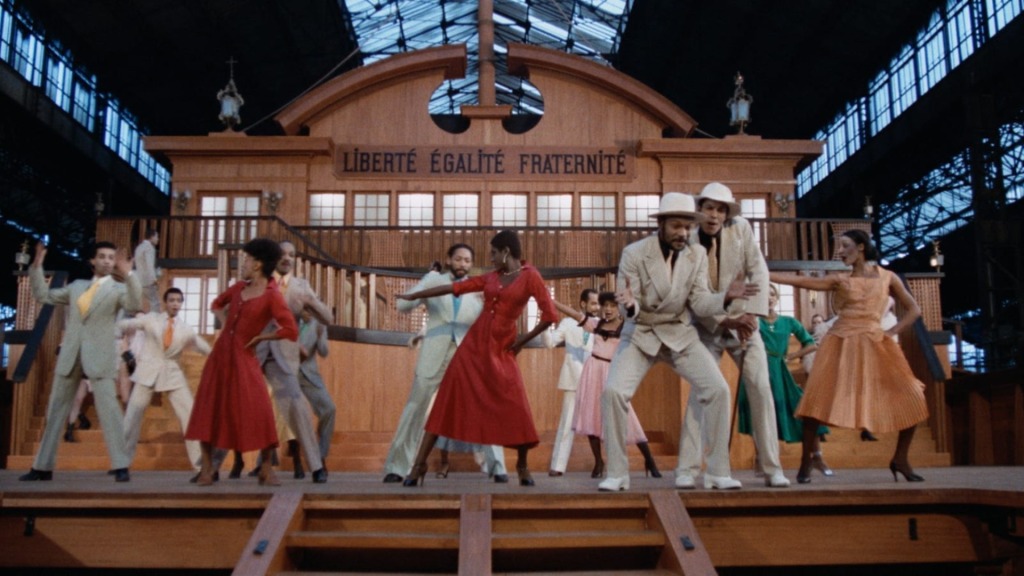
Though the maximalist, theatrical, proudly surreal history lesson of West Indies: The Fugitive Slaves Of Liberty might seem intimidating to your everyday moviegoer, anyone who enjoyed Bad Bunny’s Super Bowl halftime show has been perfectly primed to enjoy the film’s infectious, satirical takedown of colonialism. Conducted almost entirely atop a massive reconstructed slave ship sitting in an unused Parisian car factory, Mauritanian French director Med Hondo’s 1979 musical closes with a message familiar to anyone who watched Bad Bunny recontextualize “America.” Expanding on the pan-American solidarity established at the end of that performance—where South and Central American countries, as well as many Caribbean nations, were listed out to equalize their legitimacy alongside the United States—West Indies concludes by similarly emphasizing the islands and people (enslaved and Indigenous alike) who built the modern Americas. And no, you don’t need to speak French to get it.
The pioneering and politically radical Hondo (who would later pay the bills serving as the French voice actor dubbing over Donkey in the Shrek movies) adapted Daniel Boukman’s play Les Negriers almost a decade after first directing it on stage in Paris. This was both because of money and the film’s content, which spans the impact of the French on the Caribbean, and the transatlantic slave trade that fueled this imperialism. When Hollywood studios offered to fund the project if the script was changed, Hondo replied, “Fuck it. If it’s not the same subject, why ask me to do it? Do it yourself.” Watching West Indies, you get the sense that the final film was shaped by the kind of artist who would say “fuck it” to such a request—uncompromised and wildly ambitious in its vision. You also see those who would make such a request in the very beginning of the film, conniving in a board room before making their way to the head of the ship.
Opening on a rigged election and sliding above and below deck in slick long takes, West Indies: The Fugitive Slaves Of Liberty is as smooth and angry as its choreographed rage. Its dance numbers translate the material reality of enslaved Africans—shackled, lined up, stuffed onto ships, and forced into the sugarcane fields—into elegant movements and gestures with engrossing vitality. The ensemble’s repetitive, desperate pantomime matches the thrumming sound design, which makes exertion into music, grunts and heavy breathing into basslines.
But the film is far more than a simple rebuke of slavery. (With characters often breaking the fourth wall to stare into the camera, singing with the ’70s ferocity of Jesus Christ Superstar, it’s not a simple anything.) Leaping back and forth across time, blurring the era and characters played by its cast but not the persistent discrimination, West Indies also takes to task the false promises of emigration, the seductive lure of assimilation, the backstabbings of race traitors, and other modern ripples flowing outward from the original sin of colonization. Not content to merely denounce the powdered wigs, the film playfully, pointedly demonstrates how the same attitudes snowballed to make Paris inhospitable to Black people from all walks of life. All of this critique tumbles forward across a nonstop 110 minutes with vicious sarcasm, visual gags and production design gimmicks nipping at history as violently as the songs’ lyrics.
Filled with outrageous costumes and makeup choices, where whiteface and sweaty regalia implicate rich tourists and the Catholic Church alike, West Indies‘ approach to satire is the same as its approach to the plight of its central diaspora: There’s room enough to account for everyone. That means hundreds of years of history, hundreds of years of grievances, stuffed into less than two hours. There’s an exhilarating breathlessness to that pace, the tempo seeming to underscore that Hondo wouldn’t get another chance to work at this scale with this budget. Not much African cinema would in the decades that followed, which meant that any attempts to skewer the cinema of Europe and the U.S. would lack the bombast of this bright musical blitzkrieg. And that’s a terrible shame, because much like the dizzy rush that followed Super Bowl LX’s dense blast of Puerto Rican pride, watching West Indies not only wears you out, but leaves you with a delirious curiosity—an adrenalized desire to seek out more art like it.


 Keep scrolling for more great stories.