Some context, for the context-hungry: New Vegas was released two years after Bethesda Softworks launched its grand project to save Fallout in the mid-2000s, reviving the moribund franchise, to massive success, with 2008’s Fallout 3. That’s a game I respect, more than like, if I’m being brutally honest: Fallout 3 did incredible work in dragging the series back from the dead (and straight into people’s living rooms), but it also lacked much of the humor, thoughtfulness, and expressiveness that I associated with the Fallout brand. The Capitol Wasteland—transplanted 3,000 miles from the California wreckage of the first two games—was cool as hell to explore, and I liked shooting a Super Mutant in first-person as much as the next Vault Dweller. But I rarely felt I could change the game’s world in the same ways that Fallout 2 had taught me I could, allowing me to decide, say, the fate of criminal cesspool New Reno, or the complex, condescending politics of newly founded “utopia” Vault City.
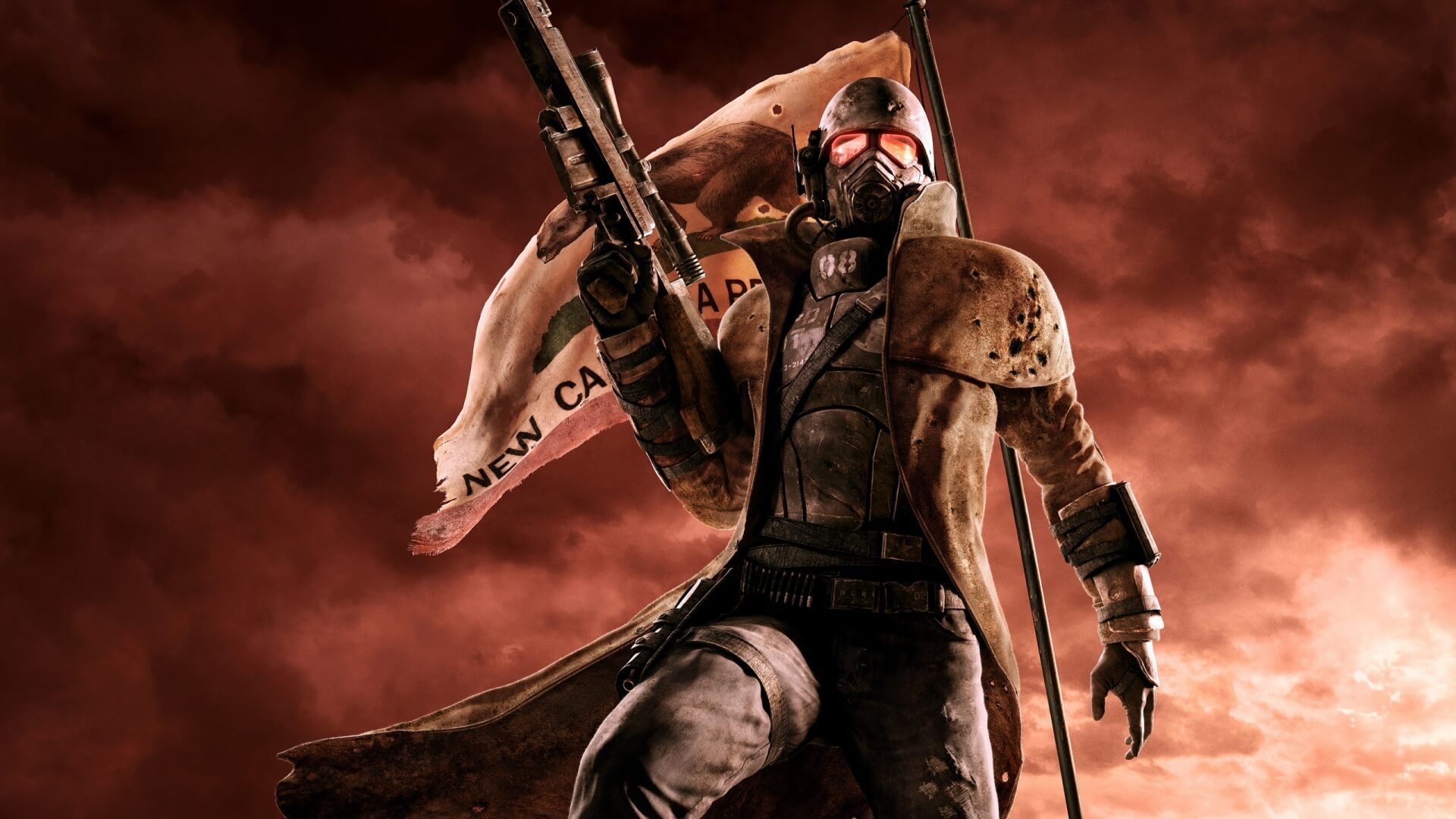
New Vegas, though, was a sop to cranky-old-bastard-before-their-time 26-year-olds exactly like me: Developed, with Bethesda’s blessing, by Obsidian Entertainment (staffed with many of the creators of the original games) and set in the Mojave Desert—i.e., close enough to California for there to be bleed-over from those earlier stories—it was a big, incredibly buggy love letter to old-school Fallout. And because both those players, and those developers, had gotten all of their “explore the devastated, civilization-deprived wastes” needs out of their systems with those previous games, it was also a game that was way more interested in people, and the societies they build, then Fallout often gets credit for. It’s a game filled with weird little cargo cults, like the Kings—a gang who discovered a Vegas school for Elvis impersonators, decided “The King” must be a figure of great and terrible power, and patterned their whole look and mannerisms after his persona—or The Boomers, gun-obsessed Vault survivors who’ve developed a quasi-religious fixation on their decaying weapons of war. And on the edges, pressing in, the forces of actual capital C civilization: The basically good, if bureaucratic and corruption-prone, New California Republic on one side, and the violently misogynistic Caesar’s Legion on the other. (With Robert House, the shadowy, Howard Hughes-esque ruler of New Vegas pulling strings from the shadows.) Each of these groups is extending their fingers out into an essentially lawless frontier, with the player tasked with deciding which of them, if any, will ultimately take control.
If there’s a thing that the Fallout show—which has just gotten done, in its most recent episode, with walking viewers through a loving, gorgeous recreation of the game’s Strip area, and the surrounding town of Freeside—doesn’t really grasp about Fallout in general, and New Vegas specifically, it’s that this whole setup is ultimately far more Deadwood than Mad Max. I try not to bemoan this too much in my TV reviews, because the show is its own thing (no matter how many times Bethesda talks about how incredibly canon it all is). But it’s pretty clear that the series wants the Wasteland to be a wasteland, and not the frontier that New Vegas (much more interestingly, to my mind) portrays it as.
That’s especially apparent in the show’s treatment of the NCR, which is depicted in the series as a last gasp of civilized humanity, destroyed in a fit of cruel pique by a jumped-up middle manager with major divorced dad energy. But the NCR of the games is neither so fragile, nor so perfect, as that nuked-back-to-dust utopia. Growing up from a small settlement in Fallout 1, by the time of New Vegas it’s become messy in all the ways democratic societies do: Rife with division, inefficient at the edges, and held together by a core of people who passionately believe in the goodness of its ideals. Critics point out how it’s slow; how its policies inevitably favor the rich over the poor; how all its “help” in the New Vegas region seems entirely predicated on keeping control of the Hoover Dam and the power it generates. And the player can take all these critiques in, and, if they so choose, agree with them—or just as easily decide that they’ll take well-meaning inefficiency over something more cruelly effective any day of the week. It’s the kind of commentary and satire you can only engage in, as a player, because New Vegas is interested in operating at scale, in showing conflicts not just between characters, but between the civilizations they represent. It’s a story about societies colliding, which, turns out, you can only do if you don’t depict each and every one of them as being nuked back to the Stone Age.
Really, it’s all there in the name: Fallout has always been a series that cares about what comes after, rather than simply exulting in the power of destruction. And while I absolutely, 100 percent get why the TV series doesn’t truck with much of this stuff—getting people to tune into a video game adaptation is still hard enough, without dropping a big-ass lore bible on their heads—it’s also a big part what makes these games, and especially New Vegas, special to me. The bombs were just the prelude; it’s the fallout that fascinates.


 Keep scrolling for more great stories.