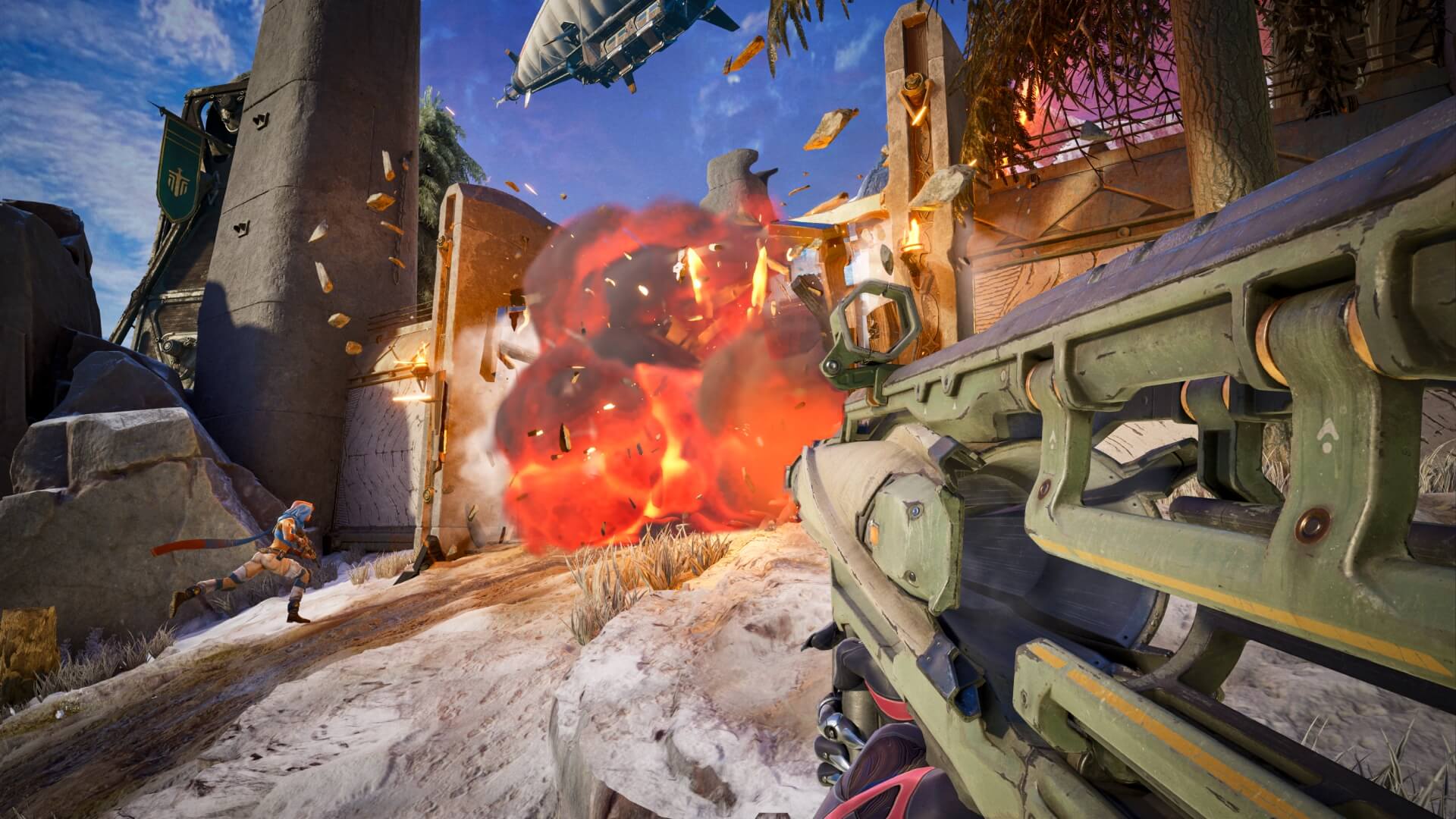
From the start Highguard was more notable for the extreme reaction it faced from gamers than for anything about the game itself. Revealed at the end of a December awards show, it was immediately pegged as a Concord-style disaster in the making—another entry in the over-saturated live service hero shooter market. Highguard mockery ran rampant on social media and YouTube, and Wildlight maintained total radio silence between the announcement and release, not attempting to counter any of the negativity as it grew. Highguard arrived in January as a competent 3-on-3 squad shooter that wasn’t quite as generic as expected, but it still didn’t do enough to dispel the dark cloud that had gathered around it. A large audience tried it out on launch day, with concurrent players on Steam peaking at over 97,000 on January 26, but few of them stuck around for long.
After a player base failed to develop, Wildlight laid off most of its staff on February 11. A week later, Game File’s Stephen Totilo reported that Chinese megaconglomerate Tencent had quietly funded Wildlight, pulling support after the game failed to reach certain benchmarks. Wildlight released some of the updates it had announced as part of an ambitious post-release roadmap, including new characters and maps, and hastily introduced a 5-on-5 mode that addressed one of the biggest complaints about the game; none of that attracted an audience, though.
In its statement today, Wildlight notes that over 2 million people have played Highguard. Not enough of them became regular players, or spent money on the cosmetic microtransactions that were the game’s source of revenue. At a time of rampant layoffs and studio closures, when video game companies seem to have completely forgotten how to successfully make games, the brief life and quick flameout of Highguard stands out as just one more cautionary tale.


 Keep scrolling for more great stories.