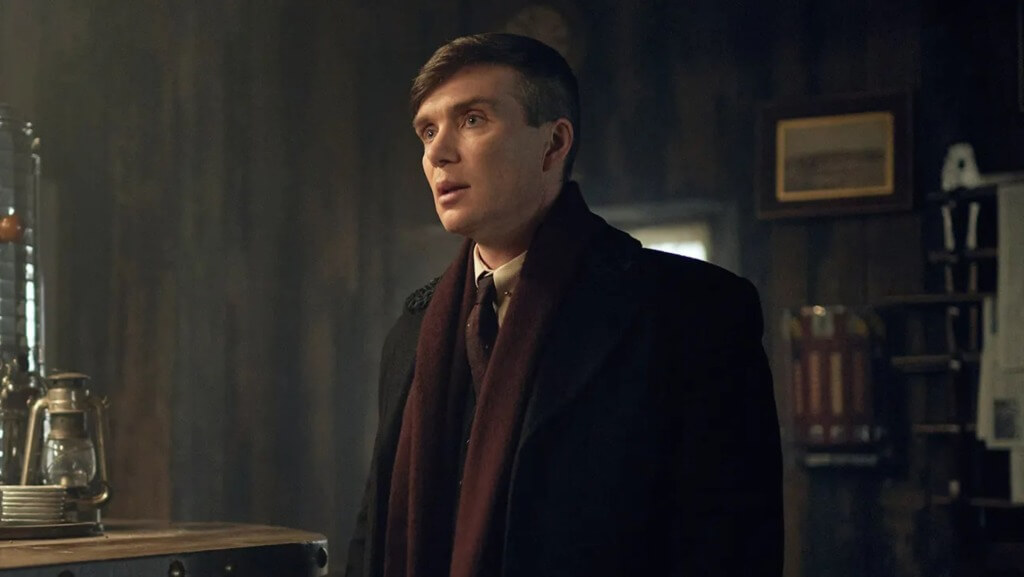
At the end of Peaky Blinders‘ sixth season, Birmingham gangster Tommy Shelby (Cillian Murphy) finally found grace. Not to be confused with his late wife and lost love Grace (Annabelle Wallis) from the first three seasons—rather, in the most recent moments of the BBC series, it seemed Tommy had stumbled onto inner peace. He’s about to commit one more murder when he hears the bells tolling to mark the eleventh hour on Armistice Day. “Peace at last,” he says. For a traumatized veteran of the First World War who spiritually died down in the trenches for King and Country, this is the only way he could be compelled to stop chasing vengeance: An appeal for his soul arriving at the literal eleventh hour. It’s a moment that makes Murphy and series creator Steven Knight’s choice to return to the well for Peaky Blinders: The Immortal Man, a flashy but ineffective feature-length continuation of the show, into a superfluous swing for finale-style pathos.
Nobody has benefited from Peaky Blinders‘ success quite like Knight, who since its premiere has created no fewer than ten other series and miniseries. Knight now resembles something of a British Taylor Sheridan—after penning some brilliant small-scale screenplays (Eastern Promises, Locke), now churns out new properties that broadly appeal to the same demographic. Knight is a hot commodity, but Peaky Blinders remains his crown jewel, and Netflix has already cut a deal to stream its sequel series. Knowing that some “next generation” reboot of Peaky Blinders is in the works goes a long way to explain why The Immortal Man feels like an obligatory and fatalistic highlight reel of Tommy Shelby’s anger, guilt, and self-hatred.
It’s now 1940, and Tommy is in self-elected exile in a dilapidated country house away from the Birmingham Blitz, haunted by the spirit of his daughter Ruby, who died from illness (or, a “gypsy curse”) in the final season. A visit from Kaulo (Rebecca Ferguson), a spiritual Romani woman, pushes Tommy to further confront the death around him.
Kaulo is the twin sister of Zelda, the mother of Tommy’s first son, who was born before the First World War; in Tommy’s absence, Duke (Barry Keoghan) is tearing through a bombed-out Brum as the brutal new leader of the Peaky Blinders gang. Clearly lacking a decent paternal influence in his life, Duke is easily convinced by Nazi operative John Beckett (Tim Roth) to commit treason. The plan is to smuggle counterfeit banknotes across England, which would eventually destabilize the U.K. economy—all based on a real Nazi plan, Operation Bernhard. “If you were my son, I would cherish you,” Beckett says to Duke, expertly pinpointing where the young gangster’s insecurities lie. Just as Beckett encourages Duke down a path of no return, Tommy is convinced by Kaulo and his younger sister Ada (Sophie Rundle) to reenter the fray before his legacy—and the country—is lost forever.
A WWII-set season of Peaky Blinders involving Operation Bernhard would make for great television; in 112 minutes, there’s no time to enjoy the procedural and espionage pleasures of the premise. How did a band of Nazis infiltrate massive English industrial cities at the height of the Blitz? What was their plan to distribute the counterfeit notes, and how costly would a small outbreak of fake money be in Birmingham? As a principled criminal, what’s Tommy’s stance on hoarding and distributing counterfeit money? With six hours of screentime to play with, Beckett and his operation would be a real threat to a country on the brink, but as The Immortal Man stumbles out of its elongated first act, it’s clear that Knight sees it as the B-story to a rehash of the Tortured Tommy Shelby Greatest Hits. Murphy dutifully but not memorably restages episodes that showcase Tommy’s icy badassery, his easily irritated ego, and his barely concealed trauma.
Tommy is incensed about Duke being a failson (at one moment, Tommy beats Duke into pigmuck to literalize their power dynamic), but The Immortal Man never makes a good case for Duke being a worthy co-lead, and Keoghan struggles to find the right balance between brooding intensity and violent explosions that, in Murphy’s hands, always felt genuine and intimidating across the series. It doesn’t help that The Immortal Man sags in the villain department; Peaky Blinders is no stranger to big-screen talent dropping in as a scenery-chewing villain (Adrien Brody as a mafioso in Season 4 is a sight to behold), but Roth is too gifted at playing sinister men who refuse to drop an affable persona, and Beckett is Roth on autopilot, registering as too cool and casual. Roth glides through his scenes, chummily sublimating the character’s evil into an ordinary, blokish demeanor—either we needed four more hours in Beckett’s company to understand his unique flavor of Nazi bile, or director Tom Harper needed to better utilize Roth’s limited screentime by making him more memorably nasty.
Harper directed half of the show’s first season, and once again given a Netflix production budget after helming Heart Of Stone, he tries to inject the story with more style—carefully composed eerie images, a flashier edit, more severe and swooping low angles. It’s more, but not necessarily better. The film is shot with too many close-ups which, when combined with the quick pacing, only exaggerates how insistently The Immortal Man tries to ground us in the story. The location work and set design are notably excellent—foggy moors are juxtaposed with dirty, snow-covered canals in Birmingham’s industrial corners, and gorgeously cracked walls and dilapidated houses, all partially reclaimed by a dying world that undermines our characters’ sense of purpose.
But all of this comes back to a central story problem. Even reimagining Operation Bernhard as a season-long arc would still require Peaky Blinders to bring Tommy and his unsolvable emotional problems back into the fray, potentially wasting more of the audience’s time as Knight tries to stumble towards a justification for trotting out more flat caps, more weary Cilliam Murphy haunted by waking shadows, and more Nick Cave needledrops. The Immortal Man is not a good entry point into Peaky Blinders for the same reason it is not rewarding for existing fans: It traffics only in the late stages of Shelby’s arc, but offers nothing new to those who have already been there, done that.
Director: Tom Harper
Writer: Steven Knight
Starring: Cillian Murphy, Sophie Rundle, Ned Dennehy, Packy Lee, Ian Peck, Stephen Graham, Rebecca Ferguson, Tim Roth, Jay Lycurgo, Barry Keoghan.
Release Date: March 6, 2026; March 20, 2026 (Netflix)


 Keep scrolling for more great stories.