Maybe it’s the non-stop internet discourse, or maybe it’s just about beach read season, but this week’s staff picks from news editor Drew Gillis and TV critic Saloni Gajjar unpack two new, much-talked-about memoirs.
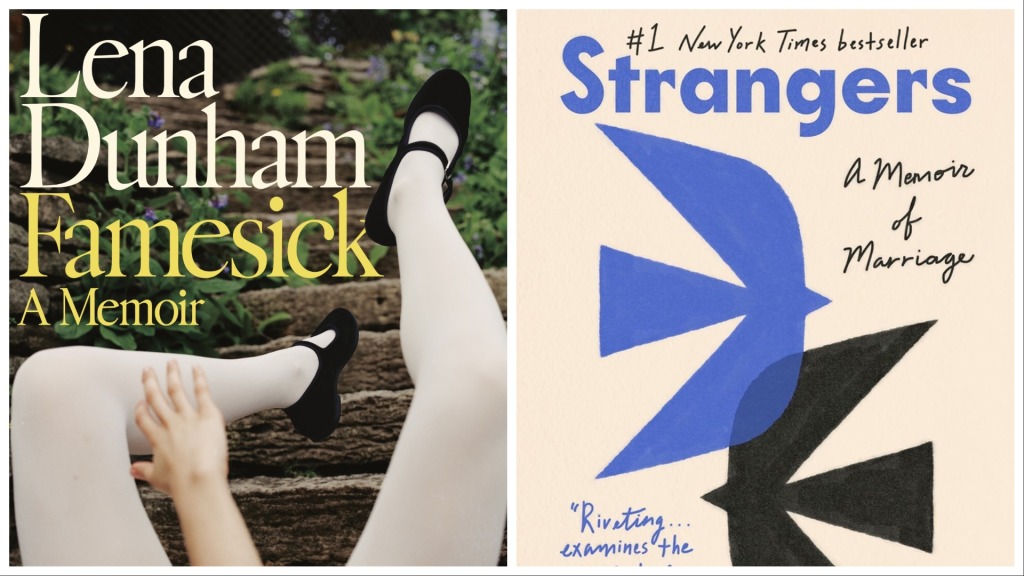
Famesick by Lena Dunham
Lena Dunham’s second memoir opens with a dedication to a list of famous names, including Amy Winehouse, Marilyn Monroe, Whitney Houston, Liam Payne, Chris Farley, Heath Ledger, and “anyone else who was too Famesick” to be cured. Like a lot of Dunham’s work, it initially sounds incredibly overdramatic but speaks to a real human experience, the kind we all can glean truths from even if we’ve never had the experience ourselves. The experience Dunham describes in Famesick—being plucked from more or less obscurity with the success of Tiny Furniture to create, run, and star in a major HBO show at 23—is one most pop culture enthusiasts will have at least some passing knowledge of. But it is always different to hear it told by the person who was the center of it, even if that person acknowledges that she’s kind of always annoyed people.
Much of Famesick is concerned with people falling in and of love with Dunham: her boyfriend of many years Jack Antonoff, her Girls co-creator Jenni Konner, the public at large. Dunham writes about these experiences with remarkable candor, even if she mostly ends up acquitting herself in the process. There are some things in this book that, frankly, I would never admit to; I’m thinking of the ups and downs of the relationship with her mother, the artist Laurie Simmons, who went from being an artist known for her work to becoming the mother of Lena Dunham. She shares her experience having a hysterectomy and her experience getting addicted to pills and ending up in rehab. A lot of this stuff is plainly upsetting, but Dunham writes like the kind of friend you love to catch up with over an hours-long phone call, even if you can only make space to do it once every year or two.
But there’s also the behind-the-scenes element that makes Famesick a fun read as a fan of Girls. It was fascinating to learn how the show was originally meant to be just three girls, with Shoshana initially meant to be a bit player in the pilot until the creative team on the show fell in love with Zosia Mamet. Marnie wasn’t envisioned as the chipper, WASP-y theater girl that she was on screen until Allison Williams brought a very specific energy to the casting process. Dunham is also pretty blunt about how unimpressed she was with the jokes the SNL writers came up with for her monologue when she hosted the show in 2014. But all of this also contributes to feeling like you’re catching up with a friend—it’s not just the heartbreak you want to hear about, but the good gossip, too. Thankfully, Famesick has both in spades. [Drew Gillis]
Strangers: A Memoir Of Marriage by Belle Burden
Even if you haven’t devoured Belle Burden’s Strangers yet, chances are you’ve heard of it while scrolling the internet. Published at the start of 2026, Burden’s memoir is a New York Times bestseller that’s generated plenty of discourse over the past few weeks, and it’s not just because Gwyneth Paltrow has signed on to star in the movie adaptation. Most of the chatter stems from trying to figure out whether Burden—the granddaughter of Barbara “Babe” Paley, with plenty of wealth to her name—was truthful enough about her monetary status. In Strangers, she unpacks the emotional, mental, and, yes, financial ramifications of her husband’s affair and sudden exit from her life.
In March 2020, at the very start of the pandemic, James (an alias she uses for him) left 51-year-old Burden and their three children (“You can have custody of the kids. I don’t want it. I don’t want any of it,” he tells her). She didn’t see it coming, considering he was a seemingly doting partner and parent. Burden, a former lawyer and aspiring writer, goes on to evocatively detail the difficulty of coping with whether she ever really knew James, or whether love blinded her to his red flags from the dating stage. Strangers is a deeply personal story of a woman whose marriage implodes, forcing her to reevaluate her life choices. Still, anyone who’s suffered heartbreak can relate to Burden’s internal struggles, even if we can’t fathom her external circumstances, like spending most of lockdown in a lavish Martha’s Vineyard mansion, owning a home in Manhattan, and spending days at a country club, being worried about what her social circle will think of her now that James is gone.
The criticisms about her financial status have merit, but not once in her book does Burden shy away from discussing her generational wealth. In fact, her self-awareness made Strangers appealing to me. She talks about her privilege frequently, even if it doesn’t pop up as some sort of profit and loss sheet detailing her trust funds and inheritance. She addresses the comforts of her life, connection to the Vanderbilts, and how that very privilege probably drew James, now a successful hedge fund manager on Wall Street, into her orbit. Heck, her being rich is likely what got her a book deal and the publicity anyway. And yet, Strangers wouldn’t be as empathetic a read if Burden weren’t as gracious and emotionally raw.
Burden doesn’t ask for our sympathy by painting herself as a victim of abandonment. Instead, she uses a major life change to also talk about the importance of women being financially independent, no matter how smart, educated, and wealthy. (She quit her job post marriage and let James handle all their money, a decision that seems both foolish and unnecessary.) The reason Strangers, at a breezy 256 pages, strikes a chord is because of Burden’s ability to interweave an intimate tale of a broken marriage with these larger issues quite provocatively. And much like Drew’s pick above, the author being rich and famous isn’t the point—their powerful writing is. [Saloni Gajjar]


 Keep scrolling for more great stories.