
The best original movies on Hulu
With rom-coms (Palm Springs), documentaries (Minding The Gap), and more, the best original movies on Hulu cover all the bases.
Photo: Hulu
Hulu, like all streaming services, adds and loses titles every month. If you see something that you want to stream, you can’t assume that it will still be there two weeks or two months later when you get around to it. That movie may hop over to another streaming service like Netflix or Amazon Prime for a few months, or it may disappear from streaming altogether for an indeterminate amount of time. The lesson here? Stream ‘em while they’re hot and, when in doubt, rely on the originals that aren’t going anywhere. Our list of the best original movies on Hulu is a bit more complex than some of the other mainstream streamers, because now that Hulu is fully owned by Disney, its corporate brethren beef up its offerings and help add some stability to the ever-rotating collection of films.
Deep Water comes 20 years after Adrian Lyne’s previous work, the soapy, acclaimed Unfaithful, and it shepherds a sadly ailing cinematic tradition forward with the same luminous style, a welcome sensuality, and in an era in which pornography is more widely available than ever before, an astute bit of camp. An adaptation of the 1957 novel of the same name by Patricia Highsmith, Lyne’s latest revisits some of the erotic highlights from his earlier works (Flashdance, 9 ½ Weeks, and Fatal Attraction) and updates them in a more appropriate (and egalitarian) context. Ben Affleck and Ana de Armas, both terrific, play the couple around whom the film’s meditation on modern sexual relationships revolves, while Lyne proves not only that he can film hot scenes unlike almost anyone in the business, but inject them with a psychological sophistication that complicates their (and our) post-coital bliss. [Todd Gilchrist]
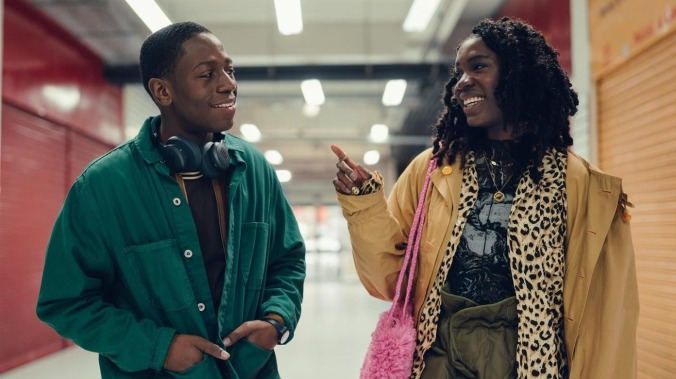
From the moment we meet Nancy Stokes, anxiously pacing around a tastefully anonymous hotel room, knocking back a minibar vodka and posing in the mirror to no great personal satisfaction, we can tell she’s a nervous wreck. And why shouldn’t she be? Nancy is a 55-year-old widow awaiting the arrival of a sex worker who’ll hopefully give her the first orgasm of her entire life. The male escort assigned to this monumental task is the “aesthetically perfect” young Leo (Daryl McCormack) and, as he’ll learn over the course of their four meetings, giving Nancy a chance to premiere her O-face means breaking down her well-established defenses. If that sounds like the premise for a comedy or even a tragedy, it’s actually neither. Good Luck To You, Leo Grande is a tender and richly satisfying charmer whose themes of self-acceptance and body positivity are delivered with a light and carefully crafted touch. Emma Thompson is at her prickly, vulnerable, fiercely intelligent best as Nancy, a stand-in for every woman who’s suppressed her sexuality out of shame, feelings of inadequacy or a need to please others. Unfolding almost entirely in one room, the film is a two-character study of sexual awakening and a heartfelt, yearning dispatch from the farthest corner of the age divide. It’s a sexually frank and intimate story told in a pleasingly mainstream manner that avoids greeting card clichés and empty “girl power” posturing. [Mark Keizer]
The Hand That Rocks The Cradle
Mexican filmmaker Michelle Garza Cervera’s take on The Hand That Rocks The Cradle, originally directed by Curtis Hanson from a screenplay by Amanda Silver, makes some much-needed amendments for our current cultural climate, but the core of the successful domestic thriller remains intact. While working at a tenants’ rights event, “ready to pop” expectant mother Caitlyn (Mary Elizabeth Winstead) briefly encounters Polly (Maika Monroe), a young woman worried about an imminent rent hike being enforced by her landlord. Polly drops a hint about needing work; as fate would have it, Caitlyn needs a nanny. So Polly enters the family home, immediately forming a connection with the precocious yet fickle Emma. The film’s ensuing tension stems from truly unexpected adversity, with organic parental missteps as well as calculated sabotage from a third party. The remake features riveting tension, assured performances, and hallmarks of an exciting new director’s narrative fascinations, all while the politics of its central dynamic continue to cry out for examination. [Natalia Keogan]
From the house that fronted Hoop Dreams comes another absorbing, heartbreaking documentary about coming of age on the economic fringe of the American Midwest. It’s boards, not basketball, that the young subjects of Minding The Gap looked to as an escape hatch, back when they were teenagers delivering themselves, an afternoon at a time, from the shared trauma of their home lives. Bing Liu, the director, was one of them, a budding filmmaker shooting skating videos with his friends. Returning to his old stomping grounds of Rockford, Illinois, he catches up with these childhood companions, still haunted by the abuse they experienced as kids, which has shaped their adulthoods in ways both obvious and not. As usual, the Kartemquin long-term filming model pays enormous dramatic dividends. But Liu is just as interested in where these real lives have been as where they’re headed, because the two are intimately related—just one profound takeaway from his multifaceted portrait of boys growing into men, trying to outpace their demons along the way. [A.A. Dowd]
Unless the political landscape changes significantly over the next few years, the number of Americans facing an old age like the one profiled in Nomadland will only continue to grow. A longtime resident of Empire, Nevada, Fern (Frances McDormand) watched her town shrivel up and die after the gypsum mine that employed the majority of the community shut down in January 2011. A dandelion seed left to float on the fickle winds of capitalism, Fern now lives in a custom van she calls “Vanguard,” traveling in search of temporary employment and a safe place to park overnight. In the winter, she packs boxes at an Amazon warehouse; in the summer, she fries burgers and cleans toilets at tourist attractions. Her pleasures are simple, her struggles immense. Her hair is short, her shoes sensible. She keeps moving so she doesn’t dwell on the past for long. In different hands, Fern’s story might be tragic. But while Nomadland director (and writer and editor and co-producer) Chloé Zhao is interested in the material realities of a sixtysomething widow living an itinerant lifestyle, she also brings a dignity to the film that verges on sublime. [A.A. Dowd]
 Keep scrolling for more great stories.