The Icelandic family drama The Love That Remains begins as an expansive family portrait and slowly drifts towards one particular character’s perspective. Writer-director Hlynur Pálmason (Godland; A White, White Day) scratches a Bergman-esque itch with his low-stakes slice-of-life dramedy—Iceland’s most recent submission for the Academy Awards’ Best International Film category—about a newly separated couple and their children.
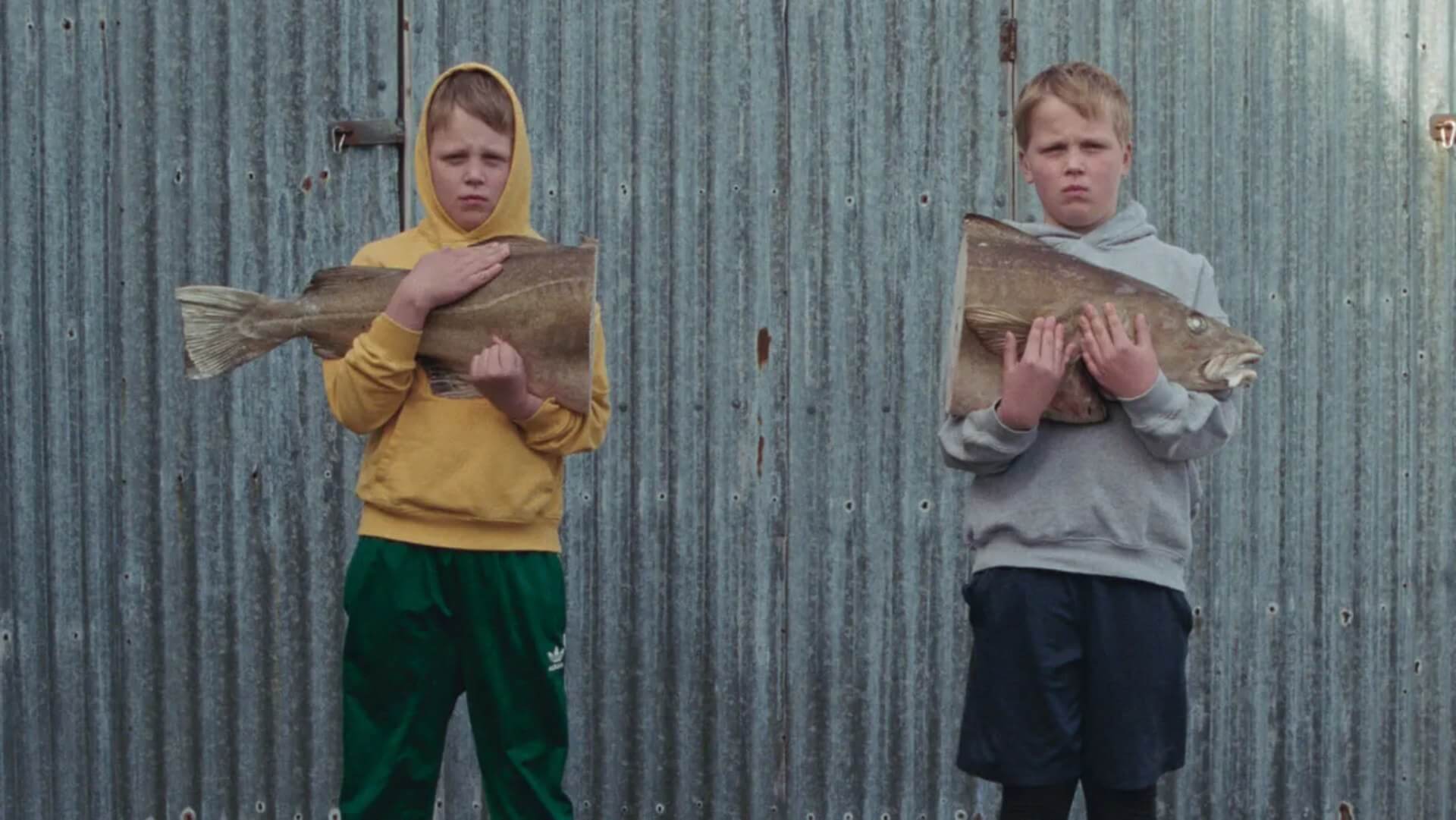
Shot on 35mm film, The Love That Remains not only looks picturesque, but offers viewers an affectless view of its characters, not as they want to see themselves, but as their emotions dictate. Each scene has its own mood and logic, and Pálmason occasionally makes time for surreal breaks from reality, which seem even stranger given the movie’s naturalistic pacing and static photography. The Love That Remains is consequently an unconventional, but mostly comforting warts-and-all tribute to family dynamics, though some of its more whimsical twists and dialogue exchanges can be a little elusive or precious.
The Love That Remains highlights natural, or really, unforced moments of absurdity and poignance within the family, but only winds up accepting that the truth that must be understood about families is that each generation is wise and wistful in its own ways. Uncomfortable emotions and stolen, scrapbook-sized moments accumulate, but gradually, the story shifts from a collection of related tableaux vivants (it’s not a conventionally structured plot, with rising and falling action) to a feverish, pseudo-modernist dream of a domestic paradise lost. But that slow shift in focus makes sense for this gentle, if sometimes frustratingly opaque, arthouse mood piece.
Most of what we know about Anna (Saga Garðarsdóttir) and her ex-partner Magnús (Sverrir Guðnason) comes from their interactions with each other: he wants to continue fooling around, but she would rather not. They stay together anyway, partly because he’s often away from home—on a fishing expedition for herring—and also for their children.
Anna’s an artist, so her inner life finds a rich expression through her intricate patterned prints, which we see her prepare and air-dry. Magnús seems more unmoored, and usually appears surprised by the force of his emotions whenever his mind wanders, or his children say something unexpected. One can tell that Pálmason wants to show both Anna and Magnús’s clashing emotional realities; it seems that Anna’s only given less screentime than Magnús because she’s more secure in expressing herself.
On the one hand, Anna admits to herself (aloud) that she has murderous thoughts about her ex-partner. It’s hard to know what to do with that private confession, especially since Pálmason goes out of his way to show Anna firmly dismissing her horny ex when he repeatedly won’t take no for an answer, then shows her faceplanting on her own hardwood floor after she shoos him out the door, cutting right before she hits the ground. Is this Anna’s subjective reality bleeding over into the movie’s material world? If so, why isn’t there more where that came from for Anna? She seems to have a rich inner life and no small amount of autonomy, given her ability to express herself artistically. So why then does the film watch Anna listening attentively to Martin (Anders Mossling), a self-absorbed Swedish art gallery owner who pontificates about the suppressed health benefits of heavy wine consumption (as in one bottle a day) and steals a goose egg for no other reason than that he can? Pálmason insinuates something that doesn’t quite land when he shows Martin revealing his stolen egg to Anna in slow-motion, matched by Anna’s slow-blooming look of disgust. In an off-the-cuff exchange, Anna tells Magnús that Martin’s behavior is normal, but is it? If so, how much does that really matter to Anna?
On the other hand, Magnús always acts surprised, if not quite upset, when the movie’s reality doesn’t match his expectations. His daughter Ída (Ída Mekkín Hlynsdóttir) complains to him about his singling out one horny rooster for punishment, and it soon becomes clear that she’s not really talking about poultry. Magnús’s wayward emotional state is also occasionally revealed through surreal and sometimes over-burdened dream sequences, like an indulgent daydream he has of looking up Anna’s yellow sun dress. This scene and a few others suggest that Pálmason might have found it easier to access Magnús’s jumbled and self-flagellating feelings than Anna’s ostensibly more complex emotions. But even when Pálmason finds an unexpected beauty and surreal humor in a dream sequence involving Magnús and a violent giant rooster, that gag’s still pretty unrevealing.
Thankfully, though, Pálmason earnestly honors everybody’s perspectives. Even Martin, with his self-important rant about the politically incorrect “truth” about wine, and the captain of Magnús’ ship (Stephan Stephensen), who callously asks about Magnús’ separation and then whines about the younger generation’s sensitivity, make points that The Love That Remains tacitly accepts. In this movie, nobody really sees or completely accepts that everybody else’s take on reality has its own truth.
To this end, Pálmason never explicitly takes a side or completely validates anybody’s perspective, but he does make a number of choices that suggest that he, like Magnús, struggles with how to present this family with authenticity, or at least minimal contrivance. The resulting drama might have been exasperating for its surface passivity if Pálmason’s faith in his actors and other regular collaborators, as well as his knack for composition (he’s also the movie’s cinematographer), didn’t pay off so regularly and so viscerally. Pálmason’s consideration for his protagonists’ emotions puts The Love That Remains over the top, though not everything they feel resonates.
Director: Hlynur Pálmason
Writer: Hlynur Pálmason
Starring: Saga Garðarsdóttir, Sverrir Gudnason, Ída Mekkín Hlynsdóttir, Þorgils Hlynsson, Grímur Hlynsson
Release Date: January 30, 2026


 Keep scrolling for more great stories.