Time Capsule is a weekly feature series where Paste writers revisit albums that came out before the magazine was founded in July 2002 and reassess their cultural or personal importance.
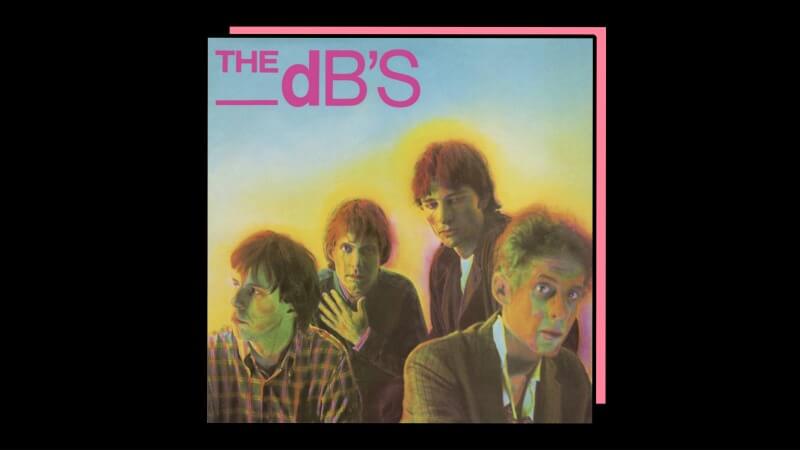
Time, circumstance, and a convoluted recording industry have buried more remarkable bands in obscurity than any of us could ever hope to dig up in a lifetime of music discovery. New York power-pop outfit The dB’s very well could’ve joined the ranks of the forgotten. After all, their revered first two records, 1981’s Stands for deciBels and 1982’s Repercussion, could only be found in the States as imports. The band was a critical darling, but one essentially without an affordable record on the shelves in America. Fortunately, for both the band and the rest of us, good music, like truth, will win out. Small pockets of fans emerged as the group toured and lucky album owners shared their import copies with local radio stations. Over time, The dB’s reached a dedicated audience, albeit a small, scattered one—a fanbase that quietly grew even after the band initially hung up their deciBels in the late ‘80s. As co-frontman Peter Holsapple framed it nearly four decades later, “Somehow we’ve gone from great, white hope to also-ran to ‘godfathers of power pop,’ all without selling a whole lot of records.”
The dB’s actually began as friends in a relatively thriving scene in Winston-Salem, North Carolina. When guitarist/vocalist Chris Stamey moved to New York City to pursue music and record with, among others, Big Star’s Alex Chilton and Richard Lloyd of Television, both bassist Gene Holder and drummer Will Rigby soon followed. Guitarist/vocalist Holsapple was the last to migrate north, originally to play keyboards for the brief iteration of the band billed as Chris Stamey and the dB’s. They soon dropped the “Chris Stamey,” and the classic dB’s lineup was born. Like most young bands, The dB’s wore their influences on their sleeves like neon signs: tons of ‘60s rock and pop outfits from both sides of the pond and, most prominently, Big Star, an already defunct muse that was still developing a cult following by the late ‘70s. Stamey and Holsapple, who shared songwriting duties, took these influences and began filtering them through their own distinct voices as composers. Consequently, so much of the joy of spinning Stands for deciBels, even four decades on, comes from hearing something so warmly familiar beneath songs that The dB’s then steer in strange, new directions.
If Stands for deciBels sometimes gets dubbed one of the “great ‘lost’ power-pop albums” of the ‘80s, then Holsapple’s lead track, “Black and White,” should be on every compilation from that era. Drenched in quintessential jangle-pop guitars and propelled by Rigby’s drumming, this single about calling it quits with a girl feels timeless. “We are finished,” Holsapple sings with a strain of garage roughness in his voice. “As of a lifetime ago / As of a long time ago.” The music stops and starts with the singer’s emotive cues, gains momentum on the bridge, and rallies out the door alongside the song’s protagonist. In true dB’s fashion, “Dynamite” quickly demolishes any working script. On this lone song crediting all four bandmates as writers, Stamey and Holsapple harmonize on sneering, droning verses over pulsing backing, broken up by the latter’s Acetone organ interludes. What should be a grating experience instead turns catchy as hell, the build of the final “Dyna- / Dyna- / Dynamite” offering a surprisingly satisfying exhale. It’s an example of how dB’s songs often end up doing more than they initially hint at while never sacrificing the simple goal of being enjoyable pop tunes.
Calming Beach Boys vibes emanate from the delicate, tip-toeing “She’s Not Worried,” Stamey’s first triumph on Stands, and a track that spins more like a mini-opera than a three-minute pop song. Like the best moments of, say, XTC’s Andy Partridge, Stamey has a knack for cramming countless ideas into a simple song without leaving the track feeling like a cluttered bedroom in need of tidying up. The subtle shifts and movements, the wafting harmonies and emerging instruments, and Stamey’s own gift for conveying emotional swings through his vocal deliveries make it the type of song that sounds new upon each listen. “The Fight” then drags us from the bedroom back to the garage for a knock-down, drag-out affair. Holsapple recalls the romantic dispute with choppy he-said-she-said verses and a Jagger-worthy pout. As straight-forward as this rock song might seem, it’s extremely clever how Holsapple assembles the choruses like an inverted house of cards: starting with the defensive posturing of deceptively brilliant lines like “Did you see the way she looked at me?/ Did you see the way she looked right through me?” and building to the volatile, raw vocal explosions that follow.
The trio of songs at the center of Stands for deciBels confirms that Stamey is indeed the strange straw that stirs the more experimental and quirky concoctions of The dB’s. And yet, the whole band never seem like less-than-enthusiastic Igors in the service of the group’s resident mad scientist. Yes, that’s Holsapple playing a plastic ruler on the blipping “Espionage,” a funky spy noir of sorts that borrows the droning harmonies from “Dynamite” and finds Stamey almost rapping at one point. Yes, that’s an Orange Squeezer compressor connected to an organ turning the opening moments of “Tearjerkin’” into the theme music of the final boss from your favorite arcade game. On all of these odder tracks, you get to appreciate just how good Holder and Rigby are as a rhythm section, with Stamey’s mercurial, counterintuitive constructions requiring them to always be at the ready. Nowhere do they shine brighter than “Cycles per Second,” where their bass and drums become lead parts as the vocals and a zany range of sounds interject like ‘80s Saturday morning cartoons.
If listeners pass this mid-album litmus test and can embrace the more offbeat, though essential, tangents of The dB’s, then Stands for deciBels will reward them with one of the great closing sequences of its time. Though Holsapple claims he’s gotten far too old to sing a song like “Bad Reputation” with any conviction, the inner teenager in all of us will never dump a song that begins: “New girl at school / She looks cool / Cool enough to cool you down like a summer vacation.” It could be the theme to any ‘80s teen movie (although its anti-slut-shaming angle feels ahead of its time), given the thumping drums, piano wreckage, and sheet-metal-thin guitar solo leading into the final chorus cranking up the teen angst. Holsapple’s “Big Brown Eyes” might be The dB’s poppier, janglier answer to Big Star’s “Thirteen.” It’s a simple love song that perfectly captures those first smitten glances, an elated tune that would feel just as relatable had it been recorded 20 years earlier or yesterday.
But then, as if on cue, “I’m in Love” rushes in on Rigby’s drums to contradict, with Stamey trying to decipher just how he came to be bitten by the love bug. “It could be bad, it could be good / It could be none of the above,” he overthinks, before wailing, “I don’t understand…” Though his protagonist’s brain might be tangled up in knots, it’s far and away Stamey’s most accessible pop song on the record, and it highlights just how tight a harmonizing group the dB’s could be. For all the focus on just how different Stamey and Holsapple are as songwriters, you also get the sense of a mutual awe and eagerness to support each other’s vision. For instance, there’s zero preciousness, only camaraderie, as Holder takes lead guitar, Stamey handles bass on a cello, and Rigby fills in on backing vocals on Holsapple’s somnambulistic closer, “Moving in Your Sleep.” It’s a dreamy, little melody with doo-wop parts, all the more breathtaking because of how far removed it feels from the opening moments of the record.
The dB’s immediate sophomore record, Repercussion, met much the same fate as their debut. With no standard release on record shop shelves, there was little hope of the band amassing a large following, though certain towns, like Chicago, tended to be hipper than others and routinely allowed them to sell out shows. Stamey would leave the band in early 1982 to focus on solo projects, and the others would soldier on under Holsapple for two more records before initially calling it quits in ‘88. As mentioned above, time would be kind to The dB’s—a band whose magic often sparked from being both behind and ahead of the times—and they would reunite in 2005 for shows and eventually a new record. Believe it or not, 2024 marked the first time in the band’s history that Stands for deciBels and its follow-up were made available on vinyl in the States. It’s a fitting, and long overdue, tribute to a record that fought for decades to be heard and now should jangle and plunk its way into the hearts and record collections of generations to come.


 Keep scrolling for more great stories.