“Harvey wrote a beautiful book. It’s a human story. That’s the thing that I loved,” Brady tells The A.V. Club over the phone. “You didn’t have to go, well, now that this is an all-Black production, let’s change the language. No, you don’t have to. The language stands because the story stands.” While there were a couple minor tweaks to place the story in the present day—changing a mention of “Francs” to “Euros,” for example—the script is effectively the same. Because even though La Cage Aux Folles originally premiered during a time of crisis for the queer community, it focused on love and joy. Brady—who counts himself as a fan of the show since catching it at a dinner theater in Orlando in 1991—says, “Harvey wanted the world in this show to be the inverse of the quote-unquote real world. Everyone in this show who was gay—that was normal.
And it was the people who were not gay that came in trying to impose their beliefs. They were the outsiders, there to prove a point. I always loved that this is a world that he created, where it’s okay for these people to love each other.”
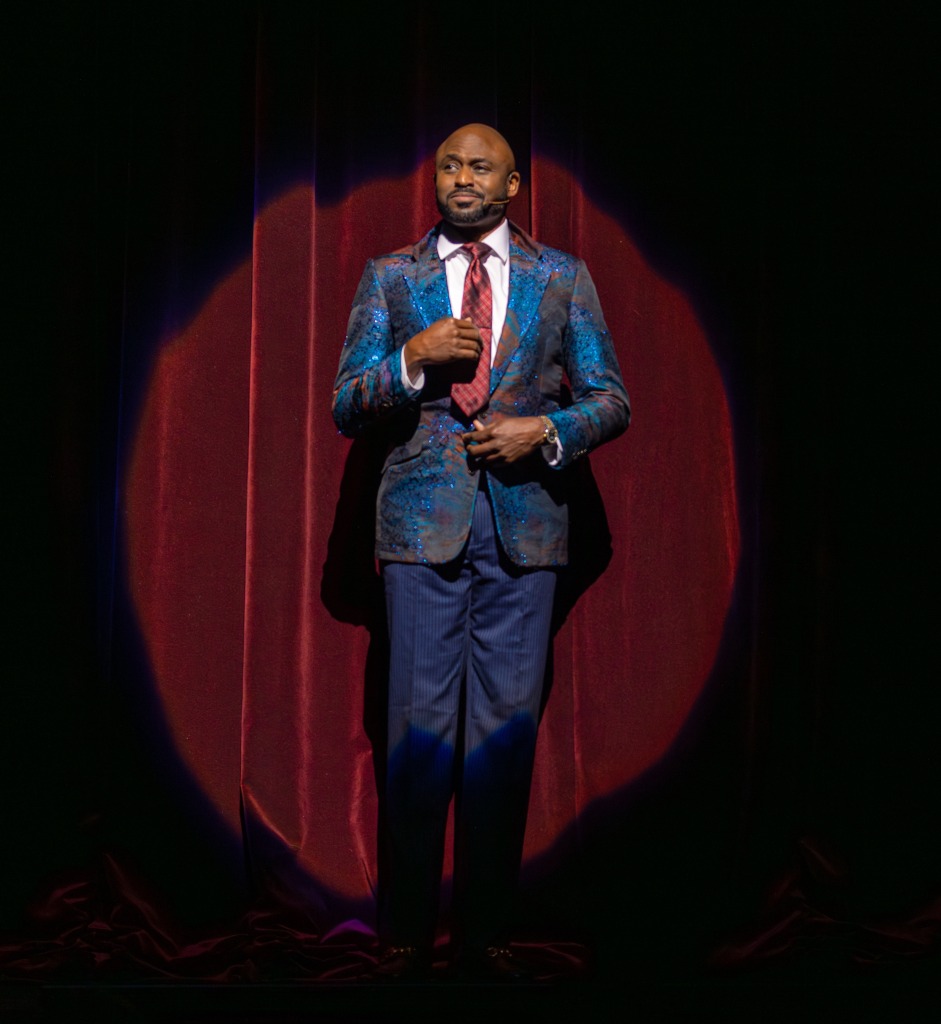
Exclusive image of Wayne Brady in Encores! La Cage Aux Folles. Photo: Benjamin Miller
Still, Brady knows that the all-Black cast adds a new layer to the production. “Now you have a different type of presentation of love and struggle, because now you’re talking about people that are othered, two times removed. They’re othered because of who they love and the othered because of the color of their skin. That’s a very specific walk to walk,” he shares.
”And what does that Black, gay relationship look like on stage? What does Black family look like on stage? What does Black queerness, as it intersects with Harvey’s play from the ’80s, look like on stage?” There are also some modern flourishes to the costume design that reinforce this; Les Cagelles—the ensemble of dancers who perform at the club—sometimes wear costumes that nod to Black icons like Beyoncé or Rihanna. As Brady puts it, “The modernity comes with looking at it.”
Brady’s next theatrical endeavor will be another focused on the intersection of Blackness and queerness. This fall, he’ll star off-Broadway in Ms. Blakk For President, which follows the true story of Ms. Joan Jett Blakk, the drag persona of performer and activist Terence Alan Smith, who ran for president in 1992 “to raise money and to raise awareness about the AIDS epidemic.” The script for that play comes from Moonlight screenwriter Tarell Alvin McCraney and the production is directed by Tina Landau, who was most recently on Broadway with Floyd Collins. “I would argue that queer history, Black queer history, is American history. Like any other history of an American,” says Brady while discussing the role. “That’s where people get it twisted, to say, ‘Well, that’s not American history. That’s not the Civil War, World War II.’ No, but it is American history. So to be a part of that is truly an amazing gift.”
La Cage Aux Folles runs at New York City Center through June 28; Ms. Blakk For President begins performances at the Vineyard Theater in October.


 Keep scrolling for more great stories.