It’s no secret that the video game industry is abysmal at preservation. An untold number of games are unplayable on modern systems, only available through purchasing expensive old hardware, subscription services (where you don’t actually own them), or jumping through hoops via legally dubious means. The original source code for older games are often lost or deleted. Digital-only titles are removed from storefronts, becoming entirely inaccessible.
Archivists have said that almost 90% of games released before 2010 are “critically endangered,” meaning they are exceedingly difficult to access. While grassroots efforts attempt to plug the holes, there’s only so much they can accomplish without the support of the companies that own these properties. Compared to film and TV studios that take at least some modicum of pride in their pasts, game publishers treat theirs with shame (unless they’re trying to sell a new thing tied to the old one), best exemplified by PlayStation CEO Jim Ryan’s 2017 interview with TIME where he justified the PS4’s lack of backwards compatibility by saying that PS1 and PS2 games “looked ancient” and wondered “why would anybody play this?”
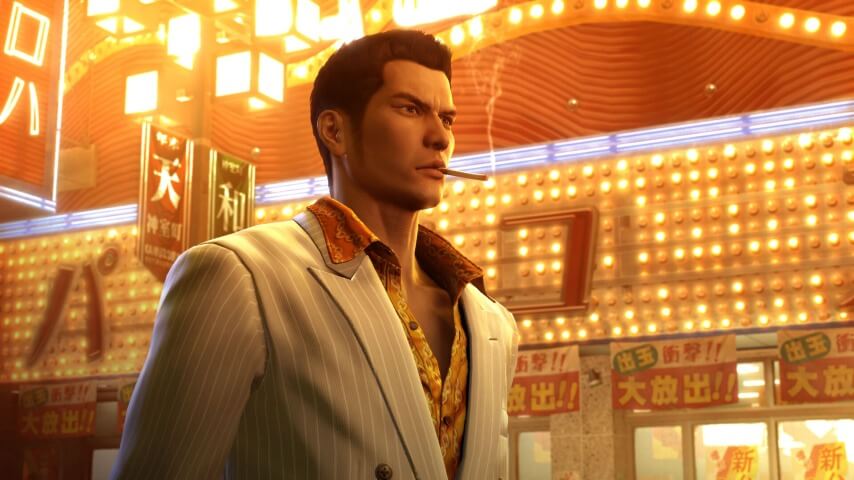
The latest blow to gaming history came from SEGA, and while it seems relatively minor out of context, it has many understandably upset. Last week, the company gave an update regarding Yakuza 0 Director’s Cut, which is headed for PS5, Xbox Series X/S, and Steam on December 8, following its June debut on the Switch 2. The Director’s Cut is a re-release of the 2015 game Yakuza 0 (which is a prequel to the long-running Yakuza series) that features English and Chinese dubs, localization in several additional languages, a new co-op multiplayer mode, and runs at a locked 60 FPS at 4K resolution.
However, there are two problems. One, it adds roughly 30 minutes of mostly terrible non-optional cutscenes that actively undermine the original’s storytelling. And two, on December 8, the original 2015 version of the game will be removed from almost all digital storefronts and replaced with the inferior Director’s Cut. SEGA is even pulling the original version of the game from systems that aren’t compatible with the new one, meaning PS4 and Xbox One users will only be able to play the game by tracking down a physical copy (which is quite difficult to do for the Xbox version in particular).
To back up a bit, for those unfamiliar with Yakuza, it’s a crime series set in Japan known for bone-breaking tonal whiplash that blends grim underground dealings with wacky sidestories involving crab romance and grown men who dress up like babies. Yakuza 0 is rightly viewed as the magnum opus of the series, so much so that it’s not just the high point of these games, but also one of the best games of the millennium. It mixes the previously mentioned over-the-top absurdity with achingly sincere emotional turns regarding brotherhood, selflessness, and sacrifice as our protagonists battle endless gangs of hoodlums with identical walk animations; it’s dumb, sad, weird, and beautiful.
As for where the Director’s Cut goes wrong, it fails to understand the basic dramatic principle that less is often more. Across five cutscenes that span an additional 30 minutes, characters prattle on about plot points that were better left inferred. Boring explanations are given, and every little detail needs to be sanded over, fixing a “problem” that didn’t exist in the first place. In. In short, these sequences feel very much like deleted scenes that would have been better left on the cutting room floor. Unfortunately, these moments aren’t just dry sequences that hurt the pacing, but have bigger narrative consequences. The first and worst cutscene of the bunch makes the most of these blunders. For one, it needlessly spoils a crushing late-stage reveal involving a fixed memento that ties the story together.
Additionally, it makes the dunderheaded decision to outright un-kill a character who meets a shocking, tragic death in the original story. It was an important turning point, both for one of the game’s protagonists and for the audience in understanding that the story wasn’t afraid to have its major players exit stage left. After literally exploding in a ball of flame, we see the un-killed characters wrapped in bandages, looking on from an alley before inexplicably never appearing in the narrative again. Later, another character who was pumped full of lead reveals he somehow made it through, and there’s a mercilessly long scene with a nameless guy who seemed to bite it off-screen in the first telling.
These choices tie into a larger problem the series has suffered from in recent years: Its central characters are routinely brought back from the grave, making it increasingly difficult to get invested or to believe its attempts at tension. And now that bad habit has found its way into a previous installment that was largely free of that problem.
Sure, adding a bad 20-ish minutes to a base game with around 11 hours of cutscenes and a general playtime of 60+ hours seems like a drop in the bucket. On top of this, the last of these new cutscenes is a surprisingly solid scene that works as a fun bookend. But while it may be tempting for outside observers to dismiss these alterations, the fundamental problem is that this “upgrade” isn’t an optional toggle but a forced replacement, just like when George Lucas made his ill-advised changes to the then-new home releases of the original Star Wars movies. Unless you own the original version of the game, which again, is being delisted from almost all digital storefronts on December 8 (except for Good Old Games, the only of these online marketplaces that makes game preservation at all a priority), you will only be able to play this new version. On top of this, there’s the cost: while Yakuza 0 goes for $19.99 on Steam, the Director’s Cut will be $49.99. As the game’s Steam description puts it, this is the “definitive edition” of the game, after all.
Unfortunately, this whole situation isn’t anything new. When Dark Souls Remastered (which had better graphics but worse art design) was released, it also outright replaced the original game on Steam. Overwatch and its 6v6 battles were replaced by Overwatch 2’s 5v5s. The 2001 version of Silent Hill 2 is brutally difficult to come by (unavailable on digital platforms and goes for close to $100 on eBay), and it has received not one but two inferior follow-ups: the first was a very bad remaster job that removed the series’ iconic fog, and the second was an overly dour remake that while competent, loses much of the original’s camp charm. These are just a few examples out of many.
The obvious reason that many publishers do this is because they can charge more money for the new thing than for the old one—again, the Director’s Cut of Yakuza 0 costs an additional $30, even though it’s mostly the same 10-year-old game (but worse). However, the pervasiveness of this problem goes beyond commonplace greed and speaks to a deeper issue: video games being viewed more as software to be updated and eventually discarded rather than art to be preserved. In the view of these publishers, graphical fidelity is far more important than an overall aesthetic, with evocative imagery often discarded for higher pixel counts.
And it’s certainly not only single-player games that receive this kind of treatment, because multiplayer games arguably have it even worse. The current versions of many live service games frequently look dramatically different from release, creating a Ship of Theseus problem. Can the 1.0 version of Fortnite be considered the same game as the one people are currently playing? And that’s the best-case scenario, because it’s far more common for these online-only style titles to crash and burn. Sometimes these games are taken offline mere months after release, immediately becoming lost media. Then, when fans bring them back online through technical wizardry, they are hit with a cease-and-desist from the original publisher that keeps the game dead.
This situation is something that the consumer-led Stop Killing Games initiative aims to address by petitioning against publishers designing games for “planned obsolescence,” advocating for offline versions of these games to be made available after their servers are shut down. And while it’s certainly encouraging that so many are taking a more active interest in preserving video game history, the Yakuza 0 situation makes it clear that most of these companies won’t do the right thing until they’re literally forced to. Until then, more games will fall into the digital landfill.


 Keep scrolling for more great stories.