
Despelote takes a bold step forward for documentary storytelling
This audio-visual sandbox lets players explore a specific moment in the past with a soccer ball underfoot.
Photo courtesy of Julián Cordero and Sebastian Valbuena
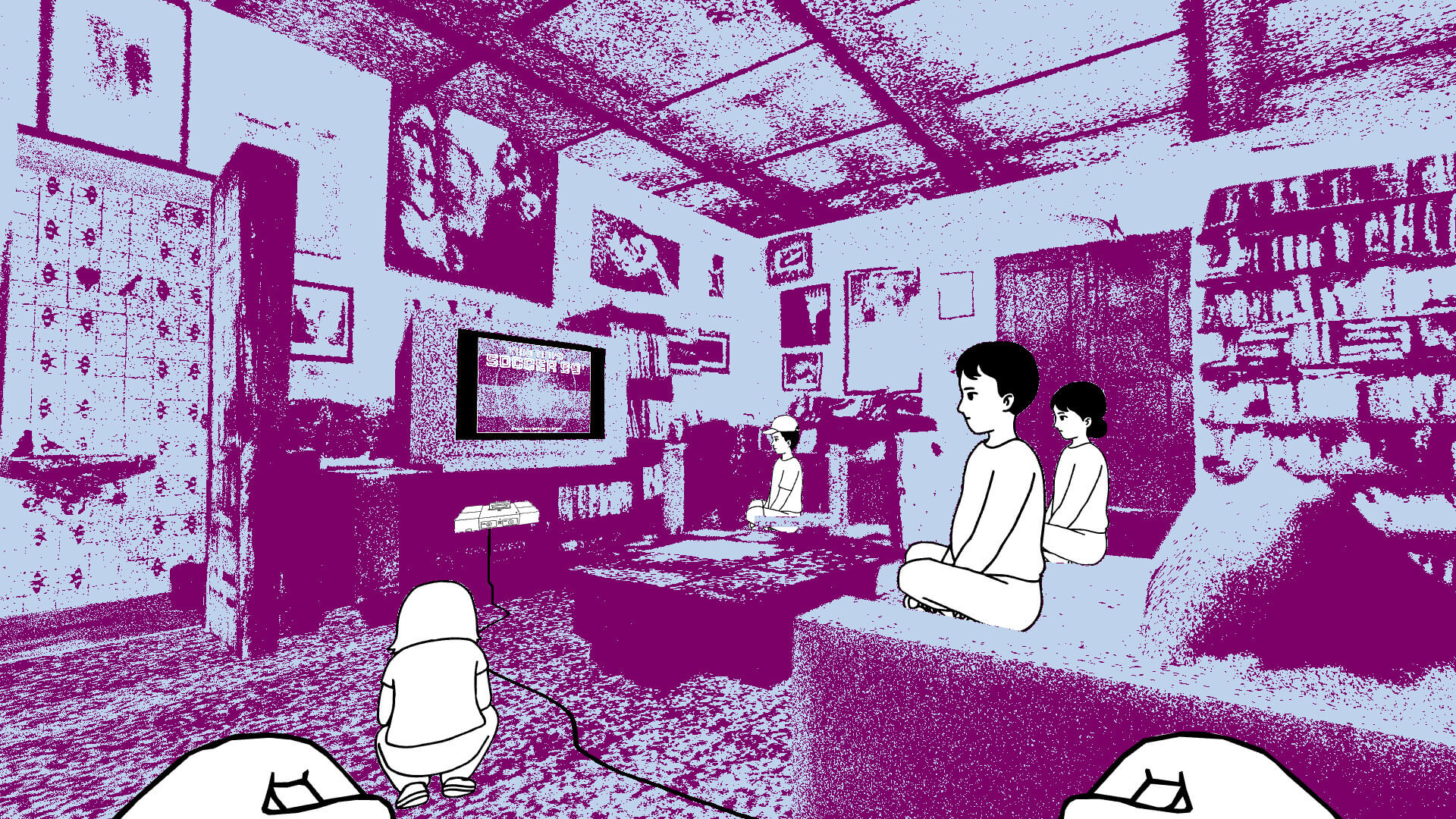
2025 gave us no shortage of big, showy games with immediately apparent appeal: Death Stranding 2 was larger and weirder than its predecessor, Donkey Kong Bonanza let us punch to the center of the planet, and Clair Obscur reminded those who don’t regularly play turn-based RPGs that turn-based RPGs can actually be pretty good. And although they all made our list of the year’s best games, none of them came in at number one. That honor went to a game that’s noticeably more subdued, a rare break from action spectacle and genre fiction that captivated through a much more grounded approach: “a soccer game about people,” as its tagline puts it.
Despelote was developed by Julián Cordero and Sebastian Valbuena and takes place in Quito, Ecuador, during the country’s Cinderella run in the 2002 World Cup qualifiers. Portrayed from Cordero’s perspective during his childhood, you witness digitally reconstructed neighborhoods and dreamlike memories, as narration fills in the details about the country’s national team and its progress in the qualifying bracket. There isn’t a clear objective beyond soaking in as much of the ambient storytelling as you can. You explore and listen in on incidental conversations about exceedingly specific topics, like what movies are expected at the Corderos’ DVD rental store, or spend an afternoon kicking a ball with other local kids. This comes across in a series of loosely connected vignettes that sometimes jump-cut ahead in Cordero’s life before returning to 2002.
Despelote is game as autobiography, juxtaposing candid recreations of the past against more hallucinatory daydreams; one moment, Cordero’s parents will be talking about familial tensions regarding an upcoming wedding, and the next, soccer balls will be raining from the sky. However, what binds both modes is that everything comes back to the unifying power of soccer and the Ecuadorian national team’s run. Diehards discuss player stats, fresh devotees try to memorize the roster, and every grade schooler in sight is dribbling a soccer ball, Julián included. The general excitement is palpable. Meanwhile, narration fills in the gaps, offering context about this time period and its political tensions, like how the country’s currency had recently crashed. It all serves to further capture how this sport gave people hope and a sense of community during an otherwise trying moment.
Although the main appeal of this experience is how it artfully conveys a particular atmosphere and energy, one of its most novel elements is its presentation. Its narrated facts, flights of fancy, and interactive recreations of the past make it work as a unique combination of documentary, fiction, and video game. To be clear, there are other games out there that can be more cleanly described as documentaries. Digital Eclipses’ interactive docs, specifically the ones in the Gold Master Series, have playable timelines that highlight legendary games and designers, with design documents, interviews, and more that capture the backstory behind each title in the compilation. They are quite neat.
 Keep scrolling for more great stories.