If you don’t count the people who actually created and championed Doctor Who back in the ’60s, or the long list of actors who’ve subsequently taken control of the TARDIS, there might not be anyone more important to the history of the long-running British sci-fi series than executive producer and writer Russell T Davies. He’s credited with returning the Doctor to TV in 2005, nearly a decade after a failed reboot starring Paul McGann. The argument could be made that Davies has a better handle on the immortal time-traveler and their universe(s) than any writer or producer who came before him. And that, paradoxically, might be why it’s for the best that he’s no longer involved with Doctor Who as of this week.
It made perfect sense to bring Davies back in 2022, when Doctor Who got a huge boost to its budget (and a new streaming home) from Disney. He successfully revitalized the show once, why wouldn’t he be able to do it a second time? Well, the Disney+ deal collapsed after two seasons with Davies at the helm and Ncuti Gatwa starring as the Doctor, and now the BBC has canceled a planned Christmas special. So where did it all go wrong? Unfortunately, the blame likely belongs at Davies’ feet.
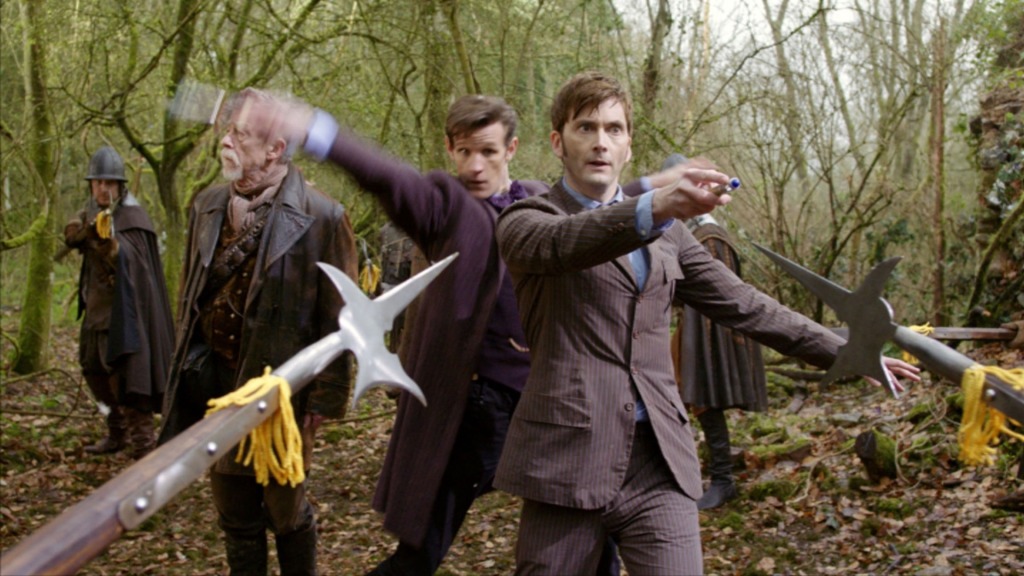
Doctor Who’s Disney era often came across as an attempt to transform the series into a Marvel-esque expandable franchise, where characters and plot points could pop up in one thing and get paid off in another thing, which likely accounts for the cool-at-the-time decision to cast fan-favorite former-star David Tennant as the 14th Doctor for a series of specials in 2023. For viewers who might’ve dipped out at some point during the Matt Smith, Peter Capaldi, or Jodie Whittaker eras, reintroducing the actor who played the beloved 10th Doctor seemed like a great hook. Hindsight being 20/20, though, it is odd that a supposed soft reboot of the series was wholly dedicated to resolving a plot point from 2008: Donna Noble (Catherine Tate) having her memories of the Doctor erased. Fresh episodes of Doctor Who were now available to more people—and, therefore, more potential converts—than ever before. But if you didn’t know the significance of Donna’s relationship with the Doctor, and the reason her mind was wiped in the first place, why would you care if Disney spent millions of dollars revisiting it?
When Gatwa came in and replaced Tennant as the actual new Doctor, his stories often seemed like a specific rejection of things Doctor Who had done in the past. The decision not to give the Doctor a specific costume gave Gatwa opportunities to wear different cool outfits, but it also deprived the show of the magic that comes from distinct details like the 11th Doctor’s bow tie or the Fifth Doctor’s sprig of celery. Plus, with the Doctor facing off against more fantasy creatures than alien monsters, Gatwa never got to achieve his dream of fighting a Dalek. (On screen, at least.) That seems like a bit of negligence that only someone consciously avoiding old Doctor Who storylines would make. Perhaps Davies didn’t want to repeat himself? He had already done a “let’s reintroduce the Daleks and explain why these stupid looking things are so scary” episode during his original time with the show (the 2005 episode “Dalek,” which rules).
Then again, Davies ended his second run on Doctor Who by repeating how he began it. When Gatwa’s time as the Doctor came to an end with an unexpected regeneration in 2025, the showrunner turned to another familiar face: Billie Piper, who played Rose Tyler in the early seasons of Davies’ reboot. It bears repeating: Why would you care if you’ve only been watching since the show came to Disney+ and you don’t know who Piper or Rose are? (Not to mention the fact that Piper has returned to the show several times already since her original heartbreaking split from the Doctor, including an explicitly fan-service-y role in the 50th anniversary special.)
But avoiding repetition is not a problem that a new head writer or executive producer would’ve had; showrunners Steven Moffat and Chris Chibnall were both able to do their own Dalek stories in the years between the Davies eras, and that worked out just fine for them. Still, it’s a tough call, and Davies and Doctor Who were in a damned if you do, damned if don’t situation. If the show became too new, it risked alienating the fans who came to the series through the 2005 revival, and those who’d stuck it out between the runs of the seventh and ninth Doctors. If it were too slavishly dedicated to existing canon, newcomers would be completely lost.
So maybe it’s not a Davies problem at all, but a Doctor Who problem. The show’s closest pop culture analogs are Star Wars and Star Trek, and as those franchises have grown longer in the tooth, their respective owners, Disney and Paramount, have tried to sustain relevance by ramming them into the ground at full speed. Star Wars and Star Trek can not and will not ever go away, at least not entirely. But this is where Doctor Who differs. It’s proven it can go away before. And now it has no choice but to go away again.
In canceling the plans for a 2026 Christmas special—which Davies admitted in an Instagram post had never been planned out at all and was only penciled in to try and ensure that there was something on the books post-Gatwa—the BBC has effectively put Doctor Who on hiatus. Davies and his production company Bad Wolf are no longer involved with the show, there doesn’t seem to be a plan to name their successor any time soon, and there’s no confirmation that Piper will ever come back to play the Doctor. Davies even quipped in his Instagram post that whoever runs the show next might change the theme song or “lose the blue box.” That’s how “back to square one” we are.
And, honestly, that’s good. A lengthy break could be enormously helpful for Doctor Who, and it could give some new creative mind an opportunity to come in with a new take that makes it their own, just like Davies did. The original run of the show, from the First Doctor to the Seventh Doctor, was 26 years. The rebooted run, bookended by Davies’ tenures, is now at 21 years. Doctor Who has almost been around this time as long as it was the first time, and the show no longer seems to know how to appease old fans or draw in new ones.
Absence makes the heart grow fonder, and it would be very Doctor Who for the show to just hop in a metaphorical TARDIS and zip away for a while, only to return when we need it the most. Or when someone has a great new idea. Or when racist and sexist trolls have finally been silenced and an actor who’s a woman or Black can play the Doctor without the absolute worst people throwing little fits. The show has always been about finding ways, both big and small, to make the universe a nicer place. Maybe it’s time to take those lessons to heart and just let Doctor Who take a well-earned vacation. And if you start to miss it—well, Doctors nine through 13 just popped up on AMC+.


 Keep scrolling for more great stories.