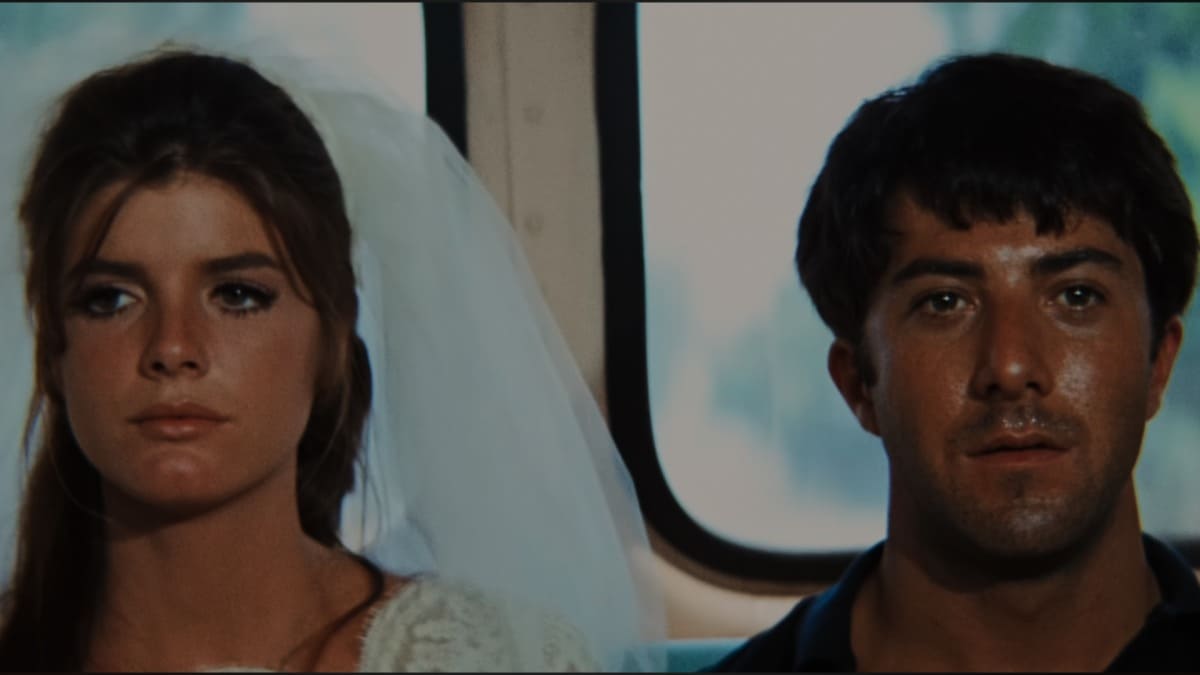
Though there are plenty of compliments to go around, too—The Graduate, of course, is frequently cited among the best films ever made—the negative parts of the experience seem to be hard for Hoffman to forget. “Mike was irritable with everyone, but with me a certain sadism seemed to creep in. There was a scene in which Katharine Ross had to slap me, and he made us do twenty-seven takes,” the actor writes. “I was dizzy by the end of that day, and Mike didn’t even use the slap in the film.” Hoffman also recalls puncturing an eardrum during a scene where he had to wear a wetsuit in the pool, and nearly losing consciousness while filming the scene where his character Benjamin runs to the church at the end of the movie. “It was a terrible experience making the movie that changed my life. The whole time, I felt Mike was angry at me, either because I was doing something wrong or because he had realized what everybody else already knew, that he had miscast the lead in his film,” writes Hoffman. (We would be remiss not to mention that Hoffman has faced several allegations of sexually predatory or otherwise unprofessional—including slapping Meryl Streep on the set of Kramer Vs. Kramer—behavior on various sets over the years.)
Still, Hoffman has come to understand Nichols differently in the years since filming wrapped. Hoffman has come to understand that he was there to serve as Nichols’ own stand-in in the film. He writes:
He didn’t notice for years that, not long after his professional breakup with Elaine May—his partner in crime, his artistic collaborator since college—he made a movie in which the hero bangs against the glass wall of a church screaming, in anguish, ‘Elaine! Elaine! Elaine!’ He was looking for an alter ego—that’s why Benjamin had taken years to cast, and maybe that’s why he was so hard on me. I was a stand-in, there to absorb Mike’s own self-loathing.
You can read the whole essay in The New Yorker.


 Keep scrolling for more great stories.