No one had The Hunting Wives becoming one of the most talked about and chart-topping TV shows of the year on their bingo card. Created originally for Starz by Rebecca Cutler, this sudsy thriller was licensed to Netflix for only one year. But the series’ twists and unexpected romance compelled viewers and turned its absurdity into a huge hit, partly because it harkened to former dramas like Desperate Housewives, Devious Maids, and Mistresses, the type of women-led shows that feel like a rare commodity on TV today. The Hunting Wives, thankfully, isn’t alone because 2025 has provided a surprisingly heavy slate of projects that are star-studded and visually appealing but don’t care to challenge their target audience. The Morning Show, And Just Like That…, and You fit this bill, sure, but these newer offerings have carved a position for themselves as elevated trash, i.e., zany shows with a prestige sheen that are rewarded in one way or another.
Take this spring’s Sirens, a goofy and relatively hollow saga about two sisters in the clutches of a hypnotic and controlling billionaire, Michaela “Kiki” Kell (a stellar Julianne Moore). It’s a pivot for creator Molly Smith Meltzer, whose previous Netflix project was the quietly moving Maid. On the surface, Sirens (which allegedly clocked more than a billion minutes of viewing time during its release week) has lots of ideas about trauma, privilege, and the difficulty of moving on after a troubled upbringing. It delivers meaningfully on none of those fronts. Much of the same can be said of Prime Video’s The Girlfriend, which crossed 25 million viewers after its October drop, per Deadline, and generated plenty of word-of-mouth discussions about which character’s side is right. The scintillating but silly six-part drama centers on the mind games between affluent gallerist Laura (Robin Wright) and her adult son’s love interest, Cherry (Olivia Cooke), as they fight to gain his trust. Once again, there are signs of a deeper take on control, freedom, and class wars. But there’s no interest in dissecting these themes. Why should either show bother with nuance when when there are lavish outfits, houses, and locations to suck you in?
Sirens is also aesthetically pleasing with its shots of Kiki’s beachside mansion, flowy dresses, and grand parties. So the interesting sibling dynamic between Devon (Meghann Fahy) and Simone DeWitt (Milly Alcock) takes a backseat. Still, it left a mark on the Television Academy voters, with Fahy earning a second Emmy nomination after her breakout performance in The White Lotus. It’s still to be seen if The Girlfriend, which features visually arresting trips to Spain, yacht vacations, and stunning homes, will earn any Emmy nominations. But what’s clear is that they’re both addicting second-screen series, ideal background noise for folding laundry or scrolling through your phone. They’re a step up from melodramatic reality TV but a welcome step down from the heady, gritty dramas that usually earn acclaim and make best-of-the-year lists.
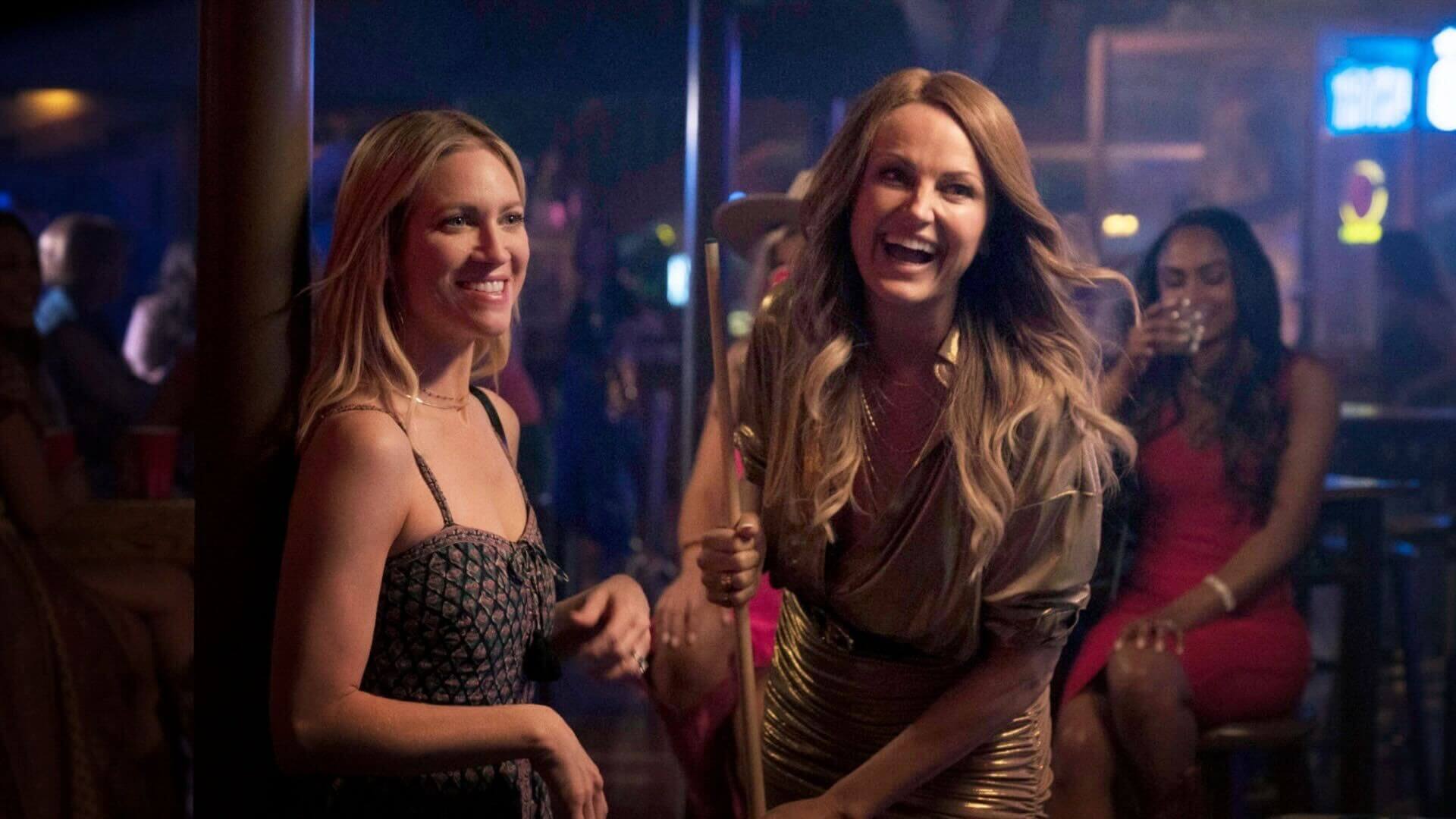
Circling back to The Hunting Wives, which dominated Netflix’s charts and watercooler conversations over the summer, its makers seem keenly aware of that aforementioned quality and its campiness. In the series, a timid and liberal Sophie (Brittany Snow) begins an affair with Margo (Malin Akerman), the wife of a Republican gubernatorial candidate in a small Texas town. This scandalous secret blows up their social circle and respective marriages after someone in their community is killed. With political and cultural clashes at play, The Hunting Wives may sound serious—but deep down, it’s refreshingly horny and ridiculous. (Akerman’s atrocious wig and characters’ cartoony Southern accents certainly help with that.) And its mainstream success proves a thirst for “good bad TV.”
Ronan Bennett knows this, as his often frivolous series MobLand became the most-watched premiere in Paramount+ history. Pierce Brosnan and Helen Mirren lead this British gangster saga as the bizarre power couple Conrad and Maeve Harrigan. They plot to defeat rival syndicates in and around London, frequently relying on fixer Harry Da Souza (Tom Hardy) for help with their smug, shit-stirring family members. An overreliance on tropes—betrayals, secret informants, constant deaths—makes MobLand pretty predictable. But nothing prepares you for the chaos Brosnan and Mirren bring to the table. Seemingly in on the joke, they sink into over-the-top roles to help land the plane. Conversely, HBO’s IT: Welcome To Derry (which ended up on some best-of-the-year lists) features sincerely moving performances from Chris Chalk and Taylour Paige that go against the show’s glaring silliness. The horror series, which started strong and opened with solid numbers, succumbs to its goofiest tendencies after Pennywise (Bill Skarsgard) pops up in episode five. This modestly fun drama also superficially addresses the racial and social injustices of 1962.
All of these series tap into a collective desire to turn our brains off from time to time. But they’re not just about escapism for the sake of it. The strong viewership numbers indicate a craving for second-screen watching that’s not entirely vapid, boasts major talent, and, occasionally, even garners awards buzz. And hopefully, the success of these dramas will lead to an uptick in similarly lowbrow but high-quality entertainment.
Saloni Gajjar is The A.V. Club’s TV critic.


 Keep scrolling for more great stories.