
Widow's Bay's costumes are as spellbinding, funny, and scary as the rest of the show
"Beach Reads" contains one of the year's crowning achievements in TV costuming.
Photo: Apple TV
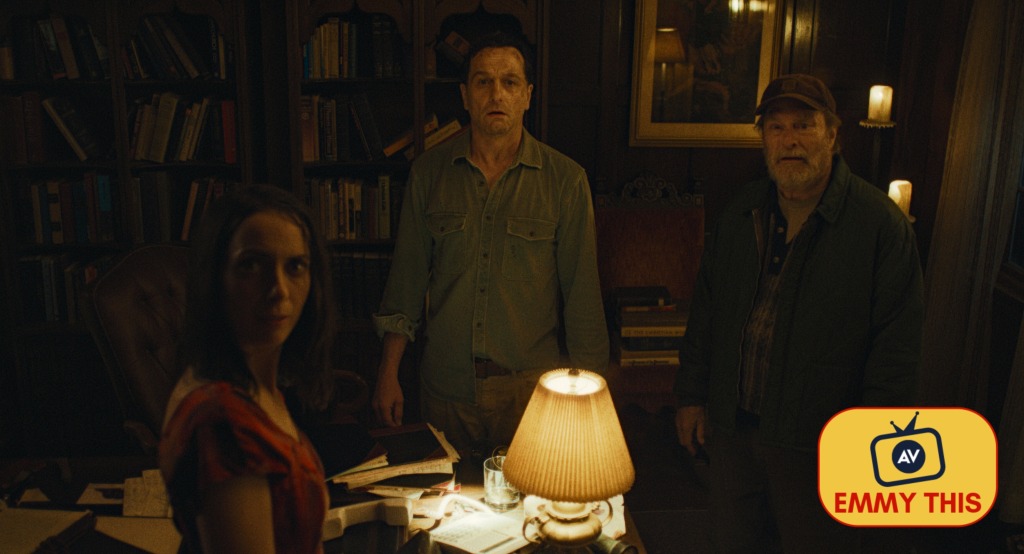
From the moment Patricia Moyer (Kate O’Flynn) first appears on Widow’s Bay, it’s clear her wardrobe isn’t composed of pieces from that month’s TikTok microtrend or whatever designer Vogue is pushing. Her retro-leaning checked culottes, pinafore frocks, natty neckerchiefs, and patterned knits sets her apart from the other residents of the show’s cursed island community—particularly her former high-school classmates, who favor a basic, more contemporary mix of ruffles, prints, and off-the-shoulder dresses. Patricia’s unique sense of style is just one of the many things that set her apart from the women whose wine-and-cheese night she crashes in the early-season highlight “Beach Reads.”
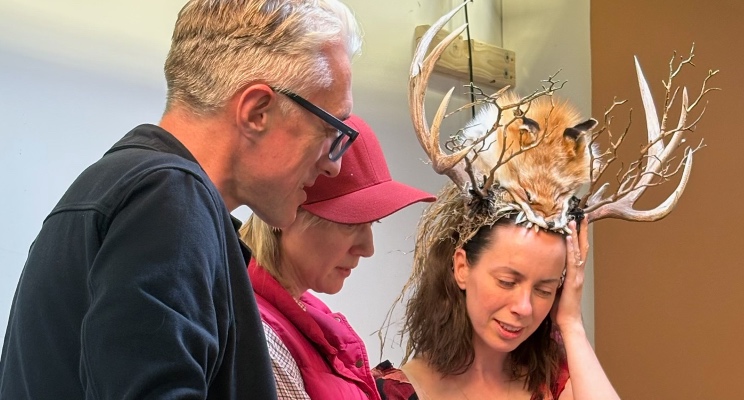
Considering Widow’s Bay just got its first cappuccino machine, it’s unlikely that the tourists flocking to the island in the wake of a glowing New York Times writeup will bring an influx of chain stores with them. I am incredibly thankful for this. Without immediate access to fast fashion or high-end retailers, the townsfolk sport lived-in attire that adds to the rustic, authentic aesthetic of the setting. Designer Alex Bovaird is at the helm of this world-building-through-costume; much like the delicate balancing act between horror and comedy achieved by series creator Katie Dippold, Bovaird and her team infuse the closet of Widow’s Bay’s colorful characters with playful and terrifying elements without straying into pastiche or forced references. The sartorial alchemy might fly under the radar, but it’s as worthy of Emmy voters’ attention as the performances, writing, direction, and production design that have turned the series into the breakout hit of 2026.
Unlike the Oscars, which haven’t changed the costume design categories since merging black-and-white and color categories in 1967, the Emmys continue to expand their costume awards to reflect the evolving TV landscape: Last year, trophies were handed out for achievements in contemporary, period, science-fiction/fantasy, and variety/nonfiction/reality costuming. However, the shows that tend to get recognized are often the stylized ones (including multiple American Horror Story entries and Wednesday) or their more high-fashion-focused counterparts (like Big Little Lies, Emily In Paris, and Schitt’s Creek). But it isn’t completely unprecedented for a show like Widow’s Bay to get a costume nomination: Its abundance of plaids and workwear wouldn’t look out of place on Twin Peaks, the first season of which won the Emmy for Outstanding Costumes For A Series in 1990.
Bovaird is no stranger to these categories, receiving nominations for outfitting locals and outsiders alike in True Detective: Night Country and the first three seasons of The White Lotus. Widow’s Bay is much closer to the former than the latter; the tourists aren’t packing thousands of dollars’ worth of designer garments, and the most notable inn on the island isn’t exactly an “employees in matching uniforms” affair. Bovaird said in a recent interview with Whatever Nevermind that director Hiro Murai described the show’s tone as “American nostalgia trapped in amber,” and her work here reflects that. Classic silhouettes, patterns, and fabrics complement the production design of Steve Arnold, but Widow’s Bay never feels like an aggressively Pleasantville environment. Instead, those throwback touches are integral to ensuring Widow’s Bay feels like a real place and not a spoof.
 Keep scrolling for more great stories.