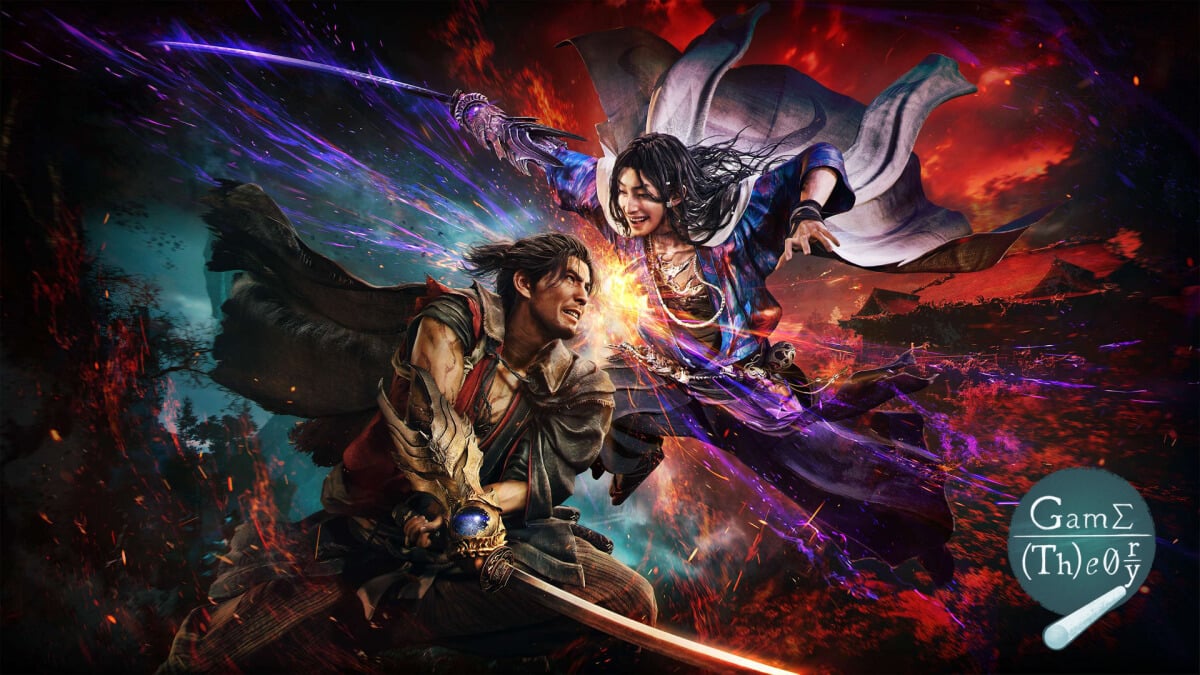
I’ve been getting whiplash with my boss fights lately. Not just because I’ve been fighting enemies with whips—although, thanks to a recent poke at the Castlevania: Belmont’s Curse demo, my number of major whip-based video game confrontations over the past month isn’t trivial. But in a fall that’s seen me chew through some of the biggest action games of the year, and come away shocked by how lackluster their biggest battles were, I’m finally digging into one where I get excited when an enemy’s giant health bar appears at the top of my screen. God or gross-looking god-like demons bless Onimusha: Way Of The Sword (and its designers at Capcom), then, for helping wash the taste of Marvel’s Wolverine and Control: Resonant’s boss fights out of my mouth.
I touched on these major battles in my write-ups of both games, admittedly. But spending time with the new Onimusha has helped highlight why those other games’ biggest fights were the ones I dreaded most. And it’s because, when I enter an arena in Way Of The Sword, I know my actions are actually going to matter. With a battle system focused on enemies tossing out a huge variety of types of attacks—and then asking me to choose, in a split second, whether my best response is a parry, a block, a dodge, or an attempt to simply fight my way through the pain—Onimusha makes its fights with giant mythological beasties feel electric every single second they’re on the screen.
Unlike, say, Control—where every version of a boss fight is going to inevitably involve executing the same basic combo three dozen times while trying to do a basic dodge move when they start to fire a beam—there’s no room in Way Of The Sword for me to get bored mid-fight. I’m focusing on when to use my limited special moves; I’m keeping track of a power mode that runs off of good play; hell, even when I’ve staggered a boss, I’m deciding whether to punish them for extra damage or milk them for a little recovered health. With a huge potential to either succeed gorgeously or eat a heaping helping of shit, I never forget that I’m doing something where the doing itself is supposed to be the fun part.
A big portion of this, I’m realizing as I compare the experiences in my head, is pacing: Unlike these other two games, Onimusha doesn’t really care how quickly I can get through a boss fight—and, indeed, tends to lean on shorter, more energetic battles, where both me and my enemies are taking big chunks off each other’s health bars. Fights can drag on longer, if I’m playing cautiously, beefing my parries, or otherwise failing to engage the game’s systems as enthusiastically as it’s throwing a gigantic wind demon with a pompadour made out of his own brain at me. But the sensation of filler that’s been haunting me in my boss fights all summer is finally gone.
Contrast, for instance, the single worst thing about the climactic battles in Wolverine, i.e., pressing up against one and feeling the invisible shape of a conversation from the design process that went something like this: “Well, we’ve got about 30 seconds worth of dialogue to get through in this section; we’d better make this chunk of [Spoiler final boss whose identity is nevertheless pretty damn obvious about 20 minutes into the game]’s health bar take 30 seconds to chew through.” If you’ve grabbed every (fairly minimal) lever the game gives you to turn up Logan’s damage output, and you’re demonstrating perfect play, you might be able to shave that number down to 20, cutting off a few lines of the monologue.
But part of that game’s commitment to “cinematic spectacle” was that it was never really willing to let the player be the director of their biggest moments; you’re a participant, at best, providing the hacks and slashes that justify the “real story” moving on to its next beats. It’s part of why Wolverine turns out to be a significantly better game when you’re fighting mooks, by the way; Logan’s kit is designed to let you wreck those poor ninjas/cyborgs/cyborg ninjas in creative and kinetic ways that don’t care about whether you’re rushing to the next cutscene or growling back-and-forth. Whereas boss fights often feel like the poor Canuck’s been neutered, because being too powerful would wreck the conversational flow; the result is to make killing the hundredth poor Reaver who winds up impaled on your claws feel far more like an expression of Wolverine’s character than when he’s facing off against a “nemesis” like Sabretooth.
Resonant, meanwhile, is almost baffling in its commitment to making boss fights that genuinely don’t matter on a moment-to-moment basis. Whether you’re fighting a single big opponent, or—as becomes more common as the game progresses, culminating in a final battle that’s entirely this—fending off the same regular waves of enemies you’ve been fighting all game in a slightly more complex arena, the game seems to believe that you make a battle bigger simply by making it longer. Notably, the game’s inhuman enemies don’t ever act like what protagonist Dylan Faden’s doing matters to them at all; they might stagger after a particular blow, but it often feels like you’re fighting an algorithm more than an opponent. (Which, arguably, ties into the game’s theme of fighting extradimensional threats that can barely perceive humanity, let alone understand it—but the result is still the feeling that you’re smacking around a giant, ostensibly malevolent spreadsheet.)
What’s fascinating about putting these three games in conversation with each other is that they’re all, on a surface level, about the same kinds of fights: Big shock-and-awe battles with opponents that dwarf your diminutive heroes. (Onimusha’s Musashi might get into a few more duels with opponents his own size, but all three of these guys spend a decent chunk of their boss fights eye-level with monster/giant robot crotch.) And yet, the feelings they evoke really couldn’t be different, whether it’s Wolverine listlessly fending off a Sentinel in the form of a “high-chair boss” (to lift a term recently coined by games writer Francisco Dominguez), or Control’s Dylan hacking away for five minutes at a dancer made out of fractal limbs that only barely seems to notice he’s even there. Whereas the duels in Onimusha feel genuinely thrilling, and even kind of personal, even when I’m revisiting them in the game’s robust, and much-appreciated, boss replay mode. Never insanely demanding, but constantly rewarding to attentive play, they serve as an antidote to playing multiple games recently made by people who seem to have put boss fights in their video games because that’s what an action game has, not because they had a great idea for how to make one fun.
I’ll close on a brief anecdote: Like everybody who’s survived their fair share of big video game battles over the years, I tend to roll my eyes these days when a boss pulls the ultimate filler flight cliché, and breaks out a second health bar after I just got done depleting the first one. When Onimusha pulled this move, for the first time in living memory, I caught myself thinking something else: “Fuck yeah, more fight.” I can’t really think of a higher compliment I can pay it.


 Keep scrolling for more great stories.