
We’re finally taking horror-comedy seriously. What took so long?

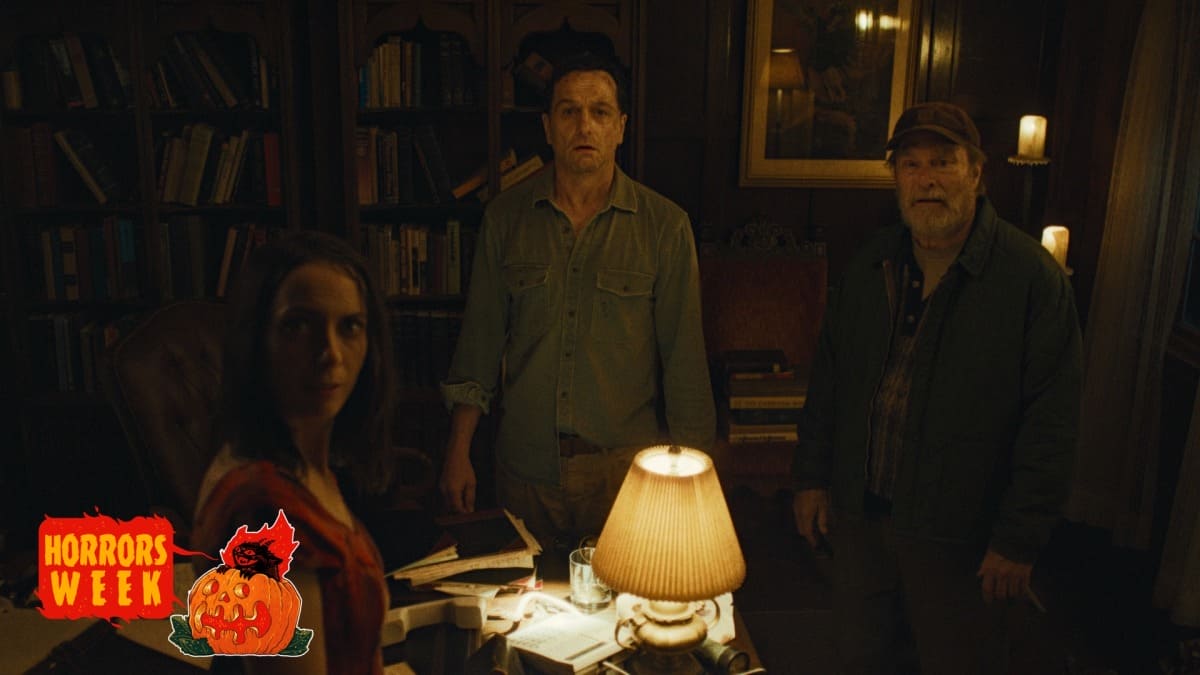
When Widow’s Bay was named Outstanding Comedy Series at the 2026 Primetime Emmy Awards, it made history several times over. This was the Apple TV show’s 14th Emmy, a new single-season record for a comedy; it was also the first time in the awards’ 78-year history that one of its top prizes went to a horror series. Creator Katie Dippold’s acceptance speech nodded toward Widow’s Bay’s outlier status, giving thanks for the “crazy creative swing” she and the rest of the team were allowed to take with “this weird show” about the people living in a cursed New England island town.
There’s some wry understatement in Dippold’s speech, but there’s no overstating how unprecedented this all is. The stigmas that once confined horror to the cultural margins have largely been shaken off, but Amy Madigan’s Best Supporting Actress Oscar for Weapons still came across as a pleasant surprise this past March. And now here was a different voting body—albeit one that, in earlier iterations, honored American Horror Story, The X-Files, and The Twilight Zone—going all in on a show where the visceral chills are tempered, and even enhanced, by abundant sight gags, exasperated exclamations from the locals, and a tossed-off aside about a man who got bit by an animal and then became that animal. Those accolades were preceded by positive word-of-mouth that crested right around the time that Obsession and Backrooms were packing movie theaters with horror hounds and normies alike; they’ll likely be followed by some plum positions on critic’s year-end lists. (It has a death-grip on my ballot’s top spot, at least.)
The best thing on TV isn’t just a horror show, but a horror-comedy. It’s the kind of thing that could give a historically maligned subgenre a good name: The Widow’s Bay breakout caps off a period of renaissance that began with small-scale big-screen bright spots like Tragedy Girls and the Happy Death Day movies and a slew of series that staked out a place for horror-comedy on TV at the start of the 2020s. One of those series, the American adaptation of Ghosts, has been enough of a hit that its creative braintrust just launched a second supernatural sitcom, Eternally Yours, this fall. The subgenre remains a tough sell at the box office—the thematically similar Ready Or Not 2: Here I Come and They Will Kill You probably didn’t help themselves by opening within a week of each other this past spring—but 2026 also saw the release of sequels to ’00s cult favorite Black Sheep and O.G. monster-movie spoof Attack Of The Killer Tomatoes. And there has to be some sign of an increased tolerance for Frankenstein creations that dare audiences to laugh and scream in Jordan Peele and Zach Cregger’s ascension to the top of the modern-day horror heap.
But if horror-comedy has spent the last 10 years or so dragging itself out of the grave, how’d that hole get dug so deep in the first place? Why hasn’t a surefire gateway to the genre—mild enough for scaredy cats while still satisfying the horror-curious with a trial dose of jolts—been treated with more respect? As we await a second season of Widow’s Bay (and all the combinations of creaky doors and whoopee cushions the first season’s success might unearth), I have some theories to propose.
Theory 1: Horror-comedy is too loosely defined
Quick: Name your favorite horror-comedy. Is it a depiction of everyday folks thrust into a familiar, scary movie setup, à la Shaun Of The Dead or Abbott And Costello Meet Frankenstein? What about something with a little more macabre whimsy to it, like House or What We Do In The Shadows? A splattery caper that sat alongside Evil Dead II, Dead Alive, or The Return Of The Living Dead on the video-store shelf? Do individual Treehouse Of Horror segments count? I mean, the atonal score and bleeding kitchen that “sure could use a woman’s touch” in “Bad Dream House” sure fit the bill, but by the time the Simpsons writers were folding The Diving Bell And The Butterfly into their annual Halloween dress-up games, things start to get a little hazy.
So it goes with trying to sort any shared aesthetics, subject matter, techniques, themes, character types, or settings into a neat rubric for defining horror-comedy. It’d be difficult for any mode of storytelling to burnish its reputation when its extremely loose definition could feasibly encompass Scream, Scary Movie, and any other, lower-rent spoof of the teen-horror revival kicked off by Wes Craven’s game-changing meta slasher. Why, it’s enough to leave one feeling like their head’s been spun clean around, Meryl Streep-in-Death Becomes Her-style. Speaking of which: Death Becomes Her—horror-comedy, or fantasy comedy with gothic undertones? And then where does that leave its companion in high-star-wattage, supernatural satire, The Witches Of Eastwick? Ope, there goes that head again.
Any attempt to survey this haunted house reveals more borderline cases lurking in hidden rooms and secret passageways. In a 2015 Vulture article, Charles Bramesco proposed a horror-comedy timeline that begins with Bud Abbott and Lou Costello tangling with the Universal Monsters, runs through the vehicular manslaughter Down Under in The Cars That Ate Paris, and ends with the survivalist hijinks of Zombieland. “All of these films outwardly align themselves under the subgenre of horror-comedy, and yet the vast gulfs of difference separating them in terms of tone reveal just how scattered that distinction is,” he writes. Eleven years later, things remain just as scattered, but a prime example of the subgenre enjoying such a high profile does help fix an idea of what is and isn’t a horror-comedy in the public imagination.
Not that Widow’s Bay can be the rubric all on its own, but the ingredients of its witch’s brew could be the start of a more precise definition. As on that show, there must be some element of the monstrous, supernatural, or paranormal bumping up against human characters whose terror is believable and whose foibles and personalities are laughable. There can be punchlines that acknowledge the absurdity of these intrusions from the otherworldly, but they shouldn’t undermine the frights. A sincere appreciation and execution of both comedy and horror conventions helps, too.
 Keep scrolling for more great stories.