You don’t have a career like Keith David’s—400-plus roles on stage and screen, three Emmys, and a Tony nomination—without hitting some hot streaks. Consider his 2009, which was bookended by his turns as Coraline’s feline guide to The Other World and The Princess And The Frog’s sinister Dr. Facilier. But the 70-year-old actor is currently on a heater for the ages: This past summer, he received a star on the Hollywood Walk Of Fame. His first season headlining the Rick And Morty spin-off President Curtis just wrapped on Adult Swim, and his portrayal of haughty attorney Steve Nichols was one of the highlights of Netflix’s canceled-too-soon Strip Law. He’ll soon be seen alongside Jake Johnson, Jane Levy, and Langston Kerman on Sunset P.I., the new NBC comedy created by Brooklyn Nine-Nine alums Dan Goor and Luke Del Tredici. And, as he added in a phone interview with The A.V. Club, he also released his first solo album in February—a standards collection titled Between Takes.
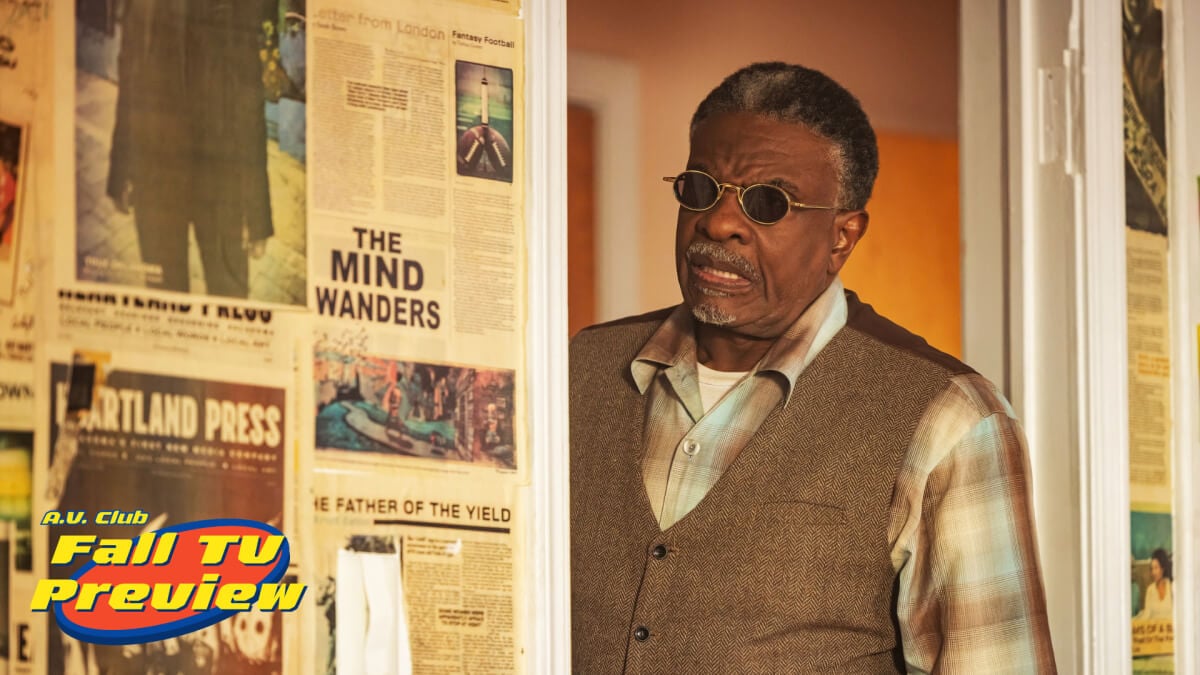
And that’s all without mentioning the role that brings him back to FX Wednesday, October 14: Marty Brunner, the Tulsa private eye with writerly ambitions that David plays on The Lowdown. Now the managing editor of the show’s fictional Heartland Press, Marty finds himself not only roped into the investigative work of self-proclaimed “truthstorian” Lee Raybon (Ethan Hawke), but overseeing the budget for those wild goose chases—which, in the second season of the Sterlin Harjo-created series, revolve around a public defender played by Betty Gilpin and her client who’s gone missing in an Oklahoma prison. Ahead of the season premiere, David spoke to The A.V. Club about the new season, playing the differences between himself and Marty and President Curtis, and why he thinks every actor is like a detective.
Read on for an exclusive first-look photo from season two of The Lowdown.
This interview has been edited for length and clarity.
The A.V. Club: When you reflect on your career does 2026 feel bigger than other years?
Keith David: Yes. Certainly it’s not every day you receive a star [on the Hollywood Walk Of Fame]. I’m still reeling from that experience. It was such a great honor. I had bore witness to friends receiving it, and truthfully, I hadn’t really given any thought to it ever happening to me until it happened.
It still moves me right now, that I was able to be present for it. That I had my father there with me, that my wife and daughters and my son, my whole family, was there—my first cousin, who is like a brother to me.
If that was the only thing that happened to me this year, that would be enough. But I got season two of The Lowdown, and we’re shooting the first season of another series, the sitcom that I’m doing [Sunset P.I.]. And my first album came out. So it’s been a wonderful, wonderful year.
AVC: When did you first have a sense of how central Marty would be to The Lowdown?
KD: When I talked to Sterlin about it initially, he said, “He’s introduced in the first season, but he’ll be very active in the second.” And I said, “Okay,” and I was ready to go.
I love how Marty’s integral to the story, because he’s just one of the few guys who really is on Lee’s side. He understands what Lee is trying to do—whether or not he agrees with the way he does it. But they’re great allies and I like that.
An exclusive first look at The Lowdown season 2, featuring Betty Gilpin as Ginger and Ethan Hawke as Lee (Photo: Shane Brown/FX)
AVC: Your relationship with Ethan Hawke goes back several years and a few projects now. How would you say that relationship has evolved over time?
KD: It’s a beautiful thing. I have other friends in the business whom I deeply,
deeply respect—a few who I’ve known my whole professional career—and watching them grow, I cannot tell you the place where it touches my soul. It fills me with hope, because I hope that I look like that to somebody—that over the years,my work has deepened, my work has expanded. Because that’s what I think of when I think of Ethan. He’s just such a wonderful actor. And he’s gotten some wonderful opportunities, and he has certainly squeezed every ounce of juice out of them.
AVC: Who would you say is the person—in your life, in your career—who watched your work deepen and expand like that?
KD: Well, my buddy Ruben Santiago-Hudson. I mean, I’ve known him 40 years. He is one of the people who I’ve done the most plays with. And I love him for life.
He’s about to direct [August Wilson’s] Seven Guitars at Lincoln Center. And we did Seven Guitars 30 years ago on Broadway, for which he won the Tony. And to watch his growth—he’s become a very prolific director. And rightly so. He is so sharp, his eye and his sensitivity, his sensibility—with everything he does, but especially doing August’s work, he is unparalleled. He just brings such depth and scope to the work that if I weren’t myself, I would wish I were him.
AVC: In other interviews about The Lowdown, you’ve mentioned that you’ve always wanted to play a TV detective. After two seasons of playing Marty—one in which he’s still in PI mode in his new job—has the role lived up to your hopes and expectations?
KD: Oh, absolutely. In the TV detectives that I’ve always loved and admired—Matlock, Columbo, Rockford—they get involved in a whole bunch of stuff in the midst of covering cases. And so does Marty. What I love about him is you also get a glimpse into his personal life and what he’s interested in. And how, at this point in his life, having made a lot of personal sacrifices, what becomes important to him—and his relationships are important to him. I love that development and being able to explore that and bring some of that to the table. Because it’s not all directly spoken to.
AVC: When those aspects aren’t directly spoken to, how are you conjuring them in your performance or getting them across onscreen?
KD: Well, you can’t play what’s not there. However, within the scope of what you do have to play, if there’s a moment to be eked out that’s reflective and that can resonate in other realms other than the present situation you find yourself in, I’m going to look for it. I’m going to find that.
AVC: Season two sees Marty really mixing it up with all the colorful personalities in The Lowdown’s orbit—he might be haggling over pay rates with Lee in one scene, and then going on an undercover mission with the characters played by Michael Hitchcock and Tommy Lee Jones the next. Is there anyone in the cast you haven’t acted opposite yet that you’re dying to get a scene with?
KD: No, I’ve gotten a chance to mix and mingle with everybody so far. If there’s more to be had and if Sterlin writes more in there, I would love to be there.
That’s another thing: I feel extremely blessed. It used to sound cliché to me when every cast you get into, we’d say [Affects sing-song voice.] “Oh, I love this person. We just love each other.” But you know something? It’s a cliche for a reason. Because when you’re working in a nurturing, loving environment, there is no substitute for that. And I have been so blessed in my career and in my working life that I have gotten to work with so many wonderful people and great casts—that is the gift that keeps on giving. It just brings me to my reality to say that the God of my understanding is good every day of the week and all the time.
AVC: There’s such a depth of talent and range of experiences and backgrounds within the cast—what kinds of conversations are you having during the downtime on set?
KD: What everybody else is talking about. Sometimes we talk about the state of the union. Sometimes we stay out of that and we talk about music. We talk a lot about what’s going on in the scene: What is this scene about? Can we make it better?
That’s another reason why I just adore working with Sterlin because it’s one thing on the page when it comes out of the writers’ room. And then when we get on set and we start to breathe life into it. Well, then sometimes something doesn’t ring as true as it did in the office. So he’s right there with us, willing and able to change it on the spot. And it’s like, “Wow!” It doesn’t get better than that, man.
AVC: Is that type of flexibility something you seek out in projects?
KD: As much as possible. Adaptability is one of the things that keeps us alive. It keeps us young and keeps us from being dinosaurs. It’s a really wonderful thing when you, when you’re working with people who are confident enough to change. Different isn’t always better—but it can be.
AVC: What did you pull from in order to play Marty zonked out on veterinary drugs after he’s been shot in the first-season finale?
KD: You don’t want to know. [Laughs.] Just say I survived the ’70s. If you live long enough, stuff happens, and you remember. [Laughs.]
AVC: Do you have a general approach to playing intoxication? I’ve always heard the best way to play drunk is to try to appear sober.
KD: Well, most of the time, unless you’re trying to get drunk just to be drunk, you’re trying to enjoy yourself. You just happen to overload. So there’s always something to fight against—you don’t want nobody else to know the degree of intoxication that you are. I find that’s true in life, and that’s how I approach the moment. Suddenly you’re losing control of certain senses or your balance or something, but you’re trying to maintain it.
And that’s always fun to play. Used to be a theme in old movies: [Sings.] “How dry I am, how dry I am, nobody knows how dry I am.” That’s what you lean into—nobody knows but you. You don’t want to be too over the top with it, either in life or in the playing of it. Fortunately, I have great people around me, like Sterlin, who will keep it balanced. They’ll say, “Okay, pull it back a little bit, it’s too much,” or “That’s it. There you go, you got it.”
AVC: You were once asked about the “attitude” that unites your characters and performances, and part of your answer was “I try to find the differences, not the similarities, but it’s still being filtered through me. So there are going to be some inherent similarities, but those are not the things I’m looking for.” What are the differences between you and Marty?
KD: Marty is a deeper diver than me. When he gets involved with something, he really gets involved. His training as a PI and as a writer helps him to dive deeply into things and ask the right questions.
Every actor, I believe, is a detective of sorts. And you want to explore and check out different time periods, you want to be observant of different personalities and personality types. And the way men and women behave in different periods of time—a man’s work ethic in the ’50s is very different than what it is today, and different from ones from in the ’70s. So what are those differences? I look for those. But Marty, as opposed to me, because he’s a writer, I think he knows some of those resources a little bit better than I do. But I continue to learn.
AVC: And what are the differences between yourself and President Curtis?
KD: [Laughs.] I have a far better filter than Curtis. At least, at least I think I do. The thing that I love about him is he is an integrous man—he has a deep integrity, but he doesn’t have any filter. And he has a respect for the people and for the office that we don’t see as much today. I like and respect that about him.
AVC: What was it like to dig deeper into that character, and how does playing him across a full season of President Curtis differ from the guest appearances on Rick And Morty?
KD: Well, you get to find out all the things about him. I not only get to discover things about him, but, the writers and the producers, they get to write into some of his strengths and his vulnerabilities.
That’s, again, a gift, because you don’t always get that when you’re playing a character for a long time. When you’ve been in a relationship with anybody, you don’t find out everything about that person in a day. After 25 years, my wife still asks me, “Oh, when did you meet that person? How do you know them? You’ve never talked about that person before.” And I go, “Well, it didn’t come up.” So the longer you get to play a character, things unfold.
AVC: One of those things we learn about President Curtis is that he’s quite the shower singer. How did that part of the show come about?
KD: I don’t know, probably because I’m always singing in between takes. With those, it was something that I think we played with and then they decided to lean into it.
AVC: You also have Sunset PI coming up on NBC at the beginning of next year. There’s not a ton of information about that one out there yet—what do you feel is the most important thing to know about that show before it premieres?
KD: You’re going to have a lot of fun. It’s very funny, and it’s a workplace sitcom about a couple of private eyes. And I play the owner of their agency. One is like my son. And one is my son.
AVC: And now you’ve gotten to live that dream of being a TV detective twice over.
KD: Every day of my life I’m living my dream. All my life I wanted to be an actor. And on my worst day, I’m still an actor. The creator has gifted me with being able to live my dream. Sometimes dreams have rainy days, but I’m living it. I have learned to be as thankful for what I label “not so good days” as my good days. I haven’t had a bad day in years. I have a bad moment, but I don’t let that color the rest of my day.



 Keep scrolling for more great stories.